
Tag: AI

  • **Technology and Science?: How They Intertwine, Where They Diverge, and Why It Matters**

    **Technology and Science?: How They Intertwine, Where They Diverge, and Why It Matters**

    Header image: File:Mongolian Technology and Science University.jpg by Chinneeb, CC BY-SA 3.0, via wikimedia via Openverse — cropped to 16:9 and colour-adjusted.

    Key takeaways

    • Science explains why things happen; technology builds tools that apply that knowledge
    • Feedback loops connect scientific discovery to technological advancement and back again
    • Different fields depend on science to varying degrees—mechanical tech often advances without it

    Scientific understanding of electron behavior enabled transistor development. Technological advances in electronics enabled microprocessor development. Advancements in computing technology enable simulation of complex systems. That’s the loop. And it’s tighter than ever.

    Science and technology aren’t interchangeable. Science chases understanding—why electrons behave the way they do, how proteins fold, what dark matter might be. Technology chases utility—faster chips, better drugs, cleaner energy. One produces papers. The other produces products. One wins Nobels. The other wins market share. But strip away the labels, and you’ll find they’re locked in a feedback loop that’s become the engine of modern progress.

    That loop isn’t uniform. Some technologies sprint ahead with barely a whisper of scientific theory. Others crawl without it. Understanding the difference isn’t academic. It’s the difference between funding the right research, building the right tools, and avoiding ethical trainwrecks.


    The Divide: Goals, Methods, Outputs

    Science asks why. Technology asks how. Science delivers theories, laws, models—abstract frameworks that explain reality. Technology delivers tools, processes, systems—concrete solutions that change it. The scientific method demands experimentation, peer review, reproducibility. Technological development demands design, iteration, market validation. You don’t test a hypothesis with a hammer. You don’t build a bridge with a particle accelerator.

    The CK-12 Foundation nails it: science and technology serve different masters. Science seeks knowledge. Technology seeks application. That doesn’t make one superior—just measured by different yardsticks. A scientific breakthrough might earn a Nobel. A technological one might earn a billion. Some breakthroughs achieve both scientific recognition and practical application.


    The Loop: How They Feed Each Other

    The relationship isn’t linear. It’s a feedback loop. Science enables technology. Technology accelerates science. Consider electronic technology. Scientific understanding of electron behavior developed. This led to transistor development. Transistors led to computers. Computers now simulate quantum systems. The cycle never ends.

    Analysis shows that science provides the knowledge base. Technology provides the tools. Without microscopes, no cell biology. Without telescopes, no modern astronomy. Without particle accelerators, no Standard Model. And without the Standard Model, no next-gen quantum tech.

    CRISPR is another textbook case. The discovery of bacterial immune systems (CRISPR) led to a gene-editing tool. That tool is now used to study gene function, model diseases, and attempt germline editing. Each scientific advance opens new technological doors. Each technological advance raises new scientific questions.


    Field-Specific Dependencies: When Science Is Optional

    The relationship shifts depending on the field. Some technologies advance with minimal scientific input. Others are utterly dependent.

    Mechanical tech is the poster child for independence. Mechanical inventions often need little science. The steam engine, printing press, bicycle—all emerged without deep theoretical understanding. Early inventors didn’t need deep theoretical understanding. Early aviation pioneers didn’t need deep theoretical understanding. These inventions came from observation, trial and error, incremental improvement. Science arrived later to explain why they worked.

    Electrical, chemical, and nuclear tech tell a different story. These fields demand scientific training. No semiconductor physics? No transistors. No molecular biology? No new drugs. No nuclear fission? No reactors. Most advances in these fields require serious scientific groundwork. There’s no accidental discovery of a new battery chemistry or high-temperature superconductor.

    Biotech sits somewhere in between. It needs both scientific discovery (genetics, biochemistry) and engineering (lab techniques, manufacturing). mRNA vaccines relied on decades of RNA biology research, lipid nanoparticle science, and immunology. But they also needed advancements in manufacturing, delivery systems, and clinical trials. Without either, no vaccines.


    The Limits: What Happens Without the Other

    Technology can succeed without science—briefly. A prototype might work. A product might sell. But without scientific understanding, scaling and improving become nearly impossible. Even successful technology alone provides an insufficient basis for true innovation. You can build a working steam engine without thermodynamics, but you can’t optimize it for efficiency or scale it for industry. You can invent a transistor without quantum mechanics, but you can’t shrink it to nanoscale or integrate billions onto a chip.

    Science acts as technology’s conscience. It provides constraints, ethics, long-term vision. Without it, tech risks becoming a runaway train—powerful but directionless. Look at AI. The last decade saw staggering progress driven by engineering—better algorithms, more data, faster hardware. But without research into alignment, interpretability, and safety, we’re flying blind. The tech works. We don’t know why—or what it might do next.

    The reverse is also true. Science without technology is limited. Theoretical breakthroughs can languish for decades without the tools to test them. String theory remains unproven because we lack the tech to observe its predictions. CRISPR’s discovery was scientific, but its impact depends on tech—delivery systems, off-target detection, clinical applications.


    Innovation: Where They Converge

    Innovation sits at the top. It’s the application of science and technology to create value—economic, social, environmental. They can be framed as nested categories. Science is the foundation. Technology is the toolkit. Innovation is the outcome.

    Engineering bridges the gap. It takes scientific knowledge and designs real-world solutions. Renewable energy is a perfect example. Photovoltaics science explained how light interacts with semiconductors. That led to solar cells—a tech breakthrough. But turning cells into efficient, scalable, affordable panels required engineering—materials science, manufacturing, system integration. Without engineering, solar power remains a curiosity, not a viable energy source.

    Together, science and technology drive human progress. Vaccines, computing, agriculture, transportation—none exist without their interplay. Science tells us how mRNA works. Technology packages it into a vaccine. Innovation delivers it to billions.


    AI: The Ultimate Blur

    AI blurs the lines more than any other field. It’s both science and technology. Machine learning theory, neural networks, optimization algorithms—all grounded in math and stats. But AI is also a tool—image recognition, NLP, recommendation systems, autonomous vehicles.

    Some AI advances came from science. Deep learning built on decades of neural network research. Others—like prompt engineering or reinforcement learning for robotics—are more empirical, driven by trial and error.

    Data is the glue. Scientific models (transformer architectures) need tech infrastructure (GPUs, data centers, large-scale datasets). The field moves so fast it’s often unclear whether a breakthrough is scientific or technological. AlphaFold was both—a scientific achievement in protein folding and a tech tool for drug discovery.

    Field-specific observations apply here too. AI straddles the line, making it a case study in how science and tech can evolve together—or diverge.


    The Future: Will They Merge?

    The trend lines point to deeper entanglement. Synthetic biology, quantum computing, nanotech—all push both science and tech boundaries. Synthetic biology blends scientific discovery (genetic circuits) with tech application (engineering organisms for medicine or materials). Quantum computing demands scientific research (qubit coherence, error correction) and tech development (cryogenics, control systems, algorithms).

    But there’s a risk. As tech outpaces science, we create tools we can’t control. AI alignment is exhibit A. We’re building powerful AI without fully understanding its workings or implications. The same goes for gene editing, geoengineering, even social media algorithms. Tech without science invites unintended consequences.

    The open question: will emerging fields demand new collaboration models? Will we need hybrid disciplines where scientists and engineers work side by side from day one? Or will the feedback loop suffice, with science and tech advancing in parallel but distinct tracks?


    Why It Matters: Policy, Industry, Ethics

    The distinction isn’t just academic. It shapes funding, strategy, ethics.

    Funding priorities: Governments and institutions must allocate limited resources. Basic science (fundamental physics, biology) or applied tech (clean energy, AI)? The Belfer Center’s analysis suggests both are necessary, but the balance varies by field. Mechanical tech might need less science. Electrical or chemical tech demands more. Conflating the two risks underfunding critical research—or wasting money on dead ends.

    Industry strategies: Companies face similar trade-offs. R&D (scientific discovery) or engineering (tech application)? Pharma needs both—basic research into drug targets and engineering for delivery systems. Software might focus more on engineering, iterating on existing tech. But even software benefits from scientific research—algorithms, AI, human-computer interaction.

    Ethical considerations: Science acts as tech’s conscience. Without it, we risk building tools we can’t control or understand. CRISPR is the cautionary tale. The scientific discovery enabled tech applications—curing genetic diseases. But it also raised ethical questions about germline editing, designer babies, unintended consequences. Science provides the framework for asking these questions. Tech provides the tools to answer them—or ignore them.

    The CRISPR baby scandal in 2018 drove this home. Some researchers have attempted human germline editing, raising ethical concerns. Such experiments raise concerns about both ethics and scientific responsibility. He bypassed consensus on germline editing, jumping straight to application without understanding the risks. The result was widespread concern and calls for greater oversight.


    The Bottom Line

    Science and technology? Distinct but inseparable. Science studies nature. Technology builds on that knowledge to create tools. Science seeks understanding. Technology seeks utility. Together, they drive progress.

    But their relationship isn’t one-size-fits-all. Mechanical tech can advance with minimal science. Electrical, chemical, nuclear tech demand deep scientific groundwork. Biotech, AI, and emerging fields blur the lines, requiring both.

    The distinction matters. It shapes funding, strategy, ethics. Ignore it, and we waste resources, stall innovation, or create tools we can’t control. Embrace it, and we unlock their full potential—progress that’s not just powerful, but purposeful.

    So, science and technology? Not the same. But together? Unstoppable. The question isn’t whether they’ll merge. It’s whether we’ll guide their evolution—or let them guide us.

  • **AI vs. Technology: A False Dichotomy—or the Defining Goal of Our Era?**

    **AI vs. Technology: A False Dichotomy—or the Defining Goal of Our Era?**

    Header image: Man vs. Machine | Biology vs Technology SU Amsterdam 2013 – 19928 by 4v4l0n42, CC BY 2.0, via flickr via Openverse — cropped to 16:9 and colour-adjusted.

    Key takeaways

    • AI isn’t rival to technology but its most ambitious expression
    • AI depends entirely on general tech like semiconductors and cloud
    • AI redefines technology’s possibilities by aiming to replicate human thought

    AI isn’t just another tool. It’s a goal of technology: replicating human-like intelligence. That isn’t a "vs. "—it’s a hierarchy. If technology is the broader category of tools that extend human potential, AI is the subset chasing the ultimate prize. Automating not just tasks, but human-like intelligence.

    The framing of "AI vs. technology" is misleading. AI isn’t an alternative to technology. It’s an expression of what technology can aspire to.

    Here’s the kicker. AI depends entirely on general technology—semiconductors, cloud computing, data infrastructure—even as it transforms and strains those same systems. It’s a parasitic innovator, feeding on the very tools it’s redefining. So the real question isn’t "AI vs. So the real question isn’t "AI vs. technology" but what happens when technology’s goal becomes replicating human thought.


    The Hierarchy: How AI Fits Into (and Depends On) General Technology

    AI doesn’t exist in a vacuum. It’s embedded in the technological ecosystem of the 2020s, from search engines to medical diagnostics. But it’s also accelerating that ecosystem in ways we’re only beginning to grasp.

    Take the infrastructure that powers AI.

    Compute. Nvidia’s GPUs and Google’s TPUs are essential for the AI gold rush. Without these specialized chips, training large language models would be impossible. Nvidia’s market cap has surged significantly. A direct reflection of AI’s hunger for compute power.

    Data. Cloud providers store and process the petabytes of data needed to train models. APIs and open-source frameworks democratize access. But they’re built on decades of general-purpose software development.

    Algorithms. AI’s breakthroughs are enabled by foundational technologies. Python. Linear algebra libraries. Optimization techniques that predate the current AI boom.

    This isn’t just dependence. It’s symbiosis. AI is a force multiplier for general technology. But it’s also a stressor. The energy demands of training large language models are significant. Data centers are scrambling to secure power contracts. Chip supply chains are stretched thin. AI isn’t just riding the wave of technological progress—it’s reshaping the ocean.


    The Ambition: Why AI’s Goal Makes It Different

    Traditional technology augments human capability. A calculator speeds up arithmetic. A tractor multiplies farming efficiency. AI, however, aims to replace or surpass human cognition in specific domains. That’s not incremental. It’s a phase shift.

    Consider two real-world examples.

    WAXAL’s African Language Models Hundreds of millions in Sub-Saharan Africa speak over 2,000 distinct languages. Most technology—search engines, voice assistants, educational tools—only supports a handful. WAXAL, an open-access speech technology initiative, doesn’t just translate these languages. It enables understanding and generation of underrepresented tongues. Without AI, this problem would require an impractical army of human translators. AI doesn’t just scale technology. It makes previously impossible solutions feasible.

    Kardi Ai’s Cardiac Monitoring Launching in Hyderabad on September 26, 2024, Kardi Ai’s AI-powered system doesn’t just record cardiac data. It interprets it in real time. Traditional monitoring relies on periodic check-ups, where doctors review snapshots of data. Kardi Ai flags anomalies as they happen, catching issues that might slip through the cracks. This isn’t just automation. It’s augmented cognition. AI acts as a tireless, hyper-attentive partner to human clinicians.

    The difference between AI and general technology isn’t just capability. It’s ambition. A tractor doesn’t aim to be a farmer. AI isn’t content to be a tool. It’s gunning for human-like reasoning, perception, and decision-making. That’s what sets it apart.


    The Real-World Impact: AI as Technology’s Force Multiplier

    AI’s most transformative power lies in its ability to take existing technology and make it orders of magnitude more powerful, accessible, or precise. The "vs. " framing misses this entirely. AI isn’t competing with technology. It’s supercharging it.

    Take WAXAL’s work. Before AI, speech technology for African languages was a non-starter. The sheer diversity of languages—over 2,000 in Sub-Saharan Africa alone—made manual development of voice assistants or translation tools economically unviable. AI changes the equation. By leveraging large-scale data collection and machine learning, WAXAL can train models that understand and generate speech in underrepresented languages. This isn’t just a technical achievement. It’s a democratizing one. AI is bridging gaps that general technology alone couldn’t touch.

    Or look at Kardi Ai. Continuous cardiac monitoring isn’t new. But AI makes it scalable. Without AI, analyzing weeks or months of ECG data would require an army of cardiologists. With AI, the system does the heavy lifting, flagging potential issues for human review. This isn’t about replacing doctors. It’s about giving them superpowers. AI takes a tool—cardiac monitoring—and turns it into a platform for proactive, personalized care.

    The pattern is clear. AI doesn’t just improve technology. It redefines what technology can do. The question isn’t "AI vs. The question isn’t "AI vs. technology" but how AI is transforming the tools we already rely on.


    The Infrastructure Paradox: AI’s Dependence on (and Strain of) General Technology

    AI’s reliance on general technology is a double-edged sword. On one hand, AI wouldn’t exist without the foundational infrastructure—semiconductors, cloud computing, data networks—that powers it. On the other, AI is straining that infrastructure to its limits.

    Energy. Training large language models consumes significant electricity. Data centers are scrambling to secure renewable energy contracts. Some regions are hitting grid capacity limits.

    Hardware. Nvidia’s dominance in GPUs isn’t just a success story. It’s a bottleneck. Chip shortages and supply chain disruptions can stall AI progress overnight.

    Data. AI’s hunger for data is insatiable. Privacy concerns, regulatory hurdles, and the sheer cost of data collection are becoming major constraints.

    This creates a feedback loop. AI accelerates demand for better technology—faster chips, more efficient algorithms, greener data centers. But general technology’s limits—energy costs, chip shortages, regulatory hurdles—constrain AI’s growth. The "vs. " framing ignores this tension. AI isn’t separate from technology. It’s entangled with it, pushing it forward while being held back by its weaknesses.


    The Critics: Why AI’s Ambition Might Outpace Its Foundations

    AI’s biggest risks may come from its successes, not its failures. Critics like Stuart Russell and Peter Norvig argue that every technology follows an S-curve. Initial rapid growth, followed by diminishing returns as physical or economic limits kick in. AI is no exception.

    The S-Curve Problem. Moore’s Law is slowing down. Energy costs are rising. The low-hanging fruit of AI—training models on vast datasets—may be nearing its limits. What happens when progress stalls?

    Ethical Risks. AI’s reliance on data raises thorny questions about bias, privacy, and control. In 2016, issues of fairness and misuse became central topics at machine learning conferences, with increased publications and funding. Unlike general technology—a hammer—AI is opaque. Its decisions can be hard to explain. Its outputs can reinforce societal biases.

    Cultural Impact. Philosopher Philip K. Dick argued that AI alters "our understanding of human subjectivity. " This isn’t just a technical concern. It’s a cultural one. When technology starts mimicking human thought, it changes how we see ourselves.

    The "AI vs. technology" debate often ignores these nuances. AI isn’t just another tool. It’s a force that reshapes the very foundations of technology, ethics, and society. The real question isn’t whether AI will win or lose against technology. It’s whether we’re prepared for the consequences of its success.


    The False Dichotomy: Why the "Vs. " Framing Misses the Point

    The idea that AI and technology are in opposition is fundamentally flawed.

    AI is a subset of technology. It’s not a separate category. It’s a specialized pursuit within the broader field of tools and systems designed to improve human capabilities.

    AI depends on general technology. Without semiconductors, cloud computing, and data infrastructure, AI wouldn’t exist. It’s not self-sufficient. It’s parasitic on the very systems it’s transforming.

    AI’s ambition redefines technology’s possibilities. Traditional technology augments human capability. AI aims to replace or surpass it in specific domains. That’s not just a difference in degree. It’s a difference in kind.

    Instead of "" the real questions are:

    • How is AI transforming general technology?
    • What happens when technology’s goal becomes replicating human intelligence?
    • Can general technology keep up with AI’s demands?

    The tension isn’t between AI and technology. It’s between AI’s aspirations and the limits of the technology that enables it.


    The Future: AI as Technology’s Next Evolutionary Step

    AI isn’t replacing technology. It’s becoming the dominant paradigm of what technology can achieve. The evidence is already here.

    Democratization. WAXAL is making speech technology accessible to hundreds of millions who were previously excluded. AI isn’t just for the tech elite. It’s becoming a public utility.

    Acceleration. AI-driven drug discovery is shortening R&D timelines. Climate modeling, materials science, and even creative fields like music and art are being transformed by AI’s ability to generate and optimize solutions at scale.

    Strain. Energy grids, chip supply chains, and data privacy regulations are struggling to keep up. AI’s growth is outpacing the infrastructure that supports it.

    The brief’s context is clear. AI’s integration into essential applications—healthcare, language, diagnostics—suggests it’s becoming as foundational as electricity. But unlike electricity, AI is dynamic. It learns, adapts, and evolves. The question isn’t whether AI will replace technology. It’s what comes next when technology’s goal is replicating human capability.


    The Bottom Line: AI Is Technology’s Most Ambitious Offspring

    The "AI vs. technology" debate is a distraction. AI isn’t a rival to technology. It’s technology’s ambitious offspring. It relies on general technology even as it transforms it. Its ambition—human-like intelligence—sets it apart from traditional tools. But its risks and limits stem from its dependence on—and strain of—the very systems that enable it.

    So what’s the takeaway? AI isn’t just another tool in the toolbox. It’s the goal that’s redefining what the toolbox can do. The real story isn’t "vs. " It’s what happens when technology’s aspiration becomes replicating human thought.

    And more importantly—are we ready for it?


  • **Technology vs. Engineering? The Evidence Shows They’re Distinct—but Industry Is Blurring the Lines**

    **Technology vs. Engineering? The Evidence Shows They’re Distinct—but Industry Is Blurring the Lines**

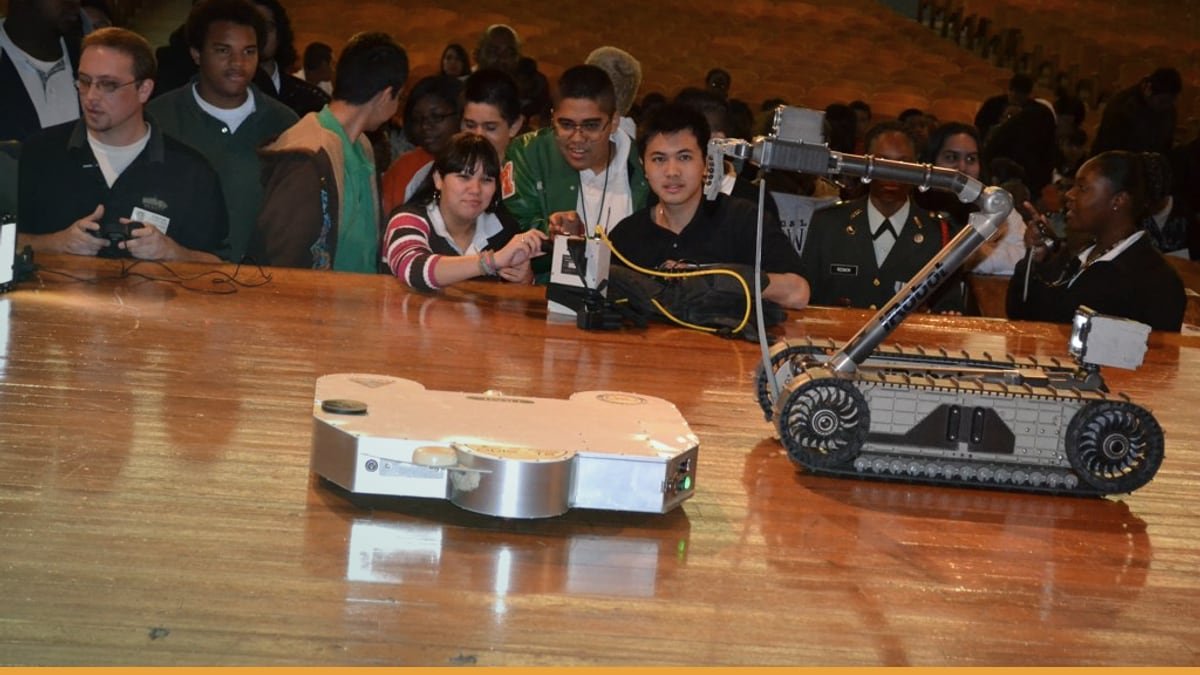
    Header image: Army reaches out to San Antonio youth (5324773312).jpg) by U.S. Army RDECOM from Aberdeen Proving Ground, MD, USA, Public domain, via Wikimedia Commons — cropped to 16:9 and colour-adjusted.

    Key takeaways

    • Industry is merging engineering theory with technology implementation
    • AI augments both engineering and technology roles
    • Hybrid skills will dominate future technical careers

    Engineering and engineering technology are not the same. Full stop.

    Engineering is theoretical design, advanced maths, the pursuit of what’s possible. Engineering technology is hands-on implementation, applied skills, making those designs work in the real world. The American Society for Engineering Education (ASEE) draws a hard line: distinct disciplines, separate career paths. Engineering graduates are "engineers. " Engineering technology graduates are "technologists. " That’s the academic divide.

    But industry? Industry doesn’t care.

    Companies like L&T Technology Services (LTTS) and Imperial Auto are operating in ways that bridge engineering and technology. They’re fusing AI, automation, and global R&D centres to create roles that demand both—deep theoretical knowledge and practical mastery. The distinction still exists on paper. In practice? It’s dissolving.


    The Academic Divide: Maths, Science, and the Curriculum Gap

    The difference between engineering and engineering technology is starkest in the classroom.

    Engineering programmes are theory-heavy. Rowan University’s comparison lays it out: more advanced applied science and mathematics—calculus III, differential equations, thermodynamics. Engineering technology programmes? Often capped at calculus I. The focus is on applying existing tools, not inventing new ones.

    Michigan Technological University (MTU) puts it bluntly: engineering technology graduates are "masters of technology. " They gain a "broad and deep understanding of the processes, systems, tools, and techniques necessary to construct, modify, operate, and maintain an engineering design. " The key word? Operate. Engineering technology is about making things work, not just designing them.

    The University of Kentucky’s College of Engineering is even clearer: "One size does not fit all. " Some students thrive in the abstract, theory-driven world of engineering. Others excel in the hands-on, problem-solving environment of engineering technology. The curricula reflect that divide. Engineering programs focus on advanced theoretical concepts while Engineering Technology programs focus on practical application. Engineering programs emphasize advanced science while Engineering Technology programs emphasize practical implementation.

    This divide makes sense—on paper. But the real world doesn’t separate design from implementation. A civil engineer who can’t read a blueprint is useless. A manufacturing technologist who doesn’t understand material science is limited. The question isn’t whether one is "better" than the other. It’s whether the academic distinction still serves students—or employers.


    Career Paths: Where the Degrees Actually Lead

    On paper, the career paths for engineers and technologists look different.

    Engineering graduates land in design, R&D, theoretical problem-solving—think aerospace, civil, software. Engineering technology graduates, per MTU, end up in manufacturing, construction, product improvement, system optimisation.

    But here’s the twist: the job titles don’t match the distinction.

    MTU admits it outright: "The degree is engineering technology, but the career is engineering. " Walk into a manufacturing plant. You’ll find "engineers" who graduated from engineering technology programmes. The ASEE’s Engineering Technology Council even lists engineering technology as a career in engineering. So much for clarity.

    This labelling problem creates friction. Technologists hit ceilings in roles requiring an "engineer" title, even if their skills are equivalent. Employers miss talent because they filter for degrees, not capabilities. The gatekeeping is subtle but real: a technologist with a decade of hands-on experience might be passed over for a design role requiring a "real" engineering degree—even if the job is 80% implementation.

    That’s a missed opportunity. If a technologist can troubleshoot a complex manufacturing system, does it matter whether they took calculus III? In some industries, absolutely. In others? Not at all.


    The Blurring Lines: How Industry Is Merging the Two

    While academia clings to the distinction, industry is already moving past it. Two recent developments prove it:

    1. **LTTS’s partnership with Cognite (September 24, 2026). LTTS brings deep engineering expertise. Cognite brings AI-native industrial solutions. The goal? A hybrid model where AI augments—but doesn’t replace—engineering knowledge.
    1. Imperial Auto’s Global Technology Center in Germany. The centre bridges European customer requirements and Imperial Auto’s global engineering and manufacturing operations. It’s not just design or implementation. It’s integration—translating local needs into global solutions, and vice versa.

    These aren’t incremental changes. They’re a fundamental shift.

    LTTS isn’t just slapping AI onto engineering. It’s redefining what "engineering intelligence" means. Imperial Auto isn’t just opening a satellite office. It’s creating a hub where theoretical engineering meets real-world application. In both cases, the old divide between engineering and engineering technology is becoming irrelevant.

    The hybrid role is here. Companies want professionals who can:

    • Understand the theoretical underpinnings of a design (engineering).
    • Implement it efficiently using the latest tools (engineering technology).
    • Use AI and automation to iterate faster (the new wildcard).

    This isn’t a merger of disciplines. It’s an expansion. The question isn’t whether engineering and engineering technology will become the same. It’s whether the distinction will matter at all in five years.


    The AI Factor: Why Technology Is Reshaping Engineering

    AI is the accelerant in this equation.

    LTTS’s partnership with Cognite isn’t about replacing engineers with algorithms. It’s about using AI to enhance engineering intelligence. The Free Press Journal describes it as combining "deep engineering expertise with AI-native industrial experiences. " Translation: AI handles the repetitive, data-heavy tasks—simulations, predictive maintenance, optimisation—while engineers focus on creative problem-solving and oversight.

    Here’s what that looks like in practice:

    • For engineers: AI tools run thousands of design simulations in the time it takes a human to run one. That doesn’t eliminate the need for engineering judgment. It amplifies it.
    • For technologists: AI predicts equipment failures before they happen. But someone still needs to understand the underlying mechanics to fix them. That’s where hands-on expertise comes in.

    The risk? Over-reliance. If engineers treat AI as a crutch, they might lose the ability to spot flaws in its outputs. If technologists rely too heavily on automation, they might struggle when systems fail. The sweet spot? A professional who understands both the why (engineering) and the how (engineering technology)—and knows when to trust AI and when to question it.

    This is the future. AI won’t replace engineers or technologists. It will force them to evolve. The most valuable professionals won’t be the ones who can do one thing well. They’ll be the ones who can do both.


    The Skills Gap: What Employers Really Want

    The blurring lines between engineering and engineering technology are exposing a skills gap.

    Traditional engineering firms still prioritise advanced maths and theoretical design. Manufacturing and tech-driven industries? They’re hungry for applied skills—rapid prototyping, tool proficiency, real-world problem-solving.

    Imperial Auto’s Germany centre demonstrates this integration.** It’s not just about engineering or technology. It’s about bridging the two. The centre’s role? To "support engineering capabilities" while enabling "faster technical responses" to European customers. That requires engineers who can design globally but adapt locally. And technologists who can implement those designs efficiently.

    The emerging trend is clear: employers want professionals who can straddle both worlds. A job posting for a hybrid engineering role might require:

    • A four-year engineering degree (theory).
    • Experience with CAD and rapid prototyping (application).
    • Familiarity with AI tools (the new wildcard).

    This isn’t a niche demand. LTTS’s partnership with Cognite proves even large-scale industrial operations are moving in this direction. The question isn’t whether this hybrid skillset is valuable. It’s whether universities and training programmes are keeping up.


    The Education Dilemma: Are Universities Keeping Up?

    Right now? No.

    Most universities still treat engineering and engineering technology as separate tracks. The ASEE’s stance is clear: distinct disciplines, distinct career paths. But that model is increasingly out of step with industry demands.

    Here’s the problem:

    • Engineering programmes are theory-heavy but often lack hands-on implementation training.
    • Engineering technology programmes teach practical skills but may skimp on advanced maths and science.
    • Neither explicitly teaches how to integrate AI and automation into traditional workflows.

    The opportunity? Universities could offer hybrid programmes that bridge the gap. Imagine a curriculum that:

    • Teaches advanced engineering theory and applied implementation.
    • Includes AI and automation as core components, not electives.
    • Offers real-world projects where students solve problems using both engineering and technology skills.

    The student choice is tricky. Should undergrads specialise early, or seek a broad foundation with electives in both? Right now, most are forced to choose—and that choice can limit their career flexibility.

    The best path? A broad foundation with targeted electives. A mechanical engineering student who takes courses in manufacturing processes and AI tools will be far more adaptable than one who doesn’t.

    The bigger question: Will universities adapt, or will industry leave them behind? Companies like LTTS and Imperial Auto are already creating their own hybrid roles. If academia doesn’t catch up, students might find themselves unprepared for the jobs of the future.


    The Future: Will the Distinction Disappear?

    In the short term? No.

    Engineering and engineering technology will remain distinct disciplines, at least on paper. The academic divide is too entrenched to disappear overnight. But in practice? The lines are already blurring.

    Here’s what will happen:

    • Short-term (next 5 years): The distinction will persist, but hybrid roles will become more common. Employers will start valuing skills over degrees. Technologists will gain more recognition in "engineering" roles.
    • Long-term (10+ years): AI and automation will merge engineering and engineering technology into a spectrum of "technical problem-solvers. " The label—engineer vs. technologist—will matter less than the ability to design and implement solutions.

    The most successful professionals will be the ones who can straddle both worlds. Deep technical knowledge and hands-on adaptability. Theoretical rigour and practical mastery. The ability to design a system and troubleshoot it when it fails.

    The real question isn’t whether the distinction will disappear. It’s whether academia will keep up—or whether industry will redefine the rules without them.


    What This Means for Students, Professionals, and Employers

    For Students:

    • Choose based on your strengths. If you love maths and theory, engineering is a natural fit. If you prefer hands-on problem-solving, engineering technology might be better.
    • But don’t silo yourself. Take electives in AI, automation, and the "other" discipline. The more adaptable you are, the more valuable you’ll be.
    • Plan to upskill. The job you train for today might not exist in 10 years. Build a foundation that lets you pivot.

    For Professionals:

    • Engineers: Learn practical implementation. Take a course in manufacturing processes, CAD, or rapid prototyping. The more you understand the "how," the better you’ll design for it.
    • Technologists: Strengthen your theoretical foundations. Brush up on advanced maths and science. The more you understand the "why," the better you’ll troubleshoot problems.
    • Both: Get comfortable with AI and automation. These tools aren’t going away. They’re becoming essential.

    For Employers:

    • Stop gatekeeping job titles. A "technologist" with AI expertise might outperform a traditional engineer in tech-driven roles. Focus on skills, not degrees.
    • Redefine roles. The hybrid model is already here. Start creating job descriptions that reflect it—roles that demand both engineering theory and practical implementation.
    • Invest in training. If universities aren’t keeping up, it’s on you to fill the gap. Offer upskilling programmes in AI, automation, and cross-disciplinary collaboration.

    The call to action? Universities, companies, and professionals need to collaborate. Define new hybrid roles. Create curricula that reflect them. Build career paths that reward adaptability. The distinction between engineering and engineering technology isn’t going away. But it’s becoming less important than the ability to merge the two.

    The open question: Will industry lead the way, or will academia finally catch up?