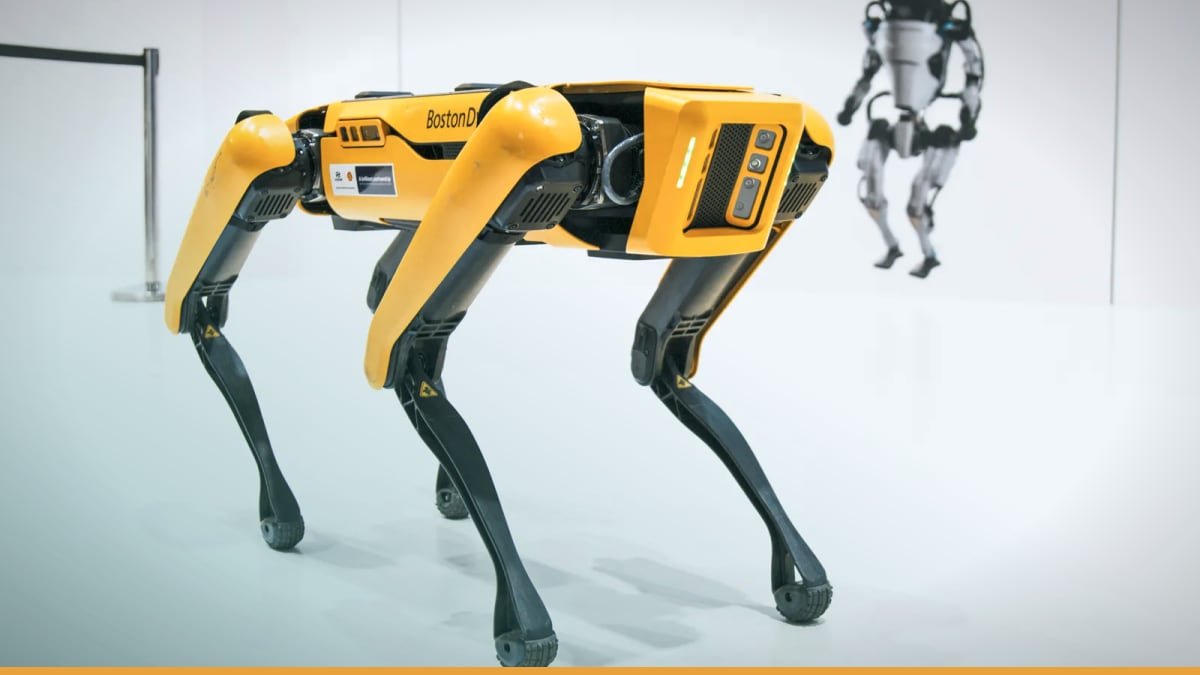
Header image source: Technology | Definition, Examples, Types, & Facts | Britannica via Britannica via Google — cropped to 16:9 and colour-adjusted.
Key takeaways
- PCs, Internet, mobile phones, GPS, and fiber optics transformed society
- Technologies start niche then become infrastructure
- Next wave: AI, quantum computing, biotech will build on existing systems
Personal computers, the Internet, mobile phones, GPS, and fiber optics. Not buzzwords. Not "solutions. " Actual systems with blueprints, failure modes, and measurable impact.
- Education: Classrooms now integrate PCs for research, coding, and interactive learning.
The Internet isn’t just another technology.
In 2021, it helped dispatchers handle 240 million calls.
GPS is a U.S. military asset, and it’s vulnerable. Jamming and spoofing are growing threats. Russia has used GPS spoofing to mask its movements in Ukraine. In 2019, a drone attack on Saudi oil facilities exposed how reliant global infrastructure is on GPS.
My take: GPS is the ultimate "dual-use" technology. The European Union’s Galileo, China’s BeiDou, and Russia’s GLONASS offer alternatives, but none have GPS’s global reach. The real question is whether we’ll see a "GPS war" where nations weaponize their systems.
5. Fiber Optics: The Unsung Hero of the Digital Age
Fiber optics is why you can stream 4K video, make a Zoom call, or download a 100 GB game in minutes. Unlike copper cables, which transmit data as electrical signals, fiber optics use light pulses sent through thin glass or plastic fibers. The result? Near-instantaneous data transfer over vast distances, with minimal signal loss.
How it works: Light is trapped inside the fiber and bounces along its length, even around curves. Single-mode fibers carry a single light mode. Multimode fibers carry multiple modes but suffer from signal degradation. Wavelength-division multiplexing sends multiple data streams simultaneously using different wavelengths of light.
The evidence:
- Broadband: Fiber-to-the-home connections offer speeds up to 10 Gbps. In 2023, 59% of U.S. households had access to FTTH.
- Cloud computing: AWS, Google Cloud, and Microsoft Azure rely on fiber-optic networks. Without them, services like Netflix and Spotify wouldn’t exist.
- Finance: High-frequency trading firms use fiber-optic networks to execute trades in microseconds.
The limits: Fiber isn’t perfect. It’s expensive to install, and it can be damaged by construction or natural disasters. Undersea cables carry 99% of international data—and sharks have been known to bite them.
My take: Fiber optics is the ultimate "invisible" technology. It’s buried underground, hidden in walls, and taken for granted—until it breaks. The push for 5G and 6G networks will only increase demand for fiber. The real challenge? Getting fiber to rural areas, where the economics don’t always make sense.
The open question: Satellite internet promises to bypass fiber’s limitations. But can it match fiber’s speed and reliability? And what happens when thousands of satellites become space debris?
The Patterns Beneath the Tech
These five technologies reveal how innovation actually works. Here’s what they have in common:
- From niche to ubiquitous: GPS started as a military tool. PCs began as hobbies for enthusiasts. The Internet was a research project. The most impactful technologies solve a specific problem first, then expand.
- Convergence: Mobile phones now combine computing, communication, and navigation. Fiber optics enable the Internet, which powers cloud services, which run on PCs. Technology doesn’t evolve in silos.
- Infrastructure dependence: The Internet and fiber optics are invisible until they fail. GPS is taken for granted until your Uber driver can’t find you. The most transformative technologies become background infrastructure.
My take: The next wave of "disruptive" technologies—AI, quantum computing, biotech—will follow the same pattern. They’ll start in labs, solve narrow problems, then scale. The question isn’t if they’ll change the world, but how and who they’ll leave behind.
How Technology Categories Overlap
The brief groups technology into six categories: communication, electrical, energy, manufacturing, medical, and transportation. But these categories are porous. Take cars:
- Transportation: They move people and goods.
- Energy: They consume gasoline or electricity.
- Manufacturing: They’re built on assembly lines.
- Electrical: Modern cars have computers, sensors, and infotainment systems.
- Medical: Ambulances are mobile healthcare units.
This overlap isn’t a flaw. It’s a feature. The most interesting technologies blur boundaries:
- Fiber optics enables manufacturing automation by connecting robots to cloud-based AI.
- Mobile phones are now medical devices (Apple Watch’s ECG, glucose monitors).
- GPS is critical for transportation and energy (self-driving cars, smart grids).
My take: The future belongs to technologies that integrate categories. Smart cities, for example, combine transportation, energy, and communication. The challenge? Making sure these systems work together without creating new vulnerabilities.
What Comes Next?
If these five technologies defined the last 50 years, what will define the next 50? Here are three candidates:
- AI:
AI isn’t just chatbots or image generators. It’s the first technology that can learn and adapt without explicit programming. Machine learning models are solving problems in drug discovery, climate modeling, and materials science. But AI’s impact is uneven. It excels at pattern recognition but struggles with causality. And its energy demands are staggering.
- Quantum Computing:
Quantum computers leverage qubits, which can exist in multiple states at once. This allows them to solve certain problems exponentially faster than classical computers. But today’s quantum computers are error-prone and require near-absolute zero temperatures. Practical applications are still years away.
- Biotechnology:
CRISPR gene editing, mRNA vaccines, and lab-grown meat are blurring the line between biology and technology. These tools could cure genetic diseases, extend lifespans, and reduce agriculture’s environmental impact. But ethical and regulatory hurdles are massive.
My take: None of these will replace the five examples above. Instead, they’ll build on them. AI needs the Internet and fiber optics. Quantum computing requires PCs. Biotechnology relies on GPS and mobile phones.
The final thought: The most interesting question isn’t what the next big technology will be—it’s who it will serve. The Internet democratized information. Mobile phones put computing in everyone’s pocket. But AI, quantum computing, and biotech are currently controlled by a handful of corporations and governments. Will they follow the same path of decentralization, or will they create a new digital divide?
That’s the open question. Technology isn’t just about tools—it’s about power. And the next wave will define who holds it.