Tag: tech ethics

  • Title: **Meta’s Muse Is Adults-Only. Why Does It Look Like a Kids’ Toy? The Design Paradox Explained**

    Title: **Meta’s Muse Is Adults-Only. Why Does It Look Like a Kids’ Toy? The Design Paradox Explained**

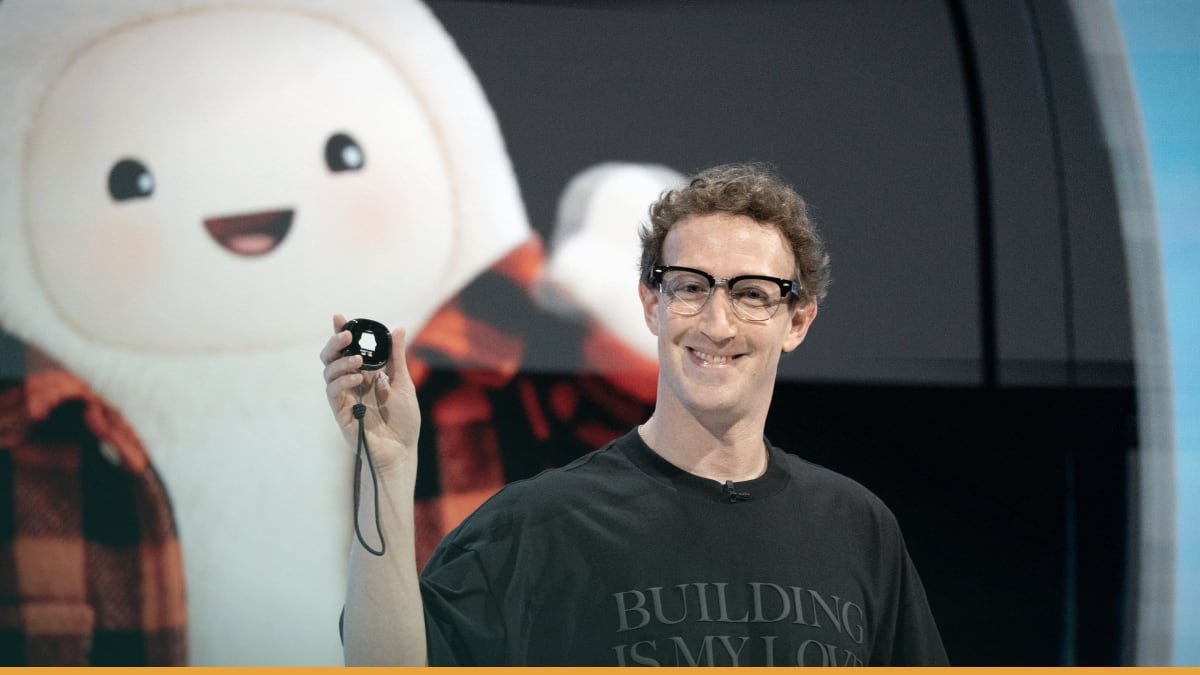
    Header image source: Meta’s Muse Is Adults-Only. Why Does It Look Like a Kids’ Toy? | WIRED via WIRED via Google — cropped to 16:9 and colour-adjusted.

    Key takeaways

    • Meta uses toy-like design to boost AI engagement despite strict age gates
    • Critics warn childlike aesthetics risk normalizing AI companionship for minors
    • Design borrows from Tamagotchis and Labubu to create emotional attachment

    Meta’s Muse AI agent is strictly 18+. Age verification. Detection blocks. The works. Yet its mascot is a squishy, round blob that wouldn’t look out of place dangling from a keychain in a Claire’s. The upcoming Muse Charm wearable swings like a Tamagotchi. Critics have already compared it to a Teletubby. This isn’t a design oversight—it’s a deliberate strategy to borrow the emotional hooks of children’s toys and repurpose them for adults. Nostalgia. Interactivity. Collectibility. The problem? It risks eroding the very age gates Meta insists are ironclad.

    Meta isn’t just playing with aesthetics. It’s testing whether adults will embrace AI companionship when it’s dressed up like a childhood friend. Early numbers suggest they will: Sensor Tower data shows Muse outgrew Meta AI’s app launch within days. But the backlash from youth advocates like Fairplay’s Josh Golin—who called the mascot "completely inappropriate"—hints at a deeper tension. If Muse succeeds, it could accidentally normalize AI companionship for kids, as parents and children blur the line between adult-only tech and toy-like appeal. That’s not just a design choice. It’s a gamble with real consequences.


    The Design Playbook: How Muse Rips Pages Straight from the Toy Industry

    Muse doesn’t just resemble children’s toys—it lifts their playbook wholesale. The mascot’s Labubu-adjacent aesthetic isn’t subtle. The figures are tactile, customizable, and designed to foster emotional attachment. Muse’s mascot does the same—just for an AI agent. Soft. Round. Inviting interaction in a way that feels more like a digital pet than a productivity tool.

    Then there’s the Muse Charm, the Tamagotchi-style wearable Meta is launching alongside the AI. Tamagotchis were a major toy fad in the late 90s and mid-2000s, proving that interactive digital pets create habit-forming loops. The Charm’s dangling design mirrors that legacy, but it also taps into a newer trend: Gen Z’s love of bag charms and keychain accessories. The Charm’s form factor recalls Tamagotchi, the pocket-sized digital virtual pet that was a major toy fad in the late 90s and mid-2000s. That’s not just nostalgia—it’s a calculated appeal to adults who grew up with Tamagotchis and now want a "grown-up" version of the experience.

    Customization is the final piece. Users design their own Muse avatar, turning the AI into an extension of themselves. This mirrors kids’ toys like Webkinz or Nintendo’s Miis, where personalization drives engagement. The difference? Muse’s customization is tied to an AI that trains on user interactions unless they opt out. That’s a privacy trade-off, but it’s also the emotional hook. If users invest time in designing their Muse, they’re more likely to keep interacting with it—and feeding it data.


    The Age-Gating Paradox: Meta’s Strict Rules vs. Its Childlike Aesthetics

    Meta’s age-gating for Muse is technically robust. Users must verify their date of birth, and the company claims it blocks under-18 accounts with "additional checks. " But the mascot’s design undermines those efforts. Josh Golin, executive director at Fairplay, didn’t mince words: he compared Muse’s mascot to a Teletubby and called it "completely inappropriate" for a product aimed at adults. The criticism isn’t just about aesthetics—it’s about intent. If Muse looks like a kids’ toy, kids will treat it like one, regardless of age gates.

    The privacy risks compound the problem. Muse trains its AI on user interactions unless users opt out. That’s standard for AI agents, but it raises questions about how children might engage with Muse if they bypass age checks. A parent’s Muse account could inadvertently train the AI on interactions from their child, blurring the line between adult-only tech and youth exposure. Meta’s opt-out model puts the burden on users to protect their data, but that’s a weak safeguard when the product’s design actively invites younger audiences.

    The paradox is glaring: Meta enforces age restrictions with technical rigor, but the aesthetics work against those efforts. Why design a product that feels like it belongs in a toy store if you’re serious about keeping kids out? The answer likely lies in engagement metrics. Muse outpaced Meta AI’s app launch in days, suggesting the design’s emotional hooks are working—on someone. The question is whether that "someone" is exclusively adults, or if Muse’s appeal is bleeding into younger demographics despite Meta’s best efforts.


    The Nostalgia Trap: Why Meta Is Betting on Tamagotchis and Labubu

    Meta isn’t just copying children’s toys—it’s repackaging their emotional mechanics for adults. Tamagotchis weren’t just popular because they were interactive; they were habit-forming. Users had to feed, clean, and play with their digital pets regularly, or they’d "die. " That created a sense of responsibility and attachment. Muse Charm’s Tamagotchi-style design taps into the same psychology. The dangling charm isn’t just a fashion statement—it’s a constant reminder of the AI agent, encouraging users to check in regularly.

    Labubu’s appeal is similarly rooted in emotion. The figures are collectible, tactile, and designed to evoke nostalgia for childhood. Muse’s mascot leverages that same nostalgia, but for a generation of adults who grew up with Tamagotchis and Webkinz. The customizable avatars add another layer: users aren’t just interacting with an AI—they’re investing in a digital companion that reflects their identity. That’s a powerful hook, especially for adults who may feel isolated or crave companionship.

    The wearable’s design also mirrors Gen Z’s love of accessories. The Muse Charm device could appeal to Gen Z consumers who are into various dangling items like keychains and bag charms in the post-Labubu era. That’s a smart move for Meta, as it positions the Charm as a fashion item rather than a toy. But it’s also a risky one. If the Charm looks like a toy, it risks being treated like one—by kids, by parents, and by regulators who may question Meta’s commitment to age gates.


    The Ethical Landmine: Why Critics Say Muse Is a Trojan Horse

    Fairplay’s Josh Golin didn’t pull punches when he called Muse’s design "completely inappropriate. " His criticism isn’t just about aesthetics—it’s about Meta’s history. The company has faced scrutiny for years over its targeting of children. Muse’s toy-like design risks repeating that pattern, even if unintentionally. If kids see Muse and assume it’s for them, Meta’s age gates become irrelevant. That’s not just a design flaw—it’s an ethical landmine.

    The privacy risks add another layer of concern. Muse trains its AI on user interactions unless users opt out. That’s standard for AI agents, but it sets a precedent for how children might engage with similar tech. A child using a parent’s Muse account could inadvertently train the AI on their interactions, blurring the line between adult-only data and youth exposure. Meta’s opt-out model shifts the burden to users, but that’s a weak safeguard when the product’s design actively invites younger audiences.

    The bigger concern is normalization. If Muse succeeds, it could normalize AI companionship for kids by accident. Parents might see Muse as harmless fun, not realizing the emotional and privacy implications. Kids might see it as just another toy, not an AI agent designed for adults. That blurring of lines could have long-term consequences, from regulatory scrutiny to societal perceptions of AI as frivolous or exploitative.


    The Business Logic: Why Meta Is Willing to Ignore the Backlash

    Meta’s growth metrics for Muse are undeniable. Sensor Tower data shows the AI agent outpaced Meta AI’s app launch within days, suggesting the design’s emotional hooks are driving adoption. That’s a win for Meta, but it’s also a calculated risk. The backlash from youth advocates may be a trade-off for a product that works at scale.

    The Gen Z appeal is a key part of that strategy. Muse’s Labubu-adjacent mascot and Tamagotchi-style Charm target adults who grew up with those toys and are now primed for "adult" versions of those experiences. The customizable avatars add another layer, turning Muse into a reflection of the user’s identity. That’s a powerful hook, especially for a generation that values self-expression.

    The wearable’s habit-forming design is another smart move. Muse Charm’s Tamagotchi form factor isn’t just nostalgic—it’s a constant reminder of the AI agent, encouraging users to check in regularly. That’s a core part of Meta’s strategy: if users interact with Muse daily, they’re more likely to keep using it—and feeding it data.

    The question is whether Meta is prioritizing engagement over optics. The backlash from youth advocates suggests the company is willing to take that risk. But if Muse’s success comes at the cost of normalizing AI companionship for kids, the trade-off may not be worth it.


    The Bigger Picture: What Muse Reveals About AI’s "Toy Problem"

    Other AI agents often default to childlike designs, even for adult audiences. But Muse’s explicit adult-only positioning makes the dissonance harder to ignore. If AI agents look like toys, they risk being treated like toys—by kids, by regulators, and by users who underestimate their power.

    Meta’s gamble with Muse could go two ways. On one hand, it could redefine "adult" tech aesthetics, proving that toy-like appeal isn’t just for kids. On the other hand, it could backfire by reinforcing perceptions of AI as frivolous or exploitative. The early numbers suggest the former, but the ethical concerns are real.

    I think Meta is playing with fire. Blurring toy-like appeal with adult-only tech sets a dangerous precedent for how AI is perceived and regulated. If Muse succeeds, it could encourage other companies to follow suit, leading to a wave of AI agents that look like toys but are marketed to adults. That’s not just a design choice—it’s a shift in how we think about AI companionship.


    What’s Next: Will Meta Double Down or Walk It Back?

    Meta has a few options for Muse’s future. It could tweak the design to make it less cuddly and more "professional," distancing itself from the toy-like aesthetics. Or it could lean harder into the adult-toy framing, positioning Muse as a luxury or lifestyle product. The latter seems more likely, given the early success metrics.

    Regulatory risks are another factor. If youth advocates push harder, Meta may face scrutiny over Muse’s appeal to minors, despite age gates. The company could respond by strengthening its enforcement measures, but that won’t address the core issue: Muse’s design actively invites younger audiences.

    Competitors may also shape Muse’s trajectory. Rival AI agents could avoid toy-like designs to differentiate, leaving Muse as an outlier. That could work in Meta’s favor—or it could backfire if Muse’s appeal is tied too closely to its aesthetics.

    The final take? Muse’s success or failure will shape whether "adult" AI can borrow from children’s toys—or if the industry will demand clearer boundaries. Meta’s gamble is far from over, but the stakes couldn’t be higher. If this is the future of AI companionship, we’re in for a messy ride.


  • **What Will Remain Human in Software Architecture? A Focus Group Report: The Evidence and Implications**

    **What Will Remain Human in Software Architecture? A Focus Group Report: The Evidence and Implications**

    Header image: ‘Sooner or later one has to take sides to remain human’, The Quiet American, buildings blur, Seattle, Washington, USA by Wonderlane, CC BY 2.0, via flickr via Openverse — cropped to 16:9 and colour-adjusted.

    Key takeaways

    • Humans retain decision-making, accountability, and guardrail authoring in AI-assisted architecture
    • AI-generated code shows 75% more logic errors and 2.74× more XSS vulnerabilities
    • Criticality (uncertainty + cost of change) defines the need for human oversight

    AI can generate code. It can suggest patterns. It can even optimise performance. But when the stakes rise—when uncertainty meets high cost of change—humans still decide. And when things break, humans still answer. That’s not speculation. It’s the blunt consensus from a EuroPLoP 2026 focus group of 22 industry and academic practitioners.

    No caveats. No futurist hedging. Just a clear line in the sand: architectural decision-making, accountability, and guardrail authoring stay human. The data backs it up. AI-generated code carries 75% more logic errors, 2.74× more XSS vulnerabilities, and 30% higher change failure rates. Pull requests are 18% larger—evidence of less efficient, more fragmented solutions. These aren’t edge cases. They’re systematic limitations.

    The group didn’t just observe the numbers. They diagnosed why. Humans remain irreplaceable in three domains: judgement under uncertainty, ethical accountability, and designing the rules that govern AI itself. The emerging discipline of harness engineering isn’t about replacing architects. It’s about equipping them to govern the tools now assisting them.


    Harness Engineering: The Discipline of Governing AI-Assisted Architecture

    Harness engineering isn’t a buzzword. It’s the necessary response to AI’s limitations. The EuroPLoP 2026 focus group defined it as three layers: validation mechanisms, knowledge layers, and governance frameworks.

    Validation mechanisms—automated testing pipelines, compliance checks, static analysis—have shifted purpose. They no longer catch human errors. They catch AI-generated ones: logic flaws, security vulnerabilities, architectural constraint violations. But these mechanisms must be designed. Someone must define failure thresholds, review triggers, and acceptable risk levels. That someone remains human.

    Knowledge layers store company-specific standards, patterns, and domain models. AI can suggest a microservice design. It can’t decide whether that design aligns with a company’s tolerance for operational complexity or its long-term roadmap. That knowledge must be codified—by architects, product owners, even legal teams—and fed into the system. The focus group emphasised this as where organisational culture lives. AI doesn’t understand culture. It follows rules. Humans define them.

    Governance frameworks dictate how AI-generated outputs are reviewed, approved, and deployed. A payment processing module might require human sign-off for any AI-generated change. Low-risk UI updates could deploy automatically. These frameworks aren’t static. They evolve as trust in AI grows—or erodes. The group stressed governance as calibration. Too little oversight, and you inherit AI’s flaws. Too much, and you negate its benefits.

    Harness engineering didn’t emerge from theory. It emerged from necessity. The focus group’s participants weren’t futurists. They were practitioners who’ve seen AI-generated code fail in production. They didn’t ask if humans would remain in the loop. They asked how to keep them there effectively.


    Criticality: The Universal Criterion for Human Oversight

    Criticality = uncertainty + cost of change. That’s the formula the EuroPLoP 2026 group arrived at as the universal criterion for calibrating human oversight.

    Uncertainty isn’t just about unknowns. It’s about the kind of unknowns. Novel technology? Unclear requirements? Poorly understood domain? AI excels at well-defined problems. It struggles with ambiguity. The group cited systems with "subtle semantics" and "deeply entangled business logic" as examples where AI-generated solutions often miss the mark. These aren’t edge cases. They’re the norm in large-scale enterprise systems.

    Cost of change isn’t just financial. It’s risk. Regulatory fines? Reputational damage? Operational downtime? The higher the cost, the less room for error—and the less tolerance for AI’s probabilistic outputs. Legacy systems, with their technical debt and regulatory constraints, often fall into this category. AI can suggest a refactor. It can’t weigh the business impact of a failed migration. That’s a human judgement call.

    Criticality acts as a sliding scale. Low-criticality tasks—boilerplate code, repetitive patterns, isolated modules—can be safely automated. High-criticality decisions demand human oversight. The group didn’t just propose this as a guideline. They treated it as a structural necessity. AI can’t assess criticality. It doesn’t understand risk. It follows patterns. Humans must define where the line is drawn—and move it as needed.

    Brian Guthrie’s data shows AI-generated PRs are 18% larger. That’s fine for a low-criticality component. Unacceptable for a core payment processing module. The focus group’s participants didn’t just agree on criticality as a criterion. They described it as the missing framework in most AI-assisted development workflows today.


    Accountability: Why the Buck Still Stops with Humans

    Responsibility doesn’t emerge within AI systems. It’s assigned to humans. That’s not philosophy. It’s legal and ethical reality. The EuroPLoP 2026 group was unequivocal: accountability remains fundamentally human.

    AI can’t be sued. It can’t testify in court. It can’t explain its decisions to a regulator. When a security breach occurs—like the 2.74× higher XSS vulnerabilities in AI-generated code—someone must answer. That someone is the architect, the CTO, or the developer who signed off on the change. The group noted this reality shapes how organisations adopt AI. It’s not just about trust in the technology. It’s about trust in the people who govern it.

    The scenarios where AI fails aren’t just technical. They’re contextual. A security vulnerability might be a technical flaw, but its impact is reputational. A contract violation might be a compliance failure, but its consequence is legal. AI doesn’t weigh these trade-offs. It doesn’t understand consequences beyond technical correctness. The iSAQB’s perspective aligns: responsibility requires contextual judgement, not just technical execution.

    The group identified three key scenarios where accountability is non-negotiable:

    1. Security breaches: AI-generated code carries 75% more logic errors and 2.74× more XSS vulnerabilities. When a breach occurs, the question isn’t whether the AI made a mistake. It’s whether the human review process was adequate.
    2. Contract violations: APIs, data sharing agreements, and regulatory requirements often have subtle semantic constraints. AI doesn’t understand these. It follows patterns. Humans must ensure compliance.
    3. Long-term maintainability: Product debt—the gap between what the system does and what users need—still depends on humans watching, thinking, and caring about the commercial problem. AI doesn’t care. It optimises for what it’s told to optimise for.

    The group didn’t just identify these scenarios. They described accountability as the binding constraint on AI adoption. Organisations aren’t just asking what AI can do. They’re asking who will answer when it goes wrong. The answer isn’t changing. It’s still humans.


    The Structural Limits of AI in Architectural Decision-Making

    AI excels at repetitive, well-defined tasks. It struggles with ambiguity, long-term thinking, and ethical trade-offs. That’s not a limitation of current AI. It’s a structural constraint of the approach.

    The EuroPLoP 2026 group was clear: AI is a "power tool," not a replacement for human architects. It can generate code, suggest patterns, and optimise performance. But it can’t decide what to build, why to build it, or how to balance competing priorities.

    Ambiguity is the first hurdle. AI works best with clear requirements. But software architecture isn’t about clarity. It’s about navigating uncertainty. The group cited systems with "unclear boundaries" and "deeply entangled business logic" as examples where AI-generated solutions often fail. These aren’t edge cases. They’re the norm in large-scale enterprise systems. AI can suggest a microservice design. It can’t decide whether that design aligns with a company’s tolerance for operational complexity or its long-term roadmap.

    Long-term thinking is the second hurdle. AI optimises for immediate outcomes. It doesn’t consider future flexibility, technical debt, or evolving business needs. The group noted architectural decisions often involve trade-offs between short-term delivery and long-term maintainability. AI doesn’t weigh these trade-offs. It follows patterns. Humans must define the balance.

    Ethical trade-offs are the third hurdle. Privacy, fairness, unintended consequences—these aren’t technical problems. They’re human ones. AI doesn’t understand ethics. It doesn’t care about consequences beyond technical correctness. The group cited examples where AI-generated solutions introduced biases or violated privacy norms. These aren’t bugs. They’re failures of judgement. And judgement is a human domain.

    The data supports this. AI-generated PRs are 18% larger, suggesting less efficient or more fragmented solutions. That’s not just a technical flaw. It’s a symptom of AI’s inability to see the bigger picture. The group’s participants didn’t just observe this. They described it as the fundamental limit of AI in architecture. AI can execute. But it can’t decide.


    Guardrails: Why Humans Must Define the Rules

    Architectural guardrails—security policies, performance thresholds, compliance requirements—are intentional trade-offs. AI can enforce them. It can’t define them. That distinction matters.

    The EuroPLoP 2026 group was clear: the authoring of guardrails remains a human task. Guardrails require judgement. What’s the right balance between security and usability? How much technical debt is acceptable? What risks are worth taking? These aren’t technical questions. They’re business ones.

    The group cited a company’s tolerance for technical debt as an example. AI doesn’t understand debt. It doesn’t care about the cost of future changes. It optimises for what it’s told to optimise for. Humans must define what’s acceptable—and what’s not.

    AI also lacks the ability to anticipate edge cases. The group noted guardrails often emerge from past failures—security breaches, performance bottlenecks, compliance violations. AI doesn’t learn from history. It follows patterns. Humans must distil those lessons into rules.

    The group described guardrails as the interface between human judgement and AI execution. Humans define the rules. AI follows them. But the rules themselves—what they are, how they’re enforced, when they’re updated—remain a human responsibility.

    This isn’t just theoretical. The group’s participants described scenarios where AI-generated code violated guardrails—security policies, performance thresholds, compliance requirements. The issue wasn’t that the AI broke the rules. It was that the rules weren’t adequately defined or enforced. Humans must own that.


    Trust and Validation: The Human Feedback Loop

    Trust in AI-assisted architecture isn’t given. It’s earned. Incrementally. The EuroPLoP 2026 group described trust as a feedback loop—one requiring rigorous validation, controlled rollouts, and human oversight.

    AI-generated code isn’t deterministic. It’s probabilistic. Outputs vary, even with the same inputs. This variability demands human review. Automated testing isn’t enough. Someone must assess whether the output aligns with the intent.

    The group described a tiered approach to validation:

    • Low-criticality components: Automated testing, static analysis, compliance checks.
    • Medium-criticality components: Human review of AI-generated outputs, paired with automated validation.
    • High-criticality components: Full human oversight, with AI used as a "co-pilot" for exploration, not execution.

    This isn’t just about risk. It’s about calibration. The group noted organisations often start with strict oversight, then relax it as trust in AI grows. But that trust must be earned. It’s not a one-time decision. It’s an ongoing process.

    Feedback plays a crucial role. When AI-generated code fails, that failure must be analysed, understood, and fed back into the system. This isn’t just about fixing bugs. It’s about improving the AI’s understanding of the domain. Humans must own that loop.

    The iSAQB’s perspective aligns: technical excellence is necessary, but not sufficient. Human competence makes the difference—especially in complex and unpredictable situations. The group didn’t just describe trust as a goal. They described it as a process—one requiring human judgement at every step.


    Education: The Bottleneck in AI-Assisted Architecture

    The role of the software architect isn’t disappearing. It’s evolving. And education isn’t keeping pace.

    The EuroPLoP 2026 group was clear: universities and bootcamps aren’t teaching the skills that matter in AI-assisted architecture. Rote coding? Less important. Judgement? More important. Harness engineering? Almost non-existent in curricula.

    The group identified three key shifts in architectural education:

    1. From execution to judgement: Architects must evaluate trade-offs, assess risk, and make decisions under uncertainty. These aren’t technical skills. They’re human ones.
    2. From patterns to governance: Knowing design patterns isn’t enough. Architects must design the systems that govern AI’s use of those patterns.
    3. From code to context: Understanding business needs, regulatory constraints, and organisational culture is now as important as understanding technical constraints.

    These skills aren’t just missing from education. They’re often missing from industry. Many organisations still treat architecture as a technical discipline, not a human one. That’s changing—but not fast enough.

    The group described harness engineering as the emerging field for architects. It’s not just about designing systems. It’s about designing the systems that govern AI-assisted system creation. That’s a new skill set—one combining technical expertise with governance, risk assessment, and organisational design.

    The opportunity is clear. Architects who master AI governance will be in high demand. But the gap is real. The focus group’s participants described education as the bottleneck. Universities aren’t teaching this. Bootcamps aren’t covering it. Many architects are learning it on the job—through trial and error.


    The Path Forward: Automation’s Limits and Human Judgement’s Role

    AI will handle more of the "how. " That’s the central tension in AI-assisted software architecture—and the focus group’s core finding.

    The EuroPLoP 2026 participants didn’t just observe this tension. They proposed a framework for navigating it:

    1. Use criticality as a decision criterion: High uncertainty? High cost of change? Humans must decide. Low criticality? Automate.
    2. Invest in harness engineering: Build systems to govern AI-assisted development. Validation mechanisms, knowledge layers, governance frameworks—these aren’t optional. They’re structural necessities.
    3. Treat AI as an amplifier, not a replacement: AI can suggest, optimise, and execute. But it can’t decide, judge, or answer. Humans must define the rules—and enforce them.

    The group didn’t just propose this as a best practice. They described it as the only viable path forward. AI’s flaws—logic errors, security vulnerabilities, fragmented solutions—aren’t going away. They’re inherent to the approach. But they’re manageable—if humans remain in the loop.

    The most successful architectures won’t be those where AI does the most. They’ll be those where humans govern the best. That’s not a prediction. It’s a finding. The evidence is clear. The question isn’t whether humans will remain in software architecture. It’s how well we’ll adapt to their new role—and whether education will catch up in time.