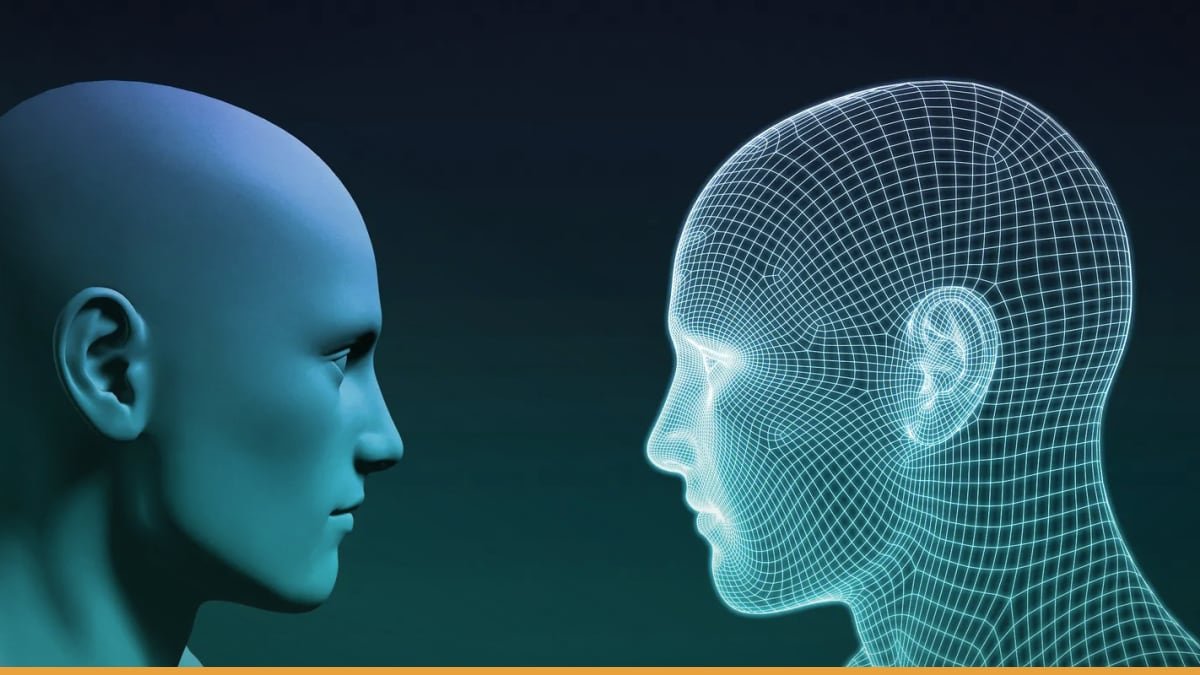
Header image source: Human Vs. Artificial Intelligence: Why Finding The Right Balance Is Key To Success via Forbes via Google — cropped to 16:9 and colour-adjusted.
Key takeaways
- Technology reflects human choices, not inevitable outcomes
- Human oversight prevents AI from becoming master over servant
- Design must prioritize autonomy, transparency and augmentation
Here’s the thing: the debate isn’t about technology versus humanity. It never was. Every algorithm, every brain-machine interface, every line of code is just a reflection of the choices we make. It’s whether we’ll design it to amplify what makes us human—or let it erode it instead.
The evidence is clear. When technology serves human autonomy, creativity, and judgment, it enhances us. When it replaces those qualities, it diminishes us. This isn’t some grand philosophical battle. It’s a choice—one we’re making every day, often without realizing it.
The False Binary: Why "Technology vs Human" Is a Distraction
Technology is created by humans. It redefines what we can do, sure. But that’s not competition. That’s co-evolution. The deciding factor isn’t the technology itself. It’s how we interact with it.
Machines are just tools. They whizz through automated, repetitive tasks. Nothing more. History shows this pattern again and again. Yet in each case, humanity didn’t resist—it adapted. Not by rejecting technology, but by reshaping it to serve human needs.
It’s between technology as a servant and technology as a master. Right now, we’re flirting dangerously with the latter.
Where Technology Enhances Humanity: Connection, Expression, Agency
When used thoughtfully, technology doesn’t diminish us. It can make us more human. It enhances our ability to connect, express, and understand ourselves. But this doesn’t happen by accident. It happens by design.
Social Technology and Empathy
Video calls, translation apps, social media—these tools can deepen human connection. But the flip side is just as real. Algorithmic feeds and attention engineering erode empathy. They fuel polarization. Outrage. The difference isn’t the technology itself. It’s how we use it.
AI as a Cognitive Amplifier
These aren’t stories of human obsolescence. They’re stories of human augmentation.
Neuralink’s brain-machine interface could help paralyzed people control devices with their minds. Make prosthetics feel real. That’s not dehumanizing. It’s re-humanizing. Restoring agency to those who’ve lost it.
But there’s a catch. Neuralink’s tech was demonstrated with a monkey playing Pong. Some experts remain skeptical about how well it will scale to complex human tasks. The promise is real. The limitations are too. Technology can’t replace human judgment. It can only extend it.
Education and Creativity
No technology can replace a teacher. But it can change the teacher’s role. The best uses of generative AI in creative fields follow the same pattern. It’s a tool. Not a replacement.
But the soul of the music still comes from the artist. The danger isn’t that technology will take over these roles. The danger is that we’ll let it. By designing systems that prioritize efficiency over empathy. Speed over creativity. Automation over human connection.
Where Technology Diminishes Humanity: Autonomy, Judgment, Dignity at Risk
The risks aren’t theoretical. They’re already here.
The Deskilling Trap
When machines take over jobs, humans risk becoming mere operators. Losing autonomy. Creativity. Judgment. This isn’t a future scenario. It’s happening now.
Empathy.
The result? Humans become monitors of systems. Not decision-makers. We stop thinking critically because the technology is supposed to do the thinking for us.
The Loss of Judgment
When technology replaces human judgment, we don’t just lose skills. We lose accountability. Pilots trusted the system. The system failed them.
These aren’t glitches. They’re design flaws. Flaws that emerge when we assume technology is infallible.
The philosophical question is unavoidable. If an AI makes a life-altering decision—a medical diagnosis, a parole ruling, a hiring choice—who is responsible? The programmer? The company? The machine itself? Right now, the answer is no one. And that’s a problem.
Neuralink and the Slippery Slope
But they also open a Pandora’s box.
Could they be used for surveillance? For cognitive enhancement that creates a new class divide? Could they be hacked, turning our own minds against us?
Some experts are skeptical about how well these technologies will scale to complex human tasks. But the bigger concern isn’t technical. It’s philosophical. If we outsource emotional regulation, memory, or even abstract reasoning to machines, what happens to our humanity?
The Symbiosis Imperative: Why Organizations Must Design for Human-Tech Partnership
Technology alone can’t fix bad processes, poor management, or low morale. Organizations that adopt AI or automation without rethinking workflows fail. Because technology isn’t a plug-and-play solution. It’s a multiplier. If your processes are broken, AI will just break them faster.
The Failure of "Tech-First" Approaches
The AI was supposed to revolutionize diagnostics. But it stumbled over real-world complexities. Unstructured medical data. The nuances of human communication.
The lesson? Technology can’t fix cultural problems. It amplifies them.
Symbiosis in Practice
The companies getting it right are those that design for human-tech collaboration.
- Healthcare: AI assists doctors, not replaces them. But the final call is always human.
- Manufacturing: Cobots work alongside humans. Handling repetitive tasks while humans manage complex decision-making.
- Customer service: AI handles routine queries. But humans step in for empathetic, nuanced interactions.
This isn’t about replacing humans. It’s about freeing them to focus on what they do best.
The Governance Gap
AI is a "quadruple-use" technology. Capable of producing both beneficial and harmful outcomes independently. That’s why proactive regulation is critical.
But they’re not enough. We need global cooperation. Because no single country can govern technologies like AI or brain-machine interfaces alone.
The key principle? Human-in-the-loop design. Critical decisions—those affecting human dignity, livelihood, health, and freedom—must always remain subject to human oversight.
The Master-Servant Paradox: Who’s Really in Control?
Technology must remain humanity’s servant, never its master. But the line between the two is blurring.
The Illusion of Control
Social media algorithms were designed to maximize engagement. They succeeded. By fueling misinformation. Polarization. Mental health crises. These aren’t bugs. They’re features. Unintended consequences of systems designed without human oversight.
The "black box" problem compounds this. Most AI systems operate in ways even their creators don’t fully understand. If an AI makes a biased hiring decision, who’s accountable? Right now, no one.
Power and Agency
Who gets to decide how technology is used? Right now, it’s a handful of tech giants, governments, and military institutions. Autonomous weapons. Surveillance capitalism. Algorithmic governance. These aren’t dystopian fantasies. They’re realities.
Public participation is critical. Facial recognition bans. AI ethics boards. Democratic input into technology policy. These aren’t luxuries. They’re necessities.
Existential Risks
The day technology becomes humanity’s master, our very existence is at risk. This isn’t about Skynet-style AI apocalypses. It’s about subtler, more insidious shifts. Where technology dictates human values. Optimizing for efficiency over empathy. Data over dignity.
History offers parallels. Each time, humanity adapted. But not without cost.
The Human Qualities Technology Can’t Replace (And Why That Matters)
Machines whizz through standardized tasks. But they lack human judgment. That’s not a flaw. It’s a feature. Because judgment is what makes us human.
The Irreplaceables
- Empathy and emotional intelligence: AI can mimic empathy. Chatbots can say "I understand. " But they don’t feel it. That matters in care work, therapy, leadership. Where human connection is everything.
- Creativity and intuition: Human innovation emerges from subconscious connections. Serendipity. Lived experience. AI can generate art. But it can’t experience the world the way an artist does.
- Ethical reasoning: Machines struggle with moral dilemmas. The trolley problem isn’t just a thought experiment. It’s a real-world challenge for AI in autonomous vehicles, healthcare, criminal justice.
The Danger of Over-Reliance
Outsourcing empathy to AI therapists. Creativity to AI artists. These risks atrophy of these skills.
Technology can connect us. But it can also isolate us. If we let it.
The Opportunity
The flip side? Technology can free us to focus on what makes us human. Automation can handle repetitive tasks. So workers can focus on relationship-building. AI can crunch data. So scientists can focus on discovery.
But this only works if we design technology to serve those goals. Right now, too often, we design it to serve efficiency. Profit. Engagement. Metrics that don’t align with human flourishing.
The Path Forward: Designing Technology for Human Flourishing
The deciding factor isn’t technology. It’s how we interact with it. Organizations must create symbiosis between people and technology. But symbiosis doesn’t happen by accident. It requires intentional design.
Principles for Human-Centric Technology
- Autonomy: Users must retain control. Opt-outs for AI decisions. Explainable AI. User-friendly interfaces. These aren’t optional. They’re essential.
- Transparency: If we don’t understand how technology works, we can’t govern it. Open-source models. Algorithmic audits. Clear communication. Non-negotiable.
- Accountability: Humans must remain responsible for outcomes. Legal frameworks for AI harm. Liability for autonomous systems. Ethical guidelines. Critical.
- Augmentation, not replacement: Technology should enhance human capabilities. Not substitute them. Cobots. AI-assisted diagnostics. Adaptive learning platforms. These are examples of this done right.
Policy and Governance
Regulation isn’t the enemy of innovation. It’s a prerequisite for responsible innovation. These are steps in the right direction. But they’re not enough.
We need global cooperation. Because technology doesn’t respect borders.
Cultural Shifts
- Education: We need to teach "human literacy" alongside STEM. Philosophy. Ethics. Emotional intelligence. Critical thinking.
- Workplace redesign: Shorter workweeks. Focus on creativity. "Human-as-partner" models. These can help workers thrive in an automated world.
- Public discourse: We need to shift the narrative. From technology versus humanity to how technology can serve humanity. The answer won’t come from Silicon Valley alone. It has to come from all of us.
The Choice Is Ours—And Time Isn’t on Our Side
Technology is a mirror. It reflects our values. Amplifies our strengths. Exposes our flaws. When it serves human agency, it enhances us. When it replaces human judgment, it diminishes us.
The future isn’t predetermined. It’s a choice. Between designing tools that empower. And systems that control. The alternative isn’t dystopia. It’s irrelevance.
The question isn’t whether technology will change humanity. It’s whether we’ll have the wisdom, courage, and humility to ensure that change is human-led.
The clock is ticking. What’s our next move?
Sources
- Technology Vs. Human – Who Is Going To Win? An …
- Does technology make us more human or less human?
- Technology vs. Humanity: Welcome to the Human Era
- Synergise tradition with innovation, human-centric technology: LG Sinha
- Imagine what humans could do with the technology that allowed a monkey to play a game with its mind
Leave a Reply