Tag: growth equity

  • **General Innovation Capital Partners AUM: The Full Breakdown**

    **General Innovation Capital Partners AUM: The Full Breakdown**

    Header image source: Investors in Emerging America — o15 Capital Partners via www.o15.com via Google — cropped to 16:9 and colour-adjusted.

    Key takeaways

    • GICP reports $345M AUM as of Dec 31, 2025 from Form ADV filing
    • Fund I has $350M sold but targets $500M total
    • $150M ‘remaining AUM’ likely represents uncalled capital or dry powder

    $345 million. That’s the number General Innovation Capital Partners (GICP) reported in assets under management as of December 31, 2025. Straight from their Form ADV filing—no spin, no projections. Just cold, hard regulatory paperwork.

    But here’s the thing about that $345 million: it doesn’t tell the whole story. Not even close.

    GICP’s Fund I is targeting $500 million. As of December 30, 2025, they’ve sold $350 million of that offering. So why does the AUM number sit at $345 million instead of something closer to $350 million—or even $500 million? Because AUM isn’t just about what’s been committed. It’s about what’s been deployed, what’s sitting in cash, and what’s still technically on the table. If you’re tracking GICP’s scale, the question isn’t just about their current AUM. It’s about how much of their $500 million target is actually in play.


    What "AUM" Actually Means for GICP

    Assets under management isn’t some abstract vanity metric. It’s a regulatory definition, and for GICP, that $345 million includes both the capital they’ve already put to work and the cash they’re holding in client accounts, waiting for the next deal. That’s how growth equity works—AUM isn’t just deployed capital. It’s uncalled commitments, reserves for follow-ons, and the dry powder sitting in the bank.

    GICP’s strategy is straightforward: they write checks between $25 million and $100 million into advanced technology companies at "inflection points of growth. " This isn’t early-stage venture, where AUM can be a misleading proxy for fund size. Growth equity is about scaling businesses that have already proven something. And GICP’s $345 million AUM suggests they’re still in the early innings of Fund I’s deployment.

    For context, some established growth equity firms manage tens of billions in AUM. Other established firms manage significantly larger AUM figures. GICP’s $345 million is modest by comparison—but Fund I is still raising. This isn’t their peak capacity. Not yet.


    Fund I’s Progress: $350 Million Sold vs. $500 Million Target

    GICP’s Form D filing on December 30, 2025, shows $350 million sold out of a $500 million offering. Seventy percent of the target. But don’t mistake "sold" for "fully subscribed. " In private markets, "sold" means capital that limited partners (LPs) have committed—not necessarily the amount that’s been called or deployed. GICP could have $500 million in total commitments, but only $350 million has been drawn down so far.

    That gap between $350 million sold and $500 million target? It’s critical. It implies GICP still has $150 million in uncalled capital—or at least the potential to raise it. That’s not unusual for a first-time fund, where LPs often commit capital in tranches. The $345 million AUM figure from Form ADV likely reflects the $350 million sold, adjusted for various factors. But it doesn’t account for the remaining $150 million of the target.

    That’s why AUM isn’t the same as fund size.


    The $150 Million "Remaining AUM" Mystery

    Here’s where things get messy.

    AUM13F, another tracking source, shows General Innovation Capital LLC with $150 million in "remaining AUM" over a one-year duration. That’s not an extra pile of money. It’s almost certainly part of the same story. The $150 million could mean a few things:

    1. Uncalled commitments. LPs have pledged $500 million, but only $350 million has been drawn, leaving $150 million untouched.
    2. Dry powder. Capital reserved for future investments or follow-on rounds.
    3. Tracking lag. Form ADV’s $345 million and AUM13F’s $150 million might measure different timeframes or definitions of AUM.

    The most plausible explanation? The $150 million is part of Fund I’s uncalled capital. If GICP has $350 million sold but only $345 million in AUM, the difference could be fees or expenses. The $150 million "remaining AUM" would then represent the portion of the $500 million target that hasn’t been called yet.

    That’s not extra AUM. It’s a signal that Fund I is still in fundraising mode.


    SEC Registration and Fund Structure

    GICP registered with the SEC in 2024 as a venture-capital-focused advisory LLC. Don’t let the "venture capital" label fool you. Their check sizes ($25–100 million) and focus on growth-stage companies place them in a specific regulatory category. That exemption is for firms writing smaller checks into earlier-stage startups. GICP operates as a registered investment adviser, subject to stricter reporting requirements.

    Fund I follows standard private fund structures. The Form D filing confirms this, but it also reveals something important: GICP is still raising capital. The $350 million sold isn’t the final number. It’s a milestone. For LPs, this means Fund I’s AUM could grow if GICP closes the remaining $150 million of the target. For founders, it means GICP’s firepower isn’t capped at $345 million. It’s closer to $500 million—assuming they hit their goal.


    How GICP’s AUM Compares to Peers

    GICP’s $345 million AUM puts them in the lower-mid-market tier of growth equity firms.

    • Insight Partners: A major global growth equity firm with multi-stage investments.
    • TA Associates: An established growth equity firm with a long track record.
    • Volition Capital: A mid-market growth equity firm.

    GICP’s $345 million is a fraction of these firms’ AUM. GICP is still on Fund I, which hasn’t even hit its $500 million target yet. If Fund I closes at $500 million, GICP’s AUM would likely increase significantly. That would still place them in the lower-mid-market—but it’s a step up from their current $345 million.

    Some larger firms invest across broader stages and geographies. GICP is zeroed in on advanced technology companies at inflection points. That’s a narrower mandate, but it also means their AUM isn’t spread thin across multiple strategies.


    What the AUM Doesn’t Tell Us

    GICP’s $345 million AUM is a useful data point.

    1. Uncalled capital. If Fund I hits $500 million, AUM could rise significantly. That would represent a substantial increase from today’s figure.
    1. LP base. Form ADV confirms GICP serves institutional clients.

    The $150 million "remaining AUM" is another blind spot.


    Why GICP’s AUM Matters for Founders and LPs

    At $345 million AUM, they’re managing a portfolio of investments consistent with their check size range. That’s enough firepower for growth-stage rounds—but places them in a different category than the largest growth equity firms. If Fund I closes at $500 million, GICP’s AUM could increase significantly.

    For LPs, the $345 million AUM is a snapshot of Fund I’s progress. The $350 million sold vs. $500 million target suggests GICP is still fundraising. The $150 million "remaining AUM" is particularly interesting.


    What’s Next for GICP’s AUM?

    GICP’s $345 million AUM isn’t their ceiling.

    • Best-case scenario: Fund I closes at $500 million. AUM rises significantly after fees.
    • Base case: AUM stays near $345 million until Fund I is fully deployed. The $150 million "remaining AUM" represents uncalled capital or dry powder.
    • Worst case: Fund I falls short of $500 million.

    The $150 million "remaining AUM" is the wild card. If it’s uncalled capital, it could be deployed in the coming months, boosting AUM.

    And the coming period will reveal whether they’re on track to scale—or facing challenges.

    The real question isn’t just about their current AUM. It’s about how much of their $500 million target is actually in play, and what that means for their future.


  • **General Innovation Capital Partners Fund I: Does It Actually Fund Growth-Stage Tech Companies?**

    **General Innovation Capital Partners Fund I: Does It Actually Fund Growth-Stage Tech Companies?**

    Header image source: General Innovation Capital Partners via generalinnovation.com via Google — cropped to 16:9 and colour-adjusted.

    Key takeaways

    • General Innovation Capital Partners Fund I is legally classified as a private equity/growth equity fund, not venture capital
    • The fund writes $25-100M checks into companies with proven business models at growth inflection points
    • Miami headquarters creates unique deal flow and LP challenges compared to traditional hubs

    General Innovation Capital Partners Fund I closed a $25–100 million check into Albedo on April 23, 2025. That single data point tells you everything you need to know about what this fund actually does. It’s not funding moonshots. It’s not backing pre-revenue startups. It’s writing large growth-stage tickets into companies that have already proven their model—just not the way its "general innovation" branding suggests.


    A $350 Million Growth Equity Fund With a Miami Zip Code

    The fund closed its $350 million raise in January 2025, selling shares from a $500 million offering. By December, it reported $345 million in assets under management. That places it firmly in growth equity territory—big enough to lead deals but not large enough to dominate sectors. For context, Summit Partners manages tens of billions. TA Associates isn’t far behind. At $345 million, General Innovation is a mid-sized player in a crowded field.

    Its SEC classification removes any ambiguity. The fund is registered as both a private equity fund and a pooled investment fund. Not venture capital. That distinction isn’t semantic. Venture capital funds take early-stage risks, often backing companies with unproven business models. Growth equity targets companies that have already achieved product-market fit, revenue, and sometimes profitability. General Innovation’s own website describes its focus as "advanced technology companies at inflection points of growth. " Translation: companies that need capital to scale, not to survive.

    Then there’s the Miami headquarters. Most growth equity funds cluster in San Francisco, New York, or Boston. Miami’s tech scene has grown, but it’s still a fraction of the density in established hubs. That raises an obvious question: does operating outside the traditional centers limit deal flow? Or does the lower cost base compensate? The answer isn’t clear yet, but the location is unusual enough to matter.


    The $25–100 Million Check Size: Who Actually Gets Funded?

    General Innovation writes checks between $25–100 million. That immediately rules out early-stage startups. A $25 million minimum ticket is beyond the needs of a Series A or even Series B company. This is capital for companies generating meaningful revenue, with clear paths to profitability, and looking to expand into new markets or accelerate product development.

    The fund’s focus on "inflection points" is telling. In growth equity, an inflection point is a moment when a company’s growth trajectory shifts—either because it’s reached scale, market demand has changed, or it’s about to cross a critical threshold like $100 million in revenue. These aren’t speculative bets. They’re investments in companies that have already proven their model and need capital to accelerate.

    But what counts as "advanced technology"? The fund’s website and Crunchbase profile describe the focus broadly, but its only public deal in 2025—Albedo, a B2B media and information services company—suggests a narrower interpretation. Albedo isn’t an AI startup, a biotech firm, or a climate tech innovator. It’s a niche player in a mature sector. That raises questions about the fund’s definition of "advanced. " If this is the type of company General Innovation backs, its branding is more about scaling existing models than funding breakthroughs.

    This aligns with growth equity’s typical playbook. Growth equity funds rarely back moonshots. They invest in companies that have validated their business model and need capital to scale. The $25–100 million check size is designed for precisely this stage: companies too large for traditional venture capital but not yet ready for a private equity buyout or IPO.


    The Albedo Deal: A Case Study in the Fund’s Strategy

    On April 23, 2025, General Innovation made its latest public investment: a $25–100 million check into Albedo. This deal is a microcosm of the fund’s strategy—and its limitations.

    First, the sector. B2B media and information services is niche and capital-efficient. It’s not a "general innovation" play. It’s a specialized vertical with predictable revenue streams. Albedo’s business model likely revolves around subscriptions, data licensing, or advertising. None of these are high-risk, high-reward propositions. This suggests General Innovation prioritizes revenue-generating, capital-efficient companies over speculative bets on frontier technologies.

    Second, the timing. The deal closed in April 2025, just three months after the fund raised $350 million. That’s a relatively quick deployment for a growth equity fund, but it’s also the only public deal the fund has made in 2025. Growth equity funds typically aim to deploy capital over 3–5 years. A single deal in the first four months suggests either extreme selectivity or difficulty finding suitable targets.

    Third, the lack of detail. There’s no public information about the deal’s structure, valuation, or use of proceeds. Growth equity investments often involve minority stakes with board seats, but without transparency, it’s impossible to know how General Innovation engages with its portfolio companies. This opacity is common in growth equity, where deals are often private, but it raises questions about the fund’s ability to add value beyond capital.

    The Albedo deal reinforces the fund’s positioning. It’s backing a company in a mature sector with a proven model. This is growth equity in its purest form: capital for scaling, not discovery.


    The $350 Million Raise: How Much Capital Is Left to Deploy?

    General Innovation raised $350 million in January 2025, selling shares from a $500 million offering. The fact that it didn’t fill the entire offering is notable. Growth equity funds typically aim to raise as much as possible. A $150 million shortfall suggests either LP caution or a strategic decision to cap the fund size.

    There are a few possible explanations:

    1. LP caution: Growth equity is competitive. LPs may have hesitated to commit to a new fund with an unproven track record. General Innovation’s Miami base could also be a factor. Many LPs prefer funds in established hubs with deep networks.
    1. Strategic cap: The fund may have intentionally limited its size to focus on a niche strategy. Smaller funds can be more agile and selective, appealing to LPs looking for specialized exposure.
    1. Market timing: The $350 million raise closed in January 2025, when growth equity markets were still recovering from the 2022–2023 downturn. LPs may have been conservative with allocations, leading to a smaller-than-expected raise.

    As of December 2025, the fund reported $345 million in assets under management. That suggests only about $5 million has been deployed or spent since the raise. Some of that is likely management fees (typically 1–2% annually), but the vast majority remains undeployed. This slow pace is unusual. Growth equity funds typically aim to invest capital over 3–5 years. At this rate, General Innovation will take decades to fully deploy the fund.

    This raises two possibilities: either the fund is extremely selective, or it’s struggling to find suitable targets. Given the competitive landscape, the latter seems more likely. Many growth-stage companies are opting for alternative funding sources like private credit or revenue-based financing. Others are delaying raises until market conditions improve. General Innovation’s slow deployment could signal a thinner pipeline than expected.


    Growth Equity vs. Venture Capital: Why the Confusion Matters

    General Innovation is legally classified as a private equity fund and a pooled investment fund. Not venture capital. This distinction shapes its investment strategy, risk profile, and target companies.

    Venture capital is about early-stage risk-taking. VC funds back startups with unproven business models, often at seed or Series A stages. They expect most investments to fail but aim for outsized returns from the few that succeed. The asset class is high-risk, high-reward. Capital is often used for product development, hiring, and market validation.

    Growth equity is about scaling proven models. Growth equity funds invest in companies that have already achieved product-market fit, revenue, and often profitability. Capital is typically used for expansion, acquisitions, or accelerating growth. The risk is lower than venture capital, but so are the potential returns. Growth equity funds aim for steady, double-digit returns rather than 10x or 100x outcomes.

    General Innovation’s focus on "inflection points" and $25–100 million checks places it squarely in growth equity territory. It’s not funding seed-stage startups or Series A companies. It’s backing commercial-scale tech companies that need capital to grow. This is fundamentally different from venture capital. The fund’s branding as "general innovation capital" is misleading. It’s not a generalist innovation fund. It’s a growth equity fund with a tech tilt.

    The confusion matters because it affects how founders, LPs, and the broader market perceive the fund. Founders seeking early-stage capital might waste time approaching General Innovation. Growth-stage companies might overlook it because of its "innovation" branding. LPs might misjudge the fund’s risk profile. Growth equity is lower-risk than venture capital, but it’s also lower-return. Calling this a "general innovation capital" fund obscures its true nature.


    The Miami Factor: Does Location Limit Deal Flow?

    General Innovation is based in Miami. That’s unusual for a growth equity fund. Most cluster in San Francisco, New York, or Boston. Miami’s tech scene has grown, but it’s still a fraction of the density in established hubs. That raises questions about the fund’s ability to source top-tier deals.

    Growth-stage companies tend to cluster in cities with deep talent pools, strong LP networks, and scaling cultures. Miami has made strides, but it’s not Silicon Valley or New York. This could limit General Innovation’s access to high-quality deals, forcing it to rely more on out-of-market opportunities or co-investments with larger funds.

    There are potential advantages to being in Miami:

    1. Lower costs: Office space, talent, and living expenses are cheaper than in San Francisco or New York. This could allow the fund to operate more efficiently.
    1. Tax benefits: Florida has no state income tax, which is attractive to founders and investors.
    1. Founder-friendly policies: Miami has actively courted tech companies with incentives, visas, and a business-friendly regulatory environment.

    But these advantages may not outweigh the challenges. Growth equity deals often require deep relationships with founders, CEOs, and other investors. Those relationships are easier to build in established hubs. Miami’s relative isolation could make it harder for General Innovation to compete for the best deals, especially in competitive sectors like AI, biotech, or fintech.

    The fund’s location also affects its LP base. Many institutional LPs prefer funds in established financial centers. Miami’s LP network is growing, but it’s still smaller and less sophisticated than those in New York or Boston. This could limit the fund’s ability to raise follow-on capital or attract top-tier co-investors.

    Ultimately, the Miami base is a double-edged sword. It offers cost advantages and a growing ecosystem, but it may also constrain deal flow and LP access. Whether the trade-off is worth it remains to be seen.


    What’s Missing? The Fund’s Portfolio and Exit Strategy

    General Innovation has made only one public investment in 2025: the $25–100 million check into Albedo. Beyond that, there’s no public portfolio, no track record, and no transparency about other investments. This opacity is unusual for a growth equity fund, which typically highlights its portfolio to attract LPs and founders.

    There are a few possible explanations:

    1. Stealth mode: The fund may be making investments but choosing not to announce them. This is common in growth equity, where deals are often private and not disclosed publicly.
    1. Slow deployment: The fund may still be in the early stages of deploying capital. Given that it raised $350 million in January 2025, more deals could be in the pipeline.
    1. LP confidentiality: Some LPs require confidentiality, which could limit the fund’s ability to publicize deals.
    1. Limited pipeline: The fund may be struggling to find suitable targets, leading to a slower-than-expected deployment pace.

    Without more transparency, it’s impossible to know which explanation is correct. But the lack of public deals raises questions about the fund’s ability to execute on its strategy. Growth equity funds typically aim to deploy capital over 3–5 years. A single deal in the first four months suggests either extreme selectivity or a thin pipeline.

    The fund’s exit strategy is another unknown. Growth equity investments typically aim for IPOs or strategic acquisitions. Given that General Innovation’s portfolio is still in its early stages, it’s too soon to judge its exit track record. But the lack of transparency about its investments makes it difficult to assess the fund’s ability to generate returns.

    For LPs, this opacity is a red flag. Growth equity funds are expected to provide regular updates on portfolio performance and exit activity. The fact that General Innovation has disclosed so little suggests either a lack of confidence in its track record or a deliberate strategy of secrecy. Neither is reassuring.


    A Legitimate but Narrow Growth Equity Fund

    General Innovation Capital Partners Fund I is a legitimate growth equity fund, but it’s not the "general innovation capital" engine its name suggests. Here’s the reality:

    • Does it fund companies? Yes. It writes $25–100 million checks into growth-stage tech companies.
    • Is it a venture capital fund? No. It’s legally classified as a private equity/pooled investment fund. Its check size and stage focus align with growth equity, not venture capital.
    • Is it a "general innovation" fund? No. Its only public deal in 2025 was in B2B media and information services, a niche sector. The fund’s branding is misleading. It’s a specialized growth equity fund with a tech tilt, not a broad innovation platform.

    The fund’s constraints are clear:

    • Narrow sector focus: Its only public deal is in a mature, capital-efficient industry, not frontier tech.
    • Miami location: This may limit deal flow and LP access, despite the city’s growing tech scene.
    • Slow deployment: Only one public deal in 2025 suggests either extreme selectivity or difficulty finding targets.
    • Lack of transparency: No public portfolio beyond Albedo raises questions about the fund’s pipeline and performance.

    For founders, General Innovation is a potential source of growth capital—but only if their company fits the fund’s narrow criteria. For LPs, it’s a niche growth equity play, not a broad innovation bet. The fund’s $350 million raise and $345 million AUM confirm it has capital to deploy, but its limited public deal flow and sector focus suggest it’s opportunistic rather than systematic.

    The bigger question is whether this fund can scale beyond its current niche. Growth equity is competitive. General Innovation’s Miami base and slow deployment pace put it at a disadvantage compared to larger, more established players. If it can’t demonstrate a consistent pipeline of high-quality deals, its "general innovation" branding will continue to ring hollow.

    For now, the verdict is clear: General Innovation Capital Partners Fund I is a legitimate but narrow growth equity fund. Investors and founders should treat it as such. The real test will be whether it can move beyond its current limitations—or whether it remains a footnote in the growth equity landscape.


  • **General Innovation Capital Partners?: The Data, the Strategy, and the Unanswered Questions**

    **General Innovation Capital Partners?: The Data, the Strategy, and the Unanswered Questions**

    Header image source: General Innovation Capital Partners via generalinnovation.com via Google — cropped to 16:9 and colour-adjusted.

    Key takeaways

    • GICP lacks public performance metrics and founder advocacy
    • Growth equity market demands more transparency from firms
    • Founders face risk investing with unproven funds

    General Innovation Capital Partners. Growth equity firm. Advanced technology companies. That’s the pitch. Dig deeper and the public record thins to nothing. For a firm positioning itself as an innovation capital partner, this isn’t just thin. It’s a black box.


    The Growth Equity Playbook: Where GICP Fits—And Where It Doesn’t

    Growth equity sits in the middle. Too late for seed VCs. Too early for private equity. Crowded space. Insight Partners. TCV. Summit Partners. Stripes. Bessemer’s growth teams. All of them have spent years building brand equity, founder networks, operational playbooks.

    GICP’s differentiator? Doesn’t have one. At least, not one it’s willing to share. GICP? Nothing. No public thesis. No documented value-add. No portfolio storytelling. Not just a missed opportunity. A red flag in a market where founders and LPs demand more than capital.

    Context matters. LPs pulled back from illiquid assets. But top-quartile funds still raised capital. They leaned on track records, brand, niche expertise. Maybe a single big exit. Maybe a vintage year effect. Median performance isn’t a selling point.


    The Performance Paradox: Rankings Without Returns

    Not the whole story. But without knowing the benchmark—S&P 500, Nasdaq, peer group of growth funds—it’s hard to contextualize. More importantly, rankings don’t tell you how a fund achieved performance. One home-run exit? Portfolio of steady growers? Capital preservation in a down market?

    GICP offers none of the usual metrics:

    • IRR (Internal Rate of Return): Standard measure of fund performance. Time value of money.
    • MOIC (Multiple on Invested Capital): Raw measure of returns. Dollars returned per dollar invested.
    • DPI (Distributions to Paid-In Capital): Actual cash returned to LPs, net of fees.
    • Portfolio Exits: IPOs, acquisitions, secondary sales. Validates the strategy.

    Without these, the rankings feel like participation trophies. Exactly what you’d expect if 2022 was luck, not skill.

    Another possibility: GICP is a younger fund, still building its track record. But even then, the lack of transparency is a problem. LPs scrutinizing every dollar. Founders choosing investors based on more than valuation. Flying under the radar isn’t a strategy. It’s a liability.


    The Strategy Black Box: What "Advanced Technology" Really Means

    Advanced technology is almost meaningless. Problem. Growth equity thrives on specialization. Built a reputation for scaling SaaS companies.

    1. Generalist fund with a tech label. Aligns with mid-market check sizes and New York base. Capital for scaling companies. No deeper expertise. Fine. Not a differentiator.
    2. Stealth specialist. Maybe GICP has a niche—AI infrastructure, vertical SaaS, climate tech—but isn’t ready to disclose. Risky bet for founders and LPs. Investing based on faith, not data.
    • Typical entry point for $25–100M growth checks.
    • Post-2022 market shift may have pushed GICP to prioritize profitability over blitzscaling.
    • Clear path to break-even. Tighter capital markets.

    Educated guesses. Without portfolio examples or case studies, we’re left with a blank canvas. Founders increasingly choosy about investors. Blank canvas isn’t a selling point.


    The LP Perspective: Why Invest In GICP?

    On one hand:

    • Exposure to scaling companies beyond seed stage but not yet ready for private equity.

    Accessible to family offices or endowments that can’t meet minimums elsewhere.

    • Could be luck, not alpha.

    On the other hand, risks and unknowns are substantial:

    • LPs demanding more data. GICP offering less.

    The Founder’s Dilemma: Should You Take GICP’s Money?

    Different calculus for founders. Less immediate pressure for an IPO or acquisition.

    Downsides are real:

    • Founders taking GICP’s money are betting on capital alone.
    • Founders who take money from unknown or unproven funds face skepticism from later-stage investors.

    Biggest red flag? In growth equity, founder advocacy is table stakes. GICP has none. Suggests either (a) founders aren’t willing to vouch for the firm, or (b) GICP hasn’t asked. Neither is a good look.

    Another concern: Industry where visibility is currency. GICP’s absence from the conversation is striking. Flying under the radar by choice? Or simply not on anyone’s radar?


    The Competitive Blind Spot: GICP Vs. Peers

    |———————-|————————–|————————|————————-|————————-|

    GICP has none of these. Doesn’t mean it’s a bad fund. Could be a diamond in the rough. Means founders and LPs are flying blind.


    The Unanswered Questions: What We Still Don’t Know

    GICP’s public record leaves more questions than answers. Here’s what we still don’t know—and what it would take to answer them:

    1. Performance Metrics:
    • What is GICP’s IRR and MOIC for its funds?
    • How many portfolio companies have exited, and at what multiples?
    • What is the fund’s DPI (distributions to paid-in capital)?
    1. Investment Thesis:
    • What specific sub-sectors—AI, cybersecurity, enterprise SaaS—does GICP target?
    • Stage preferences—Series B vs. pre-IPO?
    • Revenue and growth thresholds for investments?
    1. Value-Add:
    • Does GICP provide operational support, or is it a passive capital provider?
    • Who are the key partners, and what are their backgrounds?
    • Dedicated teams for go-to-market, talent, customer acquisition?
    1. Fundraising:
    • How many funds has GICP raised, and what are their vintage years?
    • Who are the LPs—endowments, family offices, corporates?
    • Fund’s target return profile—3x net MOIC, 25%+ IRR?
    1. Portfolio:
    • What companies has GICP invested in?
    • Any founder testimonials or case studies?
    • Sectors and stages most represented in the portfolio?

    Until GICP opens its books, these questions stay unanswered. Market where data is king. That’s a problem.


    The Verdict: Is GICP A True Innovation Capital Partner?

    Weigh the evidence.

    The Case For:

    • Could be luck.
    • Less pressure for immediate exit.

    The Case Against:

    • Red flags for LPs and founders.
    • Suggests limited founder satisfaction.

    I think… Most likely? A bit of all three.

    Not inherently bad. A risk.

    Market where transparency is increasingly table stakes. Until then, it remains an enigma in a crowded field. One that founders and LPs should approach with caution. And one that raises a final question: In a market where data is everything, why is GICP still hiding?


  • **What Do Capital Partners Do?: A Data-Driven Breakdown of Their Role, Value, and Impact**

    **What Do Capital Partners Do?: A Data-Driven Breakdown of Their Role, Value, and Impact**

    Header image: Energy Capital Partners by Energy Capital Partners, Public domain, via Wikimedia Commons — cropped to 16:9 and colour-adjusted.

    Key takeaways

    • Capital partners provide strategic and operational support alongside funding
    • They focus on control transactions like buyouts and roll-ups
    • Alignment on strategy and sector expertise is critical for success

    Capital partners do one thing better than anyone else: they combine cash with capability. Not passive investors who vanish after wiring funds. Not lenders obsessed with repayment schedules. Capital partners step into control transactions—recapitalizations, buyouts, growth equity deals—and then they provide strategic and operational support. The money is table stakes. What comes next is the real value: strategy, sector expertise, operational grunt work. They don’t just fund growth. They accelerate it by aligning capital with deep industry knowledge. And when it goes wrong? They become friction, misalignment, or worse—stagnation.

    Here’s the hard truth: capital partners invest in control. Founder-led recaps, management buyouts, industry roll-ups, growth equity—these aren’t minority stakes. They’re majority positions, board seats, veto rights. They target specific sectors—government, engineering, lower middle-market companies—and maintain long-term partnerships. Some embed themselves in strategy and operations. Others stay in the background, providing oversight while letting management lead. The best ones don’t just write checks. They rewrite companies.


    The Spectrum: From Silent Financiers to Co-CEOs

    Capital partners aren’t a monolith. They span a spectrum, from firms that act like silent financiers to those that behave like co-CEOs.

    At one end, you’ve got hands-on capital partners. Some capital partners describe themselves as operationally focused private equity firms. They don’t just invest in lower middle-market companies—they lead control-oriented deals, place principals on boards, and drive operational improvements. These firms don’t just fund growth. They engineer it.

    At the other end, hands-off capital partners. Some capital partners take a hands-off approach, offering capital while letting management run the show. The choice isn’t just about preference. It’s about fit. A founder who wants liquidity but retains control might prefer a hands-off partner. A scaling company in a fragmented industry might need a hands-on firm to execute a roll-up.

    The transaction types tell the story:

    • Founder-led recapitalizations: Liquidity for founders while retaining equity. Think a founder selling 60% but keeping 40% and operational control.
    • Growth equity investments: Capital for expansion without a full ownership change. Funding a new product line or geographic market.
    • Industry roll-ups: Consolidating fragmented sectors. Buying multiple small engineering firms to create a regional powerhouse.
    • Management buyouts: Enabling leadership teams to acquire ownership. A CEO and CFO buying out a retiring founder.

    Some capital partners focus on these control transactions. Their role isn’t just funding—it’s shaping trajectory.


    Beyond the Checkbook: How Capital Partners Actually Drive Growth

    The pitch from capital partners emphasizes both capital and expertise. It’s "we have money and the expertise to deploy it. " The difference is everything.

    A traditional lender might fund a new factory. A capital partner might fund the factory and optimize its supply chain, negotiate better supplier terms, or identify acquisition targets to expand capacity. The data backs this up. The right capital partner accelerates business growth—not just because of the funding, but because of the strategic and operational support that comes with it.

    This isn’t theoretical. Some capital partners specializing in government and engineering have principals with extensive experience from prior firms. Their value isn’t just capital—it’s domain expertise. Some capital partners position themselves as operationally focused. That means they don’t just advise. They execute.

    Consider the implications:

    • A growth equity investment might fund a new product line. A capital partner could also refine the go-to-market strategy, identify key hires, or structure the rollout for maximum impact.
    • A recapitalization might provide liquidity for a founder. A capital partner could also help diversify the founder’s wealth, plan for succession, or identify acquisition targets to grow the business post-transaction.
    • An industry roll-up might consolidate a fragmented market. A capital partner could also streamline operations across acquired companies, improve margins, and create a scalable platform.

    This isn’t financial engineering. It’s operational engineering—using capital as a tool to drive efficiency, scalability, and long-term value.


    Who Needs a Capital Partner? Matching Firms to Business Needs

    Capital partners aren’t a one-size-fits-all solution. Their value depends on the size, stage, and industry of the company seeking funding.

    Capital partners vary based on company size, needs, and industry. The brief provides concrete examples: Middle-market companies are common targets. Too large for venture capital, too small or complex for traditional bank financing. They need capital for growth, acquisitions, or ownership transitions—and often need strategic support to execute. Lower middle-market companies may lack infrastructure or scale to attract larger private equity firms. These companies often need operational guidance—help with financial reporting, sales strategy, or scaling efficiently.

    • Larger enterprises might seek capital partners for industry roll-ups or management buyouts. These transactions require deep sector expertise and the ability to structure complex deals.

    Industry matters. Some capital partners focusing on government and engineering bring sector-specific insights—understanding regulatory hurdles, procurement cycles, or engineering workflows that generalist investors might miss. Some capital partners support mission-driven organizations improving access to quality services. Their value lies in aligning capital with social impact.

    The transaction type dictates the need:

    • Founders seeking liquidity might opt for a recapitalization, selling a majority stake while retaining operational control and a minority equity position.
    • Management teams looking to take ownership might pursue a buyout, using a capital partner’s funding to acquire the company from retiring founders.
    • Scaling businesses might seek growth equity, using capital to expand into new markets or launch new products without ceding control.

    The Cost of Getting It Wrong: Why Fit Matters More Than Funding

    Choosing a capital partner isn’t like picking a bank. It’s like choosing a co-founder—except this co-founder has the power to shape (or derail) your company’s future. Finding the right capital partner is about more than funding—it’s about fit. Get it wrong, and the consequences range from operational friction to outright failure.

    The risks fall into three categories:

    1. Misalignment on strategy: A hands-on capital partner might push for rapid growth, while a founder prioritizes stability. A hands-off partner might leave a scaling company without the operational support it needs. The focus on control transactions suggests that alignment on long-term goals is critical. If a firm is looking for a 3–5 year exit and a founder wants to build a generational business, conflict is inevitable.
    2. Cultural clashes: Some capital partners demand aggressive growth targets. Others prioritize steady, sustainable expansion. An operationally focused model implies a hands-on approach—great for companies that need help, challenging for those that don’t.
    3. Sector inexperience: A generalist firm might bring capital, but it won’t bring the industry-specific insights that DCCP or Capital Impact Partners offer. For a government contractor, this could mean missing regulatory opportunities. For a healthcare provider, it could mean failing to navigate reimbursement models.

    The wrong partner can hinder growth, while the right one accelerates it. Securing a capital partner can accelerate business growth if the right one is chosen—implying the inverse is also true. The stakes are high. The margin for error is slim.


    Inside the Investment Process: How Capital Partners Operate

    Capital partners don’t wait for deals to come to them. Many actively seek high-potential investments, leveraging networks, intermediaries, and integrated platforms. Some capital partners use integrated platforms to streamline their investment process, suggesting a proactive, efficiency-driven approach.

    The investment process is rigorous, particularly for control transactions. These deals require deep due diligence across financial, legal, and operational dimensions. The focus on control transactions implies a structured, analytical approach—valuing companies not just on current performance but on growth potential, scalability, and alignment with expertise.

    Sector specialization plays a role. A focus on government and engineering means due diligence isn’t generic. A firm evaluating a government contractor might dig into contract backlogs, compliance risks, or procurement timelines. A generalist investor might miss those details entirely.

    Post-investment, the role varies: Hands-on firms may place principals on boards, advise on strategy, or drive operational improvements. They might help restructure supply chains, optimize pricing models, or identify acquisition targets.

    • Hands-off firms may limit their involvement to financial oversight, quarterly reviews, or high-level strategy sessions. Their value lies in the capital and the credibility it brings, not in day-to-day execution.

    The key takeaway? The investment process doesn’t end at the check. For many capital partners, it’s just the beginning.


    The Broader Ecosystem: Where Capital Partners Fit in the Investment Landscape

    Capital partners don’t exist in a vacuum. They operate within a broader ecosystem of investors, lenders, and strategic partners. Understanding where they fit—and how they differ—is critical for companies evaluating options.

    At the highest level, capital partners are a subset of private equity, but with a narrower focus. Traditional private equity firms might invest across industries, stages, and transaction types. Capital partners often specialize. Some capital partners focus on government and engineering. Some capital partners target lower middle-market companies. This specialization allows deeper expertise—but limits their addressable market.

    Other models in the ecosystem: Impact-focused capital partners align capital with social or environmental goals. Their value isn’t just financial—it’s in measuring and delivering impact alongside returns. Sector-specific capital partners bring deep industry knowledge. For a government contractor, this might mean help navigating procurement cycles. For an engineering firm, it might mean optimizing project management. Lower middle-market capital partners focus on smaller, operationally intensive companies. Their value lies in hands-on support—helping companies scale, professionalize, or prepare for exit.

    How do capital partners differ from other investors?

    • Venture capital: Focuses on early-stage, high-risk companies with minority stakes. Capital partners often take control positions in more mature companies.
    • Debt financing: Provides loans with no ownership stake. Capital partners provide equity—and often, strategic support.
    • Strategic buyers (corporate M&A): Acquire companies for synergies or market share. Capital partners invest for financial returns and operational value creation.

    The key distinction? Capital partners blend financial returns with strategic or operational support, making them a hybrid between passive investors and active owners.


    The Future of Capital Partnerships: Trends and Evolving Models

    The capital partner space isn’t static. It’s evolving in response to market demands, technological advancements, and shifting founder expectations. The trends shaping the future offer a glimpse into where the space is headed—and what it means for companies seeking capital.

    1. Sector-specific specialization is deepening

    Some capital partners are doubling down on sector-specific niches. Generalist firms struggle to compete with the deep expertise specialists bring. For companies in fragmented or complex industries, this means more options—and higher expectations for sector-specific insights.

    1. Operational focus is becoming the norm

    An operationally focused model isn’t unique—it’s becoming a blueprint. More firms are moving beyond financial engineering to drive value through operational improvements, whether that means optimizing supply chains, improving sales processes, or professionalizing back-office functions. This shift is particularly relevant for lower middle-market companies, which often lack the infrastructure to scale efficiently.

    1. Long-term partnerships are replacing short-term flips

    Some capital partners serve clients for over two decades, suggesting they are evolving into permanent growth allies rather than temporary investors. This aligns with a broader trend in private equity toward longer hold periods and operational value creation. But it’s even more pronounced in the capital partner space, where alignment with founders and management teams is critical.

    1. Technology is streamlining the investment process

    The use of integrated platforms hints at a broader shift toward efficiency and scalability. Firms are leveraging technology to streamline deal sourcing, due diligence, and portfolio management. For companies seeking funding, this means shorter timelines and more competitive processes—but also higher expectations for data-driven decision-making.

    The implications are clear: capital partners are becoming more specialized, more operational, and more aligned with long-term growth. For companies, this means more options—but also more complexity in choosing the right partner.


    How to Choose the Right Capital Partner: A Decision Framework

    Selecting a capital partner isn’t just about who offers the best terms. It’s about alignment—on strategy, culture, and long-term vision. The wrong choice can lead to friction, stagnation, or failure. The right choice can accelerate growth, unlock new opportunities, and reshape a company’s trajectory.

    Here’s how to evaluate potential partners:

    Step 1: Define Your Needs

    Start with two questions:

    • What do you need capital for? Growth, liquidity, acquisitions, or operational improvements?
    • How much involvement do you want? Hands-on support or hands-off funding?

    The right partner depends on your goals. A founder seeking liquidity might prioritize a recapitalization with a hands-off firm. A scaling company might need a hands-on partner to execute a roll-up.

    Step 2: Assess Sector Expertise

    Not all capital partners are created equal. Some specialize in government and engineering. Others focus on mission-driven sectors. Ask:

    • Does the firm have experience in your industry?
    • Have they closed similar deals (recapitalizations, roll-ups, buyouts)?

    A focus on lower middle-market companies suggests that firms often specialize not just by industry but by company size and stage. A $50M revenue company might not fit a firm targeting $500M+ enterprises.

    Step 3: Evaluate Cultural Fit

    Cultural fit isn’t just about vibes. It’s about alignment on values, growth expectations, and decision-making. Consider:

    • Does the firm prioritize rapid growth or sustainable scaling?
    • Are they hands-on or hands-off? (And does that match your preference?)
    • How do they handle conflicts? Board seats, veto rights, exit timing.

    Fit matters more than funding. A firm pushing for aggressive growth might clash with a founder valuing stability—and vice versa.

    Step 4: Understand Their Model

    Capital partners vary in investment structures, control levels, and exit expectations. Ask:

    • Will they take a control position or a minority stake?
    • Do they require a board seat or other governance rights?
    • What’s their typical hold period? 3–5 years? 5–10 years? Longer?

    A focus on control transactions implies a model where the firm takes an active role in shaping the company’s future. If you’re not comfortable ceding that level of control, a different partner might fit better.

    Step 5: Check Their Track Record

    Past performance isn’t everything, but it’s critical. Look for:

    • **How long have they worked with clients? Some capital partners’ 20+ years suggests deep, ongoing relationships.
    • **Do their principals have relevant experience? Team backgrounds in government/engineering imply sector-specific insights.
    • What’s their exit history? Have they successfully sold portfolio companies? At what multiples?

    Not all firms are equal. Some have decades of experience. Others are newer or less specialized.


    The Open Question: Are Capital Partners the Future of Growth Investing?

    Capital partners aren’t just another funding option. They’re a hybrid model—part investor, part operator, part strategic ally—that’s redefining how companies scale, transition ownership, and navigate complex industries. The data is compelling: capital partners don’t just provide capital. They accelerate growth, unlock liquidity, and reshape industries.

    But the question remains: Is this model the future of growth investing, or just a niche within private equity? The trends suggest it’s the former. Companies are seeking more than just funding. They want strategic support, sector expertise, and long-term alignment. Capital partners are uniquely positioned to meet that demand.

    The real test will be whether this model scales beyond middle-market companies and niche industries. Can capital partners become the default choice for founders, management teams, and scaling businesses? Or will they remain a specialized tool for specific use cases?

    One thing is certain: for companies that get it right, capital partners aren’t just investors—they’re growth engines. The challenge is finding the right one. And in a space that’s becoming more specialized, more operational, and more competitive, that challenge is only getting harder.



  • **What Is General Innovation? The Evidence From a Deep-Tech Growth Equity Firm**

    **What Is General Innovation? The Evidence From a Deep-Tech Growth Equity Firm**

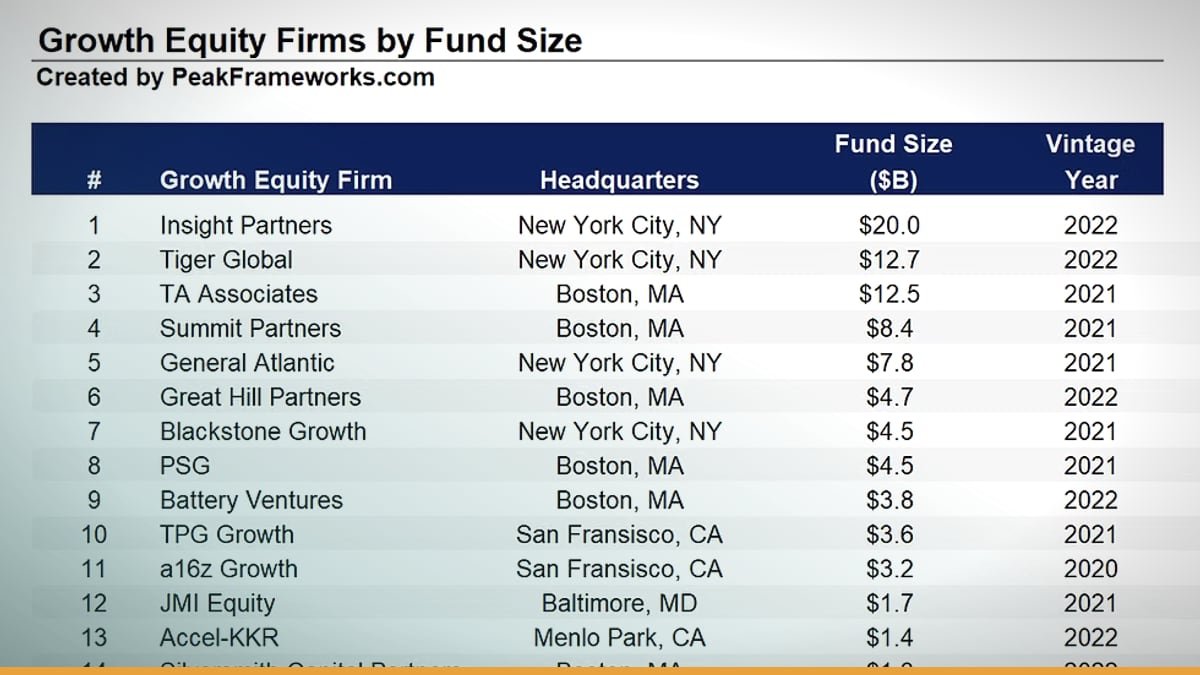
    Header image source: What is Growth Equity? / Growth Equity Interview Guide via Peak Frameworks via Google — cropped to 16:9 and colour-adjusted.

    Key takeaways

    • General Innovation Capital manages $331M for growth-stage deep-tech firms
    • Targets companies at critical inflection points between R&D and mass adoption
    • Focuses on quantum computing and advanced communications for Western tech leadership

    General Innovation Capital has $331M in assets under management. Not venture. Not private equity. Growth equity—meaning it steps in when a deep-tech company has proven the science, cleared the regulatory hurdles, and now needs capital to scale. The firm’s pitch? It invests at the exact moment a technology hits its inflection point: when quantum computing stops being a lab experiment, when advanced communications moves from R&D to deployment, when deep tech shifts from niche to necessity. This isn’t innovation as inspiration. It’s innovation as institutional-grade capital, deployed with precision to reinforce Western technological leadership.

    They target companies at "critical inflection points"—the moment when a technology moves from experimental to essential. That’s not early-stage VC. That’s growth equity, a discipline that sits between the high-risk world of venture and the cash-flow stability of private equity. The distinction matters. General Innovation Capital isn’t betting on ideas. It’s betting on momentum.


    The Inflection Point: Why Timing Is Everything

    The firm’s entire thesis hinges on one idea: breakthrough technologies only scale when they hit an inflection point. This isn’t theoretical. It’s a testable claim, and their strategy is built on spotting these moments before they become obvious.

    For decades, it was a lab curiosity—promising, but commercially irrelevant. Quantum computing has progressed from lab curiosity to commercial relevance. They mark the shift from “will this ever work?” to “how fast can we scale it?” General Innovation Capital’s focus on advanced technology suggests they’re betting on transitions from experimental to commercial viability.

    They’re targeting technologies moving from R&D to deployment. Again, the inflection point is the key. It’s the difference between a prototype and a product with a market.

    This isn’t just about picking winners. It’s about timing. Their growth equity approach avoids the early-stage risk of traditional venture capital. Instead, they look for companies that have cleared technical and regulatory hurdles but haven’t yet achieved mass adoption. This is where institutional clients want to deploy capital: in opportunities that are de-risked but still high-growth.


    The Sectors: Where the Firm Puts Its Money

    Areas include quantum and advanced communications. They’re technologies that align with Western strategic priorities.

    Quantum computing is a national priority. The technology’s applications could redefine entire industries. There is international competition in quantum computing. General Innovation Capital’s focus suggests they see advanced technologies as strategic imperatives.

    Advanced communications focuses on next-generation networks. These are technologies critical for both economic competitiveness and national security. The firm’s interest aligns with trends like the U.S. push to diversify supply chains away from Chinese telecom equipment.

    It refers to hardware or software enabling breakthroughs in other fields. The inclusion of "impact & social enterprise" suggests a focus on technologies with societal benefits.

    They’re betting on technologies that can reshape industries and economies.


    The Institutional Angle: Who Benefits?

    It’s built for institutions that have both the capital and patience for high-growth, high-impact sectors. Their $331M AUM and 2024 SEC registration signal institutional focus.

    Their strategy is designed for institutional clients.

    It suggests they work with institutional partners. By acting as an advisor, they can leverage technical expertise.

    It implies clients are investing in technologies that reinforce Western resilience.S. and allied leadership. This aligns with trends in technology policy.


    The Geopolitical Layer: Why “Western Resilience” Matters

    It reflects a recognition that technological leadership has strategic importance. There is international competition in next-generation technologies. General Innovation Capital’s strategy suggests they see themselves as part of technological advancement.

    The technology has significant implications for security. There are efforts to protect technological advantages. General Innovation Capital’s focus here suggests they’re betting on companies that can help the U.S. maintain its lead—or avoid falling behind.

    There are efforts to reduce reliance on foreign technology. The next frontier of communications will be critical. The firm’s interest implies a belief that the U.S. The firm’s interest implies a belief that Western countries can build competitive technologies.

    Their U.S.-based footprint reinforces this angle. Unlike global VC firms, General Innovation Capital keeps investments close to home. This could reflect a strategy to align with Western policy priorities.

    The question is whether this is defensive or offensive in nature. It will shape technological leadership for decades.


    The Mechanics: How They Operate

    General Innovation Capital’s inflection-point focus sets them apart. They target companies at critical inflection points of growth. This is where identifying inflection points comes into play.

    Quantum computing is progressing through different stages of development. The next inflection point involves more advanced quantum capabilities. This is when technologies move from experimental to commercial. Their strategy suggests they’re betting on companies at inflection points.

    Their focus on both financial returns and Western resilience adds complexity. The brief mentions "impact & social enterprise," but it’s unclear what specific areas this covers. If it’s the latter, their impact metrics might include patents filed, U.S. jobs created, or supply chain diversification—measures aligning with national priorities.

    The inflection-point focus requires active engagement. Their venture-capital advisory model suggests they work with institutional partners.


    What General Innovation Isn’t

    The inflection-point focus demands active engagement. They bet on companies at critical growth moments.

    It’s a structured investment strategy blending financial returns with strategic impact. Their target sectors—quantum, advanced communications, deep tech—are important for technological advancement.


    The Broader Trend: Why This Model Is Here to Stay

    Growth equity is rising, with firms focusing on later-stage, high-growth opportunities. Deep tech is attracting more investment.

    Some firms blend commercial and strategic goals.S. leadership. General Innovation Capital serves institutional clients.

    Some sectors have become priorities for institutional investors. General Innovation Capital’s focus suggests they see opportunities in advanced technology sectors.

    Their $331M AUM is significant.


    The Unanswered Questions

    How do they measure “Western resilience”? Patents filed? Jobs created? Supply chain diversification? Or something more nebulous, like geopolitical influence?

    How do they differentiate from other firms that focus on deep tech?


    The Biggest Question: Can General Innovation Scale?

    The sectors they target have long time horizons. Institutional clients are interested in both strategic narratives and returns.

    It will be a template for how institutional capital deploys in advanced technology.