Blog

  • **General Innovation Capital Partners (GICP): What the Evidence Shows**

    **General Innovation Capital Partners (GICP): What the Evidence Shows**

    Header image source: General Innovation Capital Partners via generalinnovation.com via Google — cropped to 16:9 and colour-adjusted.

    Key takeaways

    • GICP seeks $25-100M checks for quantum and advanced comms with no portfolio or team disclosed
    • Fund I remains unfinished raise with $150M still to collect as of Dec 2025
    • Competes with Quantum Wave Fund, Playground Global, and Lux Capital without track record

    General Innovation Capital Partners wants $25–100 million checks for quantum computing and advanced communications. Right now, it’s a Miami-based firm with $345 million in assets under management and a $150 million Fund I that’s still raising. No portfolio. No disclosed LPs. No proof it can execute.

    That’s the story. Here’s the reality: GICP is betting everything on a thesis that’s compelling but untested. Quantum and advanced comms matter—DARPA’s pouring billions into both, the CHIPS Act exists because supply chains broke, and NATO’s treating tech sovereignty like a national security priority. But GICP isn’t just competing with the future. It’s competing with firms that have already written those checks, closed those exits, and built those brands. And right now, it’s losing.


    Fund Structure: A Work in Progress That Looks Like a Red Flag

    $150 million target. $150 million still to raise as of December 2025. That’s not a fund—it’s a fundraising campaign that hasn’t closed. Most growth equity firms start deploying capital well before they hit their target, especially in sectors where startups burn cash faster than a Falcon 9 rocket. Quantum computing? Advanced communications? These aren’t SaaS companies sitting on AWS credits. They’re hardware plays with multi-year timelines and nine-figure burn rates.

    The structure’s designed for institutions or ultra-high-net-worth investors: $2.5 million minimum. That’s steep. Lux Capital started with $1 million minimums. DCVC dropped theirs to $500,000 to attract a broader base. GICP’s high bar suggests it’s chasing family offices, sovereign wealth funds, or defense-adjacent LPs—yet there’s no public record of who’s actually committed.

    $150 million is a small fund for growth equity. Playground Global closed its first at $300 million. Quantum Wave Fund raised over $500 million. GICP’s size doesn’t just limit its ability to lead rounds—it limits its ability to compete at all.


    Investment Thesis: A Geopolitical Bet with Real Constraints

    GICP’s pitch is straightforward: invest in quantum, advanced communications, and other tech that strengthens Western technological leadership. No portfolio companies disclosed, but the target sectors are clear.

    Quantum computing—likely commercial-stage startups like PsiQuantum, Rigetti, or IonQ. Advanced communications—probably 5G/6G infrastructure, satellite networks, or secure comms for defense. And then there’s that vague but telling phrase: other advanced technology sectors. That’s code for AI hardware, semiconductors, dual-use tech like Anduril or Shield AI.

    The growth equity stage—$25–100 million checks—makes sense. Late-stage deep tech is less risky than seed bets but still offers significant upside if the technology scales. The “Western resilience” angle? That’s the interesting part. It’s not just a thesis. It’s a geopolitical bet. The CHIPS Act, DARPA’s quantum initiatives, export controls on semiconductor equipment—these aren’t policy footnotes. They’re the foundation of a world where Western-aligned tech is a strategic asset. GICP is positioning itself as the capital partner for that shift.

    But this focus creates real risks. Limited deal flow: many cutting-edge quantum and comms startups are global—Riverlane in the UK, Xanadu in Canada. GICP’s framing may exclude them. Regulatory hurdles: export controls on quantum, semiconductors, AI could complicate exits or follow-on funding. Defense dependency: if GICP leans into dual-use tech, it’s looking at long sales cycles, classified contracts, CFIUS reviews.


    Competitive Landscape: Why GICP Struggles to Stand Out

    GICP isn’t the only firm chasing deep-tech growth equity. The space is crowded, and GICP’s lack of track record makes differentiation nearly impossible.

    Quantum-specific funds? Quantum Wave Fund raised over $500 million and backed PsiQuantum, Rigetti, IonQ. Playground Global closed at $800 million, invested in PsiQuantum, Varda Space, Anduril. Samsung Catalyst Fund’s in quantum sensing and cryptography. GICP’s disadvantage? No disclosed quantum investments. Quantum Wave and Playground have already backed the most promising startups, leaving GICP to fight for scraps or bet on dark horses.

    Generalist deep-tech growth equity? Lux Capital manages over $1.5 billion, backed Anduril, Shield AI, Recursion Pharmaceuticals. DCVC’s over $1 billion, invested in PsiQuantum, Relativity Space, synthetic biology. Eclipse Ventures has $3 billion focused on industrial tech and hardware. GICP’s disadvantage? No portfolio, no exits, no brand recognition. Lux and DCVC have high-profile wins—Anduril’s $8.5 billion valuation—while GICP’s still raising Fund I.

    Defense and dual-use tech? Andreessen Horowitz’s American Dynamism fund has over $1 billion, backed Anduril, Shield AI, Palantir. Shield Capital raised $500 million focused on defense tech and AI. 8VC manages over $2 billion, invested in Anduril, Palantir, space startups. GICP’s disadvantage? No defense track record. Andreessen and Shield Capital have direct ties to the Pentagon and intelligence community. GICP’s team remains a mystery.

    GICP’s only clear advantages? Miami’s lower taxes, growing tech scene, proximity to Latin American markets. Discretionary advisory services that could attract family offices or niche institutional investors. But these aren’t enough to overcome the lack of track record, small fund size, unfinished raise.


    LP Risks: Why Investors Should Be Wary

    GICP’s Fund I is a high-risk proposition. Here’s why.

    Fund I is still raising capital. $150 million remaining to raise means GICP’s deployed little to no capital. Slow LP uptake suggests skepticism from institutional investors. The $2.5 million minimum excludes smaller institutions and high-net-worth individuals, limiting the LP base.

    No performance data. No IRR, MOIC, or portfolio exits disclosed. No track record in public filings or press releases. No proof the team can source, diligence, or scale deep-tech companies.

    Sector concentration risk. Quantum computing is still pre-revenue. Most quantum startups are years away from commercialization—and many may never get there. Advanced communications is crowded—Sequoia, Bessemer, Lightspeed are already active in 5G, 6G, satellite networks. “Western resilience” could limit deal flow. If GICP avoids China, India, or other non-aligned markets, it may miss out on global innovation.

    Geopolitical exposure. Export controls—U.S. CHIPS Act restrictions—could complicate exits or follow-on funding. Defense contracts often come with long sales cycles and classified restrictions. CFIUS reviews could block strategic acquisitions by foreign buyers.


    Team and Leadership: The Biggest Unknown

    Here’s the most concerning part: there’s no public information about who’s running GICP.

    No executive team listed on the website, Crunchbase, or filings. The registered agent is CT Corporation System—a common service for private funds, but no named partners. No visible track record. Unlike Lux’s Josh Wolfe or DCVC’s Peter Hébert, GICP’s team is invisible.

    This isn’t just a transparency issue. It’s a governance risk. Who’s making investment decisions? Do they have experience in quantum, advanced communications, defense tech? Are they former operators, investors, government officials?

    Possible explanations: Solo GP or small team—many early-stage funds start this way, but it’s high-risk for LPs. Stealth mode—maybe the team has classified backgrounds (DARPA, NSA, DoD), but if so, why not disclose it? First-time fund—if this is the team’s first institutional fund, LPs have no way to assess their ability to scale.


    Deal Flow and Sourcing: Can GICP Compete?

    GICP’s biggest challenge is getting access to the best deals. Growth equity in deep tech is winner-takes-most. The top firms—Lux, DCVC, Playground—have proprietary networks, scout programs, repeat founders.

    Potential sourcing advantages: Miami’s growing tech scene—proximity to eMerge Americas, Blackstone’s tech push, Latin American investors. Defense/dual-use networks—if the team has DARPA, DoD, or intelligence community ties, they could source classified or export-controlled deals. “Western resilience” narrative—could attract patriotic LPs or defense contractors looking to align with U.S. tech sovereignty.

    Sourcing risks: No evidence of proprietary deal flow. Unlike Sequoia’s scout program or Andreessen’s founder network, GICP hasn’t disclosed any unique sourcing channels. Late-stage growth equity is competitive—GICP will compete with private equity firms, strategics like Cisco or IBM, crossover funds like Tiger Global. Small fund size limits influence—$25–100 million checks are meaningful, but Lux and DCVC can write $200 million-plus checks, giving them more leverage in competitive rounds.


    Exit Strategy: How Will GICP Return Capital?

    GICP’s exit strategy is the biggest unknown. Deep tech investments often have long hold periods—10-plus years. Quantum computing is still years away from widespread commercialization.

    Potential exit paths: Strategic acquisitions—IBM, Google, defense primes like Lockheed or Raytheon could buy quantum or advanced comms startups. Public listings—unlikely near-term, given quantum’s pre-revenue stage and market volatility. Secondary sales—larger PE firms or sovereign wealth funds could buy stakes from GICP.

    Exit risks: Liquidity crunch—if Fund I hasn’t deployed capital by 2027–2028, LPs may demand distributions. No follow-on funds—if LPs are dissatisfied with performance, GICP may struggle to raise Fund II. Regulatory hurdles—CFIUS reviews or export controls could block exits.


    Verdict: Is GICP a Smart Bet for LPs?

    GICP is a high-risk, high-reward bet. It could pay off if the team executes flawlessly, but it could also struggle to differentiate itself in a crowded market.

    The bull case: Early mover in quantum and advanced comms—if GICP backs the next PsiQuantum or Anduril, returns could be outsized. Miami’s tax advantages—could attract Latin American or U.S. high-net-worth capital. “Western resilience” narrative—appeals to patriotic or defense-focused LPs.

    The bear case: No track record, no team visibility, no portfolio—effectively a blind pool. Fund I still raising capital—suggests LP skepticism. Small fund size—$150 million limits ability to lead rounds or compete with larger firms.

    Who should invest? Deep-tech specialists willing to bet on quantum’s long-term potential. Defense or dual-use LPs aligned with the “Western resilience” thesis. Miami-based investors seeking local exposure.

    Who should avoid? Risk-averse institutions—no performance data, high sector risk. Generalist LPs—better options exist in AI, biotech, fintech. Retail investors—$2.5 million minimum excludes most individuals.


    The Real Question

    GICP isn’t just a fund. It’s a test. Can a new player break into deep-tech growth equity without a track record, without a visible team, without a closed fund? The thesis is strong—quantum matters, advanced communications matter, Western tech sovereignty matters. But theses don’t write checks. Teams do.

    Right now, GICP’s team is a black box. And in venture capital, black boxes don’t return capital. They lose it.

    So here’s the question LPs need to answer: Is “Western resilience” a compelling enough narrative to bet on a firm that hasn’t proven it can execute? Because right now, the only resilience GICP’s demonstrating is its ability to keep fundraising while saying almost nothing.



  • **General Innovation Capital Partners?: The Data, the Strategy, and the Unanswered Questions**

    **General Innovation Capital Partners?: The Data, the Strategy, and the Unanswered Questions**

    Header image source: General Innovation Capital Partners via generalinnovation.com via Google — cropped to 16:9 and colour-adjusted.

    Key takeaways

    • GICP lacks public performance metrics and founder advocacy
    • Growth equity market demands more transparency from firms
    • Founders face risk investing with unproven funds

    General Innovation Capital Partners. Growth equity firm. Advanced technology companies. That’s the pitch. Dig deeper and the public record thins to nothing. For a firm positioning itself as an innovation capital partner, this isn’t just thin. It’s a black box.


    The Growth Equity Playbook: Where GICP Fits—And Where It Doesn’t

    Growth equity sits in the middle. Too late for seed VCs. Too early for private equity. Crowded space. Insight Partners. TCV. Summit Partners. Stripes. Bessemer’s growth teams. All of them have spent years building brand equity, founder networks, operational playbooks.

    GICP’s differentiator? Doesn’t have one. At least, not one it’s willing to share. GICP? Nothing. No public thesis. No documented value-add. No portfolio storytelling. Not just a missed opportunity. A red flag in a market where founders and LPs demand more than capital.

    Context matters. LPs pulled back from illiquid assets. But top-quartile funds still raised capital. They leaned on track records, brand, niche expertise. Maybe a single big exit. Maybe a vintage year effect. Median performance isn’t a selling point.


    The Performance Paradox: Rankings Without Returns

    Not the whole story. But without knowing the benchmark—S&P 500, Nasdaq, peer group of growth funds—it’s hard to contextualize. More importantly, rankings don’t tell you how a fund achieved performance. One home-run exit? Portfolio of steady growers? Capital preservation in a down market?

    GICP offers none of the usual metrics:

    • IRR (Internal Rate of Return): Standard measure of fund performance. Time value of money.
    • MOIC (Multiple on Invested Capital): Raw measure of returns. Dollars returned per dollar invested.
    • DPI (Distributions to Paid-In Capital): Actual cash returned to LPs, net of fees.
    • Portfolio Exits: IPOs, acquisitions, secondary sales. Validates the strategy.

    Without these, the rankings feel like participation trophies. Exactly what you’d expect if 2022 was luck, not skill.

    Another possibility: GICP is a younger fund, still building its track record. But even then, the lack of transparency is a problem. LPs scrutinizing every dollar. Founders choosing investors based on more than valuation. Flying under the radar isn’t a strategy. It’s a liability.


    The Strategy Black Box: What "Advanced Technology" Really Means

    Advanced technology is almost meaningless. Problem. Growth equity thrives on specialization. Built a reputation for scaling SaaS companies.

    1. Generalist fund with a tech label. Aligns with mid-market check sizes and New York base. Capital for scaling companies. No deeper expertise. Fine. Not a differentiator.
    2. Stealth specialist. Maybe GICP has a niche—AI infrastructure, vertical SaaS, climate tech—but isn’t ready to disclose. Risky bet for founders and LPs. Investing based on faith, not data.
    • Typical entry point for $25–100M growth checks.
    • Post-2022 market shift may have pushed GICP to prioritize profitability over blitzscaling.
    • Clear path to break-even. Tighter capital markets.

    Educated guesses. Without portfolio examples or case studies, we’re left with a blank canvas. Founders increasingly choosy about investors. Blank canvas isn’t a selling point.


    The LP Perspective: Why Invest In GICP?

    On one hand:

    • Exposure to scaling companies beyond seed stage but not yet ready for private equity.

    Accessible to family offices or endowments that can’t meet minimums elsewhere.

    • Could be luck, not alpha.

    On the other hand, risks and unknowns are substantial:

    • LPs demanding more data. GICP offering less.

    The Founder’s Dilemma: Should You Take GICP’s Money?

    Different calculus for founders. Less immediate pressure for an IPO or acquisition.

    Downsides are real:

    • Founders taking GICP’s money are betting on capital alone.
    • Founders who take money from unknown or unproven funds face skepticism from later-stage investors.

    Biggest red flag? In growth equity, founder advocacy is table stakes. GICP has none. Suggests either (a) founders aren’t willing to vouch for the firm, or (b) GICP hasn’t asked. Neither is a good look.

    Another concern: Industry where visibility is currency. GICP’s absence from the conversation is striking. Flying under the radar by choice? Or simply not on anyone’s radar?


    The Competitive Blind Spot: GICP Vs. Peers

    |———————-|————————–|————————|————————-|————————-|

    GICP has none of these. Doesn’t mean it’s a bad fund. Could be a diamond in the rough. Means founders and LPs are flying blind.


    The Unanswered Questions: What We Still Don’t Know

    GICP’s public record leaves more questions than answers. Here’s what we still don’t know—and what it would take to answer them:

    1. Performance Metrics:
    • What is GICP’s IRR and MOIC for its funds?
    • How many portfolio companies have exited, and at what multiples?
    • What is the fund’s DPI (distributions to paid-in capital)?
    1. Investment Thesis:
    • What specific sub-sectors—AI, cybersecurity, enterprise SaaS—does GICP target?
    • Stage preferences—Series B vs. pre-IPO?
    • Revenue and growth thresholds for investments?
    1. Value-Add:
    • Does GICP provide operational support, or is it a passive capital provider?
    • Who are the key partners, and what are their backgrounds?
    • Dedicated teams for go-to-market, talent, customer acquisition?
    1. Fundraising:
    • How many funds has GICP raised, and what are their vintage years?
    • Who are the LPs—endowments, family offices, corporates?
    • Fund’s target return profile—3x net MOIC, 25%+ IRR?
    1. Portfolio:
    • What companies has GICP invested in?
    • Any founder testimonials or case studies?
    • Sectors and stages most represented in the portfolio?

    Until GICP opens its books, these questions stay unanswered. Market where data is king. That’s a problem.


    The Verdict: Is GICP A True Innovation Capital Partner?

    Weigh the evidence.

    The Case For:

    • Could be luck.
    • Less pressure for immediate exit.

    The Case Against:

    • Red flags for LPs and founders.
    • Suggests limited founder satisfaction.

    I think… Most likely? A bit of all three.

    Not inherently bad. A risk.

    Market where transparency is increasingly table stakes. Until then, it remains an enigma in a crowded field. One that founders and LPs should approach with caution. And one that raises a final question: In a market where data is everything, why is GICP still hiding?


  • Who Are General Partners in VC?: Roles, Risks, and Realities

    Who Are General Partners in VC?: Roles, Risks, and Realities

    Header image: Nordhaus, Raines, adjutants general visit National Guard Baltic partners (9734229).jpg) by U.S. Army National Guard photo by Master Sgt. Zach Sheely, Public domain, via Wikimedia Commons — cropped to 16:9 and colour-adjusted.

    Key takeaways

    • GPs carry unlimited personal liability for fund debts and legal issues
    • They make final investment decisions and manage LP relations
    • Becoming a GP requires either founding a firm or climbing the partner ladder

    General partners in venture capital sign the checks. They also sign the legal documents that put their personal assets on the line if the fund implodes. They make the final call on deals, shape the fund’s terms, and answer to institutional investors when returns disappoint. Unlike limited partners, who write checks and step back, or venture partners, who advise but don’t vote, GPs say “yes” or “no” to every investment. They structure the fund’s economics. They carry unlimited liability. If VC firms feel like black boxes, it’s because GPs control the capital, the narrative, and the risk.

    That’s the straightforward answer. The reality is messier. The GP title carries weight, but it also comes with power imbalances, deal attribution battles, and relentless pressure to deliver returns—not excuses—to pension funds and insurers.


    The Legal and Financial Stakes: Why Unlimited Liability Isn’t Just Fine Print

    Most founders—and even some junior VCs—miss this: GPs are personally on the hook for the fund’s debts and legal troubles. If a portfolio company gets sued for IP infringement and the fund’s insurance doesn’t cover it, the GP’s personal assets could be at risk. This isn’t hypothetical. It’s baked into the legal structure of every VC fund.

    Limited partners—pension funds, endowments, insurers—love this setup. Their liability is capped at their investment. If the fund loses money, they lose only what they put in. GPs, by contrast, face unlimited liability. That’s why you’ll rarely see a GP without deep pockets, a robust legal team, or both.

    This asymmetry shapes everything. It influences how GPs structure deals, favoring safer terms like liquidation preferences. It affects how they report to LPs—transparency has limits when personal risk is involved. It even dictates how they exit investments—a quick sale might look better than a high-risk, high-reward IPO. The legal exposure isn’t a footnote. It’s the foundation of the GP’s decision-making.


    The GP’s Day-to-Day: More Than Just Taking Meetings

    The job description involves managing the fund. In practice, it means juggling half a dozen roles, often in the same day.

    Fund Creation and Structure

    Before a single dollar is invested, GPs dive into legal documents. They negotiate the fund’s terms—management fees, carried interest, and key-person clauses. They draft the limited partnership agreement (LPA), which dictates everything from investment strategy to LP reporting requirements. This isn’t glamorous work, but it’s critical. A poorly drafted LPA can lead to disputes with LPs, regulatory headaches, or even lawsuits.

    Deal Flow and Investment Decisions

    GPs are the final gatekeepers for investments, but they don’t work alone. Junior team members source deals, conduct due diligence, and present opportunities. The GP’s job is to pressure-test the thesis: Is this founder credible? Does the market timing make sense? Can this company realistically return the fund? They negotiate terms—valuation, board seats, protective provisions—and often take a board seat themselves.

    This is where the “hands-on” part kicks in. Unlike venture partners, who might drop by for quarterly updates, GPs are often deeply involved in strategic decisions. They help hire executives, pivot business models, and raise follow-on funding. GPs at top firms often spend significant time embedded with portfolio companies during crises.

    Fund Operations and LP Management

    GPs don’t just invest. They manage the fund’s operations. That includes:

    • Cash flow management: Ensuring the fund has enough capital to deploy and meet commitments.
    • LP reporting: Providing quarterly updates on portfolio performance, fund health, and material risks.
    • Compliance: Navigating regulatory requirements—SEC filings in the U.S., AIFMD in Europe.
    • Fundraising: Raising the next fund, typically 18–24 months after the current one closes.

    This last part—fundraising—is where GPs earn their reputation. Institutional LPs—pension funds, endowments—don’t just hand over capital. They demand proof of past performance, a clear investment thesis, and alignment of interests. A GP who can’t raise the next fund is a GP who’s out of a job.


    The Power Dynamic: GPs vs. Everyone Else

    The GP role doesn’t exist in a vacuum. It’s part of a hierarchy, and the dynamics within a VC firm can be as fraught as those between the firm and its portfolio companies.

    Venture Partners: The Advisors Without Skin in the Game

    Venture partners are the “strategic advisors” of VC. They might have a track record—ex-founders, ex-operators—or deep expertise in a sector like AI or biotech. But they don’t have voting rights on investments. They don’t carry liability. And they don’t always have a formal role in the firm’s operations.

    This creates tension. A venture partner might bring in a deal, only to see a GP take credit. Or they might push for an investment, only to be overruled without explanation. The lack of accountability cuts both ways: venture partners can offer valuable insights, but they’re also expendable. If they don’t deliver, the firm can quietly move on.

    Junior Team Members: The Grinders Without Credit

    The most contentious dynamic in VC is between GPs and the junior team members who do the legwork. Associates and principals source deals, conduct due diligence, and build financial models—but they rarely get credit for the investments that succeed.

    Some industry observers have been vocal about this. *, he writes:

    This isn’t just a morale issue. It’s structural. GPs control the narrative with LPs, the media, and the broader ecosystem. Junior team members are left to prove themselves elsewhere if they want to advance. The result? High turnover at the associate and principal levels, as ambitious investors jump to other firms or start their own funds.


    Raising Capital: The GP’s Real Job

    At the end of the day, a GP’s most important job isn’t picking winners. It’s convincing LPs to trust them with their money. And the LPs who matter most aren’t wealthy individuals or family offices. They’re institutional investors: pension funds (CalPERS, CPP Investments), insurers (Prudential, Allianz), endowments (Harvard, Yale), and sovereign wealth funds (Singapore’s Temasek, Norway’s NBIM).

    These LPs don’t just write checks. They demand:

    • Transparency: Detailed reporting on fund performance, fees, and risks.
    • Alignment: Management fees that don’t incentivize reckless behavior.
    • Co-investment rights: The ability to invest directly in portfolio companies alongside the fund.
    • ESG mandates: Proof that the fund isn’t investing in fossil fuels or controversial tech.

    GPs must balance these demands with their own investment strategy. A pension fund might want steady returns, but VC is inherently risky. An endowment might push for ESG compliance, but the best deals might not fit the criteria. The tension is constant: GPs need LP capital to deploy, but they also need the freedom to take bets LPs might not fully understand.


    How Do You Become a GP? (Spoiler: It’s Hard)

    There’s no single path to becoming a GP, but two tracks dominate.

    The Founder Track

    Many GPs are ex-founders who’ve built and sold companies. Their value isn’t just in their capital—it’s in their network, operational experience, and credibility with other founders. Examples:

    • Marc Andreessen (Netscape → a16z)
    • Ben Horowitz (Opsware → a16z)
    • Peter Thiel (PayPal → Founders Fund)

    These GPs often start their own firms, leveraging their track record to attract LPs. The advantage? They can raise capital quickly. The downside? They’re unproven as investors. Founding a company is hard. Picking winners is harder.

    The Senior Firm Track

    The more common path is rising through the ranks at an established firm. Associates become principals, principals become partners, and—if they’re lucky—partners become GPs. This path is slower, more political, and far less certain.

    The catch? GP roles are rare. Most VCs never reach this level. The industry is top-heavy: a few prominent firms control a disproportionate share of capital. Even at smaller firms, the GP title is often reserved for the founding partners. Everyone else is a “partner” or “principal”—titles that sound impressive but don’t carry the same authority or liability.


    The Criticism: GPs and the Deal Attribution Problem

    The most persistent criticism of GPs isn’t about their investment decisions. It’s about who gets credit for them. As Jason Lemkin puts it:

    “The GP didn’t source the deal.

    This isn’t just about ego. It’s about incentives. If junior team members know they won’t get credit for deals they source, why should they go the extra mile? Why should they stick around if they’re doing the work but not reaping the rewards?

    Some firms have tried to address this. Some firms have programs that reward individuals who bring in deals. Some firms offer profit-sharing arrangements to junior team members. But these are exceptions. The default is still: the GP’s name goes on the deal, and the GP’s bank account gets the carry.


    GPs in the Broader Ecosystem: Private Equity vs. Venture Capital

    The GP role isn’t unique to VC. Private equity funds also have GPs, and the legal and operational responsibilities are nearly identical. Both:

    • Carry unlimited liability.
    • Raise capital from institutional LPs.
    • Deploy that capital into companies.
    • Take board seats and influence strategy.

    The key difference is the stage of the companies they invest in. VC GPs target early-stage startups—pre-revenue, pre-profit, often pre-product. PE GPs target mature companies—established revenue, predictable cash flows, and a clear path to exit.

    This difference shapes everything:

    • Risk profile: VC is higher risk, higher reward. PE is lower risk, lower reward—but still lucrative.
    • Time horizon: VC funds typically have 10-year lives. PE funds often hold companies for 3–7 years.
    • Operational involvement: VC GPs are more hands-on with product and hiring. PE GPs focus on financial engineering, cost-cutting, and bolt-on acquisitions.

    But the legal structure is the same. Whether investing in a Series A startup or a leveraged buyout of a manufacturing company, the GP is the one on the hook.


    The Future of the GP Role: Will the Model Hold?

    The traditional GP model is under pressure. LPs demand more transparency, more alignment, and more co-investment rights. Founders push back against terms they see as unfair—liquidation preferences, board control. Junior team members are increasingly vocal about the lack of credit and career progression.

    Some firms are experimenting with new structures:

    • GP committees: Distributing decision-making authority among a group of partners, rather than concentrating it in a single GP.
    • Flat hierarchies: Firms like First Round Capital have eschewed traditional titles, opting for a more egalitarian approach.
    • Evergreen funds: Instead of raising discrete funds every few years, some firms adopt open-ended structures—Berkshire Hathaway is the extreme example.

    But these are outliers. Most VC funds still operate under the traditional GP-LP model. The question isn’t whether the GP role will change. It’s whether the changes will come from within the industry or be forced by external pressures. Will LPs demand more transparency? Will founders reject terms that favor GPs over them? Will junior team members unionize?

    The GP role isn’t going away. It’s too deeply embedded in the legal and financial structure of venture capital. But the power dynamics, the incentives, and the expectations are all in flux. The next decade will determine whether GPs remain the undisputed kings of VC—or whether the model evolves into something more collaborative, more transparent, and less hierarchical. The only certainty? The tension between control and credit, between risk and reward, isn’t going anywhere.


  • **What Do Capital Partners Do?: A Data-Driven Breakdown of Their Role, Value, and Impact**

    **What Do Capital Partners Do?: A Data-Driven Breakdown of Their Role, Value, and Impact**

    Header image: Energy Capital Partners by Energy Capital Partners, Public domain, via Wikimedia Commons — cropped to 16:9 and colour-adjusted.

    Key takeaways

    • Capital partners provide strategic and operational support alongside funding
    • They focus on control transactions like buyouts and roll-ups
    • Alignment on strategy and sector expertise is critical for success

    Capital partners do one thing better than anyone else: they combine cash with capability. Not passive investors who vanish after wiring funds. Not lenders obsessed with repayment schedules. Capital partners step into control transactions—recapitalizations, buyouts, growth equity deals—and then they provide strategic and operational support. The money is table stakes. What comes next is the real value: strategy, sector expertise, operational grunt work. They don’t just fund growth. They accelerate it by aligning capital with deep industry knowledge. And when it goes wrong? They become friction, misalignment, or worse—stagnation.

    Here’s the hard truth: capital partners invest in control. Founder-led recaps, management buyouts, industry roll-ups, growth equity—these aren’t minority stakes. They’re majority positions, board seats, veto rights. They target specific sectors—government, engineering, lower middle-market companies—and maintain long-term partnerships. Some embed themselves in strategy and operations. Others stay in the background, providing oversight while letting management lead. The best ones don’t just write checks. They rewrite companies.


    The Spectrum: From Silent Financiers to Co-CEOs

    Capital partners aren’t a monolith. They span a spectrum, from firms that act like silent financiers to those that behave like co-CEOs.

    At one end, you’ve got hands-on capital partners. Some capital partners describe themselves as operationally focused private equity firms. They don’t just invest in lower middle-market companies—they lead control-oriented deals, place principals on boards, and drive operational improvements. These firms don’t just fund growth. They engineer it.

    At the other end, hands-off capital partners. Some capital partners take a hands-off approach, offering capital while letting management run the show. The choice isn’t just about preference. It’s about fit. A founder who wants liquidity but retains control might prefer a hands-off partner. A scaling company in a fragmented industry might need a hands-on firm to execute a roll-up.

    The transaction types tell the story:

    • Founder-led recapitalizations: Liquidity for founders while retaining equity. Think a founder selling 60% but keeping 40% and operational control.
    • Growth equity investments: Capital for expansion without a full ownership change. Funding a new product line or geographic market.
    • Industry roll-ups: Consolidating fragmented sectors. Buying multiple small engineering firms to create a regional powerhouse.
    • Management buyouts: Enabling leadership teams to acquire ownership. A CEO and CFO buying out a retiring founder.

    Some capital partners focus on these control transactions. Their role isn’t just funding—it’s shaping trajectory.


    Beyond the Checkbook: How Capital Partners Actually Drive Growth

    The pitch from capital partners emphasizes both capital and expertise. It’s "we have money and the expertise to deploy it. " The difference is everything.

    A traditional lender might fund a new factory. A capital partner might fund the factory and optimize its supply chain, negotiate better supplier terms, or identify acquisition targets to expand capacity. The data backs this up. The right capital partner accelerates business growth—not just because of the funding, but because of the strategic and operational support that comes with it.

    This isn’t theoretical. Some capital partners specializing in government and engineering have principals with extensive experience from prior firms. Their value isn’t just capital—it’s domain expertise. Some capital partners position themselves as operationally focused. That means they don’t just advise. They execute.

    Consider the implications:

    • A growth equity investment might fund a new product line. A capital partner could also refine the go-to-market strategy, identify key hires, or structure the rollout for maximum impact.
    • A recapitalization might provide liquidity for a founder. A capital partner could also help diversify the founder’s wealth, plan for succession, or identify acquisition targets to grow the business post-transaction.
    • An industry roll-up might consolidate a fragmented market. A capital partner could also streamline operations across acquired companies, improve margins, and create a scalable platform.

    This isn’t financial engineering. It’s operational engineering—using capital as a tool to drive efficiency, scalability, and long-term value.


    Who Needs a Capital Partner? Matching Firms to Business Needs

    Capital partners aren’t a one-size-fits-all solution. Their value depends on the size, stage, and industry of the company seeking funding.

    Capital partners vary based on company size, needs, and industry. The brief provides concrete examples: Middle-market companies are common targets. Too large for venture capital, too small or complex for traditional bank financing. They need capital for growth, acquisitions, or ownership transitions—and often need strategic support to execute. Lower middle-market companies may lack infrastructure or scale to attract larger private equity firms. These companies often need operational guidance—help with financial reporting, sales strategy, or scaling efficiently.

    • Larger enterprises might seek capital partners for industry roll-ups or management buyouts. These transactions require deep sector expertise and the ability to structure complex deals.

    Industry matters. Some capital partners focusing on government and engineering bring sector-specific insights—understanding regulatory hurdles, procurement cycles, or engineering workflows that generalist investors might miss. Some capital partners support mission-driven organizations improving access to quality services. Their value lies in aligning capital with social impact.

    The transaction type dictates the need:

    • Founders seeking liquidity might opt for a recapitalization, selling a majority stake while retaining operational control and a minority equity position.
    • Management teams looking to take ownership might pursue a buyout, using a capital partner’s funding to acquire the company from retiring founders.
    • Scaling businesses might seek growth equity, using capital to expand into new markets or launch new products without ceding control.

    The Cost of Getting It Wrong: Why Fit Matters More Than Funding

    Choosing a capital partner isn’t like picking a bank. It’s like choosing a co-founder—except this co-founder has the power to shape (or derail) your company’s future. Finding the right capital partner is about more than funding—it’s about fit. Get it wrong, and the consequences range from operational friction to outright failure.

    The risks fall into three categories:

    1. Misalignment on strategy: A hands-on capital partner might push for rapid growth, while a founder prioritizes stability. A hands-off partner might leave a scaling company without the operational support it needs. The focus on control transactions suggests that alignment on long-term goals is critical. If a firm is looking for a 3–5 year exit and a founder wants to build a generational business, conflict is inevitable.
    2. Cultural clashes: Some capital partners demand aggressive growth targets. Others prioritize steady, sustainable expansion. An operationally focused model implies a hands-on approach—great for companies that need help, challenging for those that don’t.
    3. Sector inexperience: A generalist firm might bring capital, but it won’t bring the industry-specific insights that DCCP or Capital Impact Partners offer. For a government contractor, this could mean missing regulatory opportunities. For a healthcare provider, it could mean failing to navigate reimbursement models.

    The wrong partner can hinder growth, while the right one accelerates it. Securing a capital partner can accelerate business growth if the right one is chosen—implying the inverse is also true. The stakes are high. The margin for error is slim.


    Inside the Investment Process: How Capital Partners Operate

    Capital partners don’t wait for deals to come to them. Many actively seek high-potential investments, leveraging networks, intermediaries, and integrated platforms. Some capital partners use integrated platforms to streamline their investment process, suggesting a proactive, efficiency-driven approach.

    The investment process is rigorous, particularly for control transactions. These deals require deep due diligence across financial, legal, and operational dimensions. The focus on control transactions implies a structured, analytical approach—valuing companies not just on current performance but on growth potential, scalability, and alignment with expertise.

    Sector specialization plays a role. A focus on government and engineering means due diligence isn’t generic. A firm evaluating a government contractor might dig into contract backlogs, compliance risks, or procurement timelines. A generalist investor might miss those details entirely.

    Post-investment, the role varies: Hands-on firms may place principals on boards, advise on strategy, or drive operational improvements. They might help restructure supply chains, optimize pricing models, or identify acquisition targets.

    • Hands-off firms may limit their involvement to financial oversight, quarterly reviews, or high-level strategy sessions. Their value lies in the capital and the credibility it brings, not in day-to-day execution.

    The key takeaway? The investment process doesn’t end at the check. For many capital partners, it’s just the beginning.


    The Broader Ecosystem: Where Capital Partners Fit in the Investment Landscape

    Capital partners don’t exist in a vacuum. They operate within a broader ecosystem of investors, lenders, and strategic partners. Understanding where they fit—and how they differ—is critical for companies evaluating options.

    At the highest level, capital partners are a subset of private equity, but with a narrower focus. Traditional private equity firms might invest across industries, stages, and transaction types. Capital partners often specialize. Some capital partners focus on government and engineering. Some capital partners target lower middle-market companies. This specialization allows deeper expertise—but limits their addressable market.

    Other models in the ecosystem: Impact-focused capital partners align capital with social or environmental goals. Their value isn’t just financial—it’s in measuring and delivering impact alongside returns. Sector-specific capital partners bring deep industry knowledge. For a government contractor, this might mean help navigating procurement cycles. For an engineering firm, it might mean optimizing project management. Lower middle-market capital partners focus on smaller, operationally intensive companies. Their value lies in hands-on support—helping companies scale, professionalize, or prepare for exit.

    How do capital partners differ from other investors?

    • Venture capital: Focuses on early-stage, high-risk companies with minority stakes. Capital partners often take control positions in more mature companies.
    • Debt financing: Provides loans with no ownership stake. Capital partners provide equity—and often, strategic support.
    • Strategic buyers (corporate M&A): Acquire companies for synergies or market share. Capital partners invest for financial returns and operational value creation.

    The key distinction? Capital partners blend financial returns with strategic or operational support, making them a hybrid between passive investors and active owners.


    The Future of Capital Partnerships: Trends and Evolving Models

    The capital partner space isn’t static. It’s evolving in response to market demands, technological advancements, and shifting founder expectations. The trends shaping the future offer a glimpse into where the space is headed—and what it means for companies seeking capital.

    1. Sector-specific specialization is deepening

    Some capital partners are doubling down on sector-specific niches. Generalist firms struggle to compete with the deep expertise specialists bring. For companies in fragmented or complex industries, this means more options—and higher expectations for sector-specific insights.

    1. Operational focus is becoming the norm

    An operationally focused model isn’t unique—it’s becoming a blueprint. More firms are moving beyond financial engineering to drive value through operational improvements, whether that means optimizing supply chains, improving sales processes, or professionalizing back-office functions. This shift is particularly relevant for lower middle-market companies, which often lack the infrastructure to scale efficiently.

    1. Long-term partnerships are replacing short-term flips

    Some capital partners serve clients for over two decades, suggesting they are evolving into permanent growth allies rather than temporary investors. This aligns with a broader trend in private equity toward longer hold periods and operational value creation. But it’s even more pronounced in the capital partner space, where alignment with founders and management teams is critical.

    1. Technology is streamlining the investment process

    The use of integrated platforms hints at a broader shift toward efficiency and scalability. Firms are leveraging technology to streamline deal sourcing, due diligence, and portfolio management. For companies seeking funding, this means shorter timelines and more competitive processes—but also higher expectations for data-driven decision-making.

    The implications are clear: capital partners are becoming more specialized, more operational, and more aligned with long-term growth. For companies, this means more options—but also more complexity in choosing the right partner.


    How to Choose the Right Capital Partner: A Decision Framework

    Selecting a capital partner isn’t just about who offers the best terms. It’s about alignment—on strategy, culture, and long-term vision. The wrong choice can lead to friction, stagnation, or failure. The right choice can accelerate growth, unlock new opportunities, and reshape a company’s trajectory.

    Here’s how to evaluate potential partners:

    Step 1: Define Your Needs

    Start with two questions:

    • What do you need capital for? Growth, liquidity, acquisitions, or operational improvements?
    • How much involvement do you want? Hands-on support or hands-off funding?

    The right partner depends on your goals. A founder seeking liquidity might prioritize a recapitalization with a hands-off firm. A scaling company might need a hands-on partner to execute a roll-up.

    Step 2: Assess Sector Expertise

    Not all capital partners are created equal. Some specialize in government and engineering. Others focus on mission-driven sectors. Ask:

    • Does the firm have experience in your industry?
    • Have they closed similar deals (recapitalizations, roll-ups, buyouts)?

    A focus on lower middle-market companies suggests that firms often specialize not just by industry but by company size and stage. A $50M revenue company might not fit a firm targeting $500M+ enterprises.

    Step 3: Evaluate Cultural Fit

    Cultural fit isn’t just about vibes. It’s about alignment on values, growth expectations, and decision-making. Consider:

    • Does the firm prioritize rapid growth or sustainable scaling?
    • Are they hands-on or hands-off? (And does that match your preference?)
    • How do they handle conflicts? Board seats, veto rights, exit timing.

    Fit matters more than funding. A firm pushing for aggressive growth might clash with a founder valuing stability—and vice versa.

    Step 4: Understand Their Model

    Capital partners vary in investment structures, control levels, and exit expectations. Ask:

    • Will they take a control position or a minority stake?
    • Do they require a board seat or other governance rights?
    • What’s their typical hold period? 3–5 years? 5–10 years? Longer?

    A focus on control transactions implies a model where the firm takes an active role in shaping the company’s future. If you’re not comfortable ceding that level of control, a different partner might fit better.

    Step 5: Check Their Track Record

    Past performance isn’t everything, but it’s critical. Look for:

    • **How long have they worked with clients? Some capital partners’ 20+ years suggests deep, ongoing relationships.
    • **Do their principals have relevant experience? Team backgrounds in government/engineering imply sector-specific insights.
    • What’s their exit history? Have they successfully sold portfolio companies? At what multiples?

    Not all firms are equal. Some have decades of experience. Others are newer or less specialized.


    The Open Question: Are Capital Partners the Future of Growth Investing?

    Capital partners aren’t just another funding option. They’re a hybrid model—part investor, part operator, part strategic ally—that’s redefining how companies scale, transition ownership, and navigate complex industries. The data is compelling: capital partners don’t just provide capital. They accelerate growth, unlock liquidity, and reshape industries.

    But the question remains: Is this model the future of growth investing, or just a niche within private equity? The trends suggest it’s the former. Companies are seeking more than just funding. They want strategic support, sector expertise, and long-term alignment. Capital partners are uniquely positioned to meet that demand.

    The real test will be whether this model scales beyond middle-market companies and niche industries. Can capital partners become the default choice for founders, management teams, and scaling businesses? Or will they remain a specialized tool for specific use cases?

    One thing is certain: for companies that get it right, capital partners aren’t just investors—they’re growth engines. The challenge is finding the right one. And in a space that’s becoming more specialized, more operational, and more competitive, that challenge is only getting harder.


  • **How Does a General Partner Get Paid? The Evidence Behind Private Equity and VC Compensation**

    **How Does a General Partner Get Paid? The Evidence Behind Private Equity and VC Compensation**

    Header image source: What is a General Partnership? via Sul Lee Law Firm via Google — cropped to 16:9 and colour-adjusted.

    Key takeaways

    • GPs earn via management fees (percentage of committed capital) and carried interest (share of profits after LPs are repaid)
    • Hurdle rates and clawbacks protect LPs from premature or excessive carry payouts
    • LP negotiating power shapes fee structures, especially for top-tier funds with strong track records

    General partners get paid in two ways: management fees and carried interest. Straightforward, but not simple. The first is a percentage of committed capital, paid annually. The second is a share of profits—after limited partners get their money back. That’s the standard model. It’s everywhere. Top-tier firms use it. Funds across the industry use it. It’s the industry’s default because it works: predictable cash flow for the GP, skin in the game for returns.

    Management fees are paid regardless of fund performance. No carry. If the fund performs well, the GP receives a share of the profits. That’s the deal.


    Management Fees: The Engine That Keeps the Lights On

    Management fees are the salary of private equity and venture capital. A percentage of committed capital, paid annually. But the number isn’t fixed. Early-stage VC funds often charge higher percentages—the amount varies based on fund size and operational needs. Larger funds with substantial assets under management can negotiate lower percentages. The dollar amount still covers overhead.

    These fees aren’t profit. They’re operational budget. Management fees cover operational costs including salaries, office expenses, travel, and professional services. The money flows from limited partners, typically on a periodic basis. LPs don’t love writing these checks. They’re pure expense. But they accept them because without the fee, the GP can’t function.

    The fee is also a signal. A fund that reduces its management fee significantly may signal different priorities to LPs. That spooks LPs. Many funds maintain standard fee structures even when adjustments might be possible.


    Carried Interest: The Performance Bonus That Can Make or Break a GP’s Net Worth

    Carried interest represents a significant portion of GP compensation when funds perform well. It’s a share of the fund’s profits—but only after LPs get their capital back. That’s the profit split. But it’s not that simple. Many funds include a hurdle rate. Until LPs receive their capital back plus that 8% return, the GP gets nothing.

    Here’s how it works. Consider a hypothetical fund. After some time, the portfolio appreciates. The initial capital is returned to LPs. The hurdle rate return also goes to LPs. Only then does the GP start collecting carry. The remaining profits are split between LPs and the GP. That amount represents carried interest. It’s taxed as long-term capital gains, which typically has a lower rate than ordinary income.

    That tax treatment is why carried interest is politically contentious. Some critics argue it provides favorable treatment. Some defend the tax treatment by arguing carry is an investment return rather than compensation.

    Carry isn’t paid in a lump sum. It’s distributed as portfolio companies achieve liquidity events. When a fund sells a company, the GP may receive a share of the profit if the fund has met its hurdle requirements. If not, the GP gets nothing, and LPs keep the whole payout.

    This creates a perverse incentive. The timing of carry distributions can influence GP decision-making regarding exits. That’s why some funds add clawback provisions. Clawback provisions require GPs to return excess carry if overall fund performance doesn’t justify it.


    The Catch: Clawbacks and Hurdle Rates

    Clawbacks and hurdle rates keep general partners from getting too greedy. A hurdle rate ensures LPs earn a minimum return before the GP receives carry. Without a hurdle rate, a fund could pay carry even when LPs haven’t achieved satisfactory returns.

    Clawbacks are the safety net for LPs. Consider a scenario where a fund exits an investment profitably and pays carry to the GP. If the remaining portfolio underperforms and the fund’s overall returns are insufficient. The GP would owe money back to LPs because the early carry exceeded what was justified by overall fund performance.

    Most funds include both hurdles and clawbacks, but enforcement is messy. Clawback calculations can be complex. Tax considerations can affect clawback amounts.8 million back, not $6 million. That’s a material difference. Some LPs prefer clawback structures that account for tax implications differently. Clawbacks are intended to protect LPs from overpayment of carry, but the exact terms are negotiated fund by fund.


    How GPs Actually Spend Their Time (And What It Means for Compensation)

    General partners don’t spend their days hunched over spreadsheets. Their time is split between three activities: fundraising, LP relations, and media appearances.

    Fundraising is critical. Management fees are a percentage of committed capital. Every extra dollar raised directly increases the GP’s fee income. Additional capital raised increases the GP’s fee income proportionally. These fees support the fund’s operations and compensation.

    LP relations come next. GPs maintain relationships with existing LPs through various communications. Happy LPs re-up in the next fund. Unhappy LPs pull their capital. That can kill a fund before it starts investing.

    The third activity is media and thought leadership. High-profile GPs use visibility to attract deal flow. Visibility can contribute to fund performance and terms.

    Board seats are a formality. GPs take them, but they’re rarely hands-on. Junior partners or principals typically handle the day-to-day operational aspects. The GP’s role is strategic rather than operational. That’s why GPs can manage multiple boards simultaneously. They’re allocators, not operators.


    The GP-LP Power Dynamic: Who Really Controls Compensation?

    Limited partners have more leverage than most people realise. The standard structure is common but not immutable. Large institutional investors negotiate fee structures, hurdle rates, and clawback terms. Some large institutional investors demand favorable terms. Top-tier firms with strong track records can command better terms.

    Industry data shows most funds maintain standard fee and carry structures. The exceptions prove the rule. Seed-stage funds often charge higher fees because their asset base is smaller. Hedge funds often use different fee structures that reflect their operational needs. Some evergreen funds don’t charge carry. They take equity stakes instead. That works for certain structures but wouldn’t scale to large private equity funds.

    The power dynamic shifts with fund performance. A first-time GP raising a smaller fund has limited leverage. They’ll take whatever terms LPs offer. A GP with a successful track record can negotiate better terms. That’s why the industry is reputation-driven. Past performance is the only currency that matters.


    Alternative Models: When the 2-and-20 Rule Doesn’t Apply

    The standard model dominates, but it’s not universal. Seed-stage funds often charge higher fees because their asset base is smaller. Micro-funds may need higher fees to cover operational costs. Hedge funds often use different fee structures that reflect their operational needs.

    Evergreen funds operate without carry entirely. Some evergreen funds don’t charge management fees or carry. It takes equity stakes instead. That works for certain structures but wouldn’t scale to large private equity funds. The equity stakes would be too small to generate meaningful returns.

    Some funds experiment with fee adjustments based on performance. If a fund generates carry, the GP might adjust future fees accordingly. That aligns incentives further, but it’s rare. It complicates cash flow.

    The most radical alternative is the “no-fee” model. The GP takes no management fees and relies entirely on carry. Common in angel investing, but almost unheard of in institutional funds. It leaves the GP with no income until exits start rolling in—sometimes years after the fund is raised.


    The Big Picture: Why This Compensation Model Dominates

    The standard model persists because it works. Management fees provide stable income to run the fund. Carried interest aligns the GP’s interests with the fund’s performance. If the fund loses money, the GP still collects fees but walks away with zero carry. If the fund performs well, the GP receives a share of the profits.

    The criticisms are valid. High fees eat into LP returns. The tax treatment of carried interest remains politically contentious. Some funds experiment with performance-based adjustments to fee structures. But these tweaks are marginal. The core model isn’t going anywhere.

    The real question isn’t whether the standard model will survive. It’s whether the next generation of GPs can justify the fees in a world where LPs demand more transparency, lower costs, and better alignment. The answer will determine who gets paid, and how much.


  • The Hard Part Comes After Search: Benchmarking Web Agents on Synthesizing, Organizing, and Displaying Knowledge

    The Hard Part Comes After Search: Benchmarking Web Agents on Synthesizing, Organizing, and Displaying Knowledge

    Header image source: The Chicago Bears are trending; now comes the hard part • The TRiiBE via The TRiiBE via Google — cropped to 16:9 and colour-adjusted.

    Key takeaways

    • Odysseys tests web agents on complex multi-site tasks humans do daily
    • Best agents score just 1.15% trajectory efficiency—100x slower than humans
    • Agents fail at synthesizing, organizing, and displaying knowledge across sites

    Odysseys was recently released. 200 tasks. Zero mercy. Every single one starts with a Google search page and requires navigating across multiple websites to complete complex objectives. The results? Even the best agents score 1.15% on trajectory efficiency. That’s not a rounding error. That indicates they take many more steps than a human would.

    This isn’t another incremental benchmark. It’s the first one that tests whether web agents can actually work—not just search, but synthesize, organize, and display knowledge across multiple sites. The answer is no.

    The Benchmark Plateau: Why Single-Site Tasks No Longer Cut It

    Those benchmarks are saturated. Frontier models cruise through them with near-perfect scores. But here’s the catch: no one actually needs an agent for that. The real world doesn’t hand you isolated, single-site tasks. It hands you workflows.

    Real web navigation tasks require extended interaction with multiple sites, such as comparing products between retailers or planning travel between booking platforms. Real web navigation tasks require extended interaction with multiple sites, such as comparing products between retailers. Existing benchmarks don’t test any of this. They test whether an agent can click a button. Odysseys tests whether it can think.

    The saturation of single-site benchmarks has created a dangerous illusion. Agents look impressive in demos because the tasks are trivial. But the moment you ask them to do something that requires memory, planning, or cross-domain reasoning, they collapse. That’s not a minor limitation. It’s a fundamental gap between what these systems can do and what they need to do to be useful.

    Introducing Odysseys: A Benchmark for the Hard Part of the Web

    Odysseys isn’t just another dataset. It’s a stress test for the post-search era. Each of the 200 tasks starts from a Google search page and demands navigation across multiple websites to complete a complex objective. Examples:

    • “”
    • “”
    • “”

    These aren’t contrived challenges. They’re the kinds of tasks humans do daily—tasks that require not just finding information, but doing something useful with it. Odysseys isolates this synthesis step. And it’s brutal.

    The tasks are framed as first-person requests, the way a real user might phrase them. That’s intentional. It forces agents to interpret vague, high-level goals—“”—rather than execute rigid, pre-defined steps. And that’s where they fail.

    Most agents handle the first few steps fine. Searching Google. Clicking a link. Extracting some data. But synthesizing that data into a coherent output? Organizing it logically? Formatting it for human consumption? That’s where they fall apart.

    The Efficiency Collapse: Why Agents Take 100x More Steps Than Humans

    Odysseys introduces a metric called Trajectory Efficiency: rubric score per step. Even the best agents score 1.15%. Let that sink in. A human completes these tasks efficiently. An agent takes many more steps.

    This isn’t just a UX problem. It’s a fundamental limitation in planning and memory. Agents can’t:

    • Remember prior actions. They revisit the same page multiple times because they forgot they’d already been there.
    • Plan hierarchically. They don’t break tasks into subtasks or execute them in a logical order.
    • Optimize trajectories. They don’t group related actions to minimize steps.

    The consequences are severe:

    • Cost. More steps mean more API calls. Higher operational costs.
    • Latency. Users won’t wait for an agent that takes 10 minutes to complete a task they could do in 30 seconds.
    • Brittleness. More steps mean more failure points. A single misclick can derail the entire workflow.

    This is why the hype around “autonomous agents” feels premature. If they can’t match human efficiency, they’re not autonomous. They’re just expensive macros.

    The Rankings: Who Won, Who Lost, and Why It’s Not Close

    Nine agents were evaluated on Odysseys: frontier models, open-weight models, and terminal-style agents. The metrics:

    • Rubric average. How well they completed tasks.
    • Perfect-task rate. How often they completed tasks flawlessly.
    • Trajectory efficiency. That 1.15% metric.
    • Trajectory-level LLM judge. A secondary evaluation of action quality.

    The results reveal a steep drop-off after the top performers. Most agents failed to complete many tasks perfectly. Here’s the breakdown:

    Frontier Models

    The best performers. Still struggling. Their strength? Raw reasoning power. Their weakness? Long-horizon coherence. They’d often forget intermediate steps or fail to synthesize data from multiple sources. Agents often struggle to synthesize data from multiple sources into coherent outputs.

    Open-Weight Models

    Showed promise in niche tasks. Lacked consistency. Their issue? Limited context windows and weaker reasoning. They’d excel at tasks with clear, step-by-step instructions but collapse on open-ended workflows.

    Terminal-Style Agents

    Often failed due to rigid action spaces. These agents are designed for command-line interactions, not dynamic web UIs. They’d get stuck on pages with complex layouts or fail to handle UI changes—a pop-up modal blocking an action, for instance.

    The rankings read like a report card where the valedictorian gets a C-. That’s not progress. It’s a wake-up call.

    The Synthesis Gap: Why Agents Can’t Turn Information Into Knowledge

    Odysseys tasks require agents to synthesize, organize, and display information. This is where they fail most spectacularly. Let’s break it down:

    Synthesis

    Agents struggle to merge data from multiple sources. Example: Comparing laptops from three retailers. The specs might be formatted differently—“16GB RAM” vs. “Memory: 16GB.” Agents often fail to normalize this data, leading to incomplete or inconsistent outputs.

    Organization

    Agents lack hierarchical reasoning. They’ll dump raw data into a document without grouping related items or prioritizing information. Agents lack hierarchical reasoning for organizing information.

    Display

    Agents treat output as an afterthought. They’ll paste unstructured text into a document instead of formatting it for readability. Agents treat output as an afterthought rather than formatting it for readability.

    A human would:

    1. Extract key specs—range, price, charging time—from each site.
    2. Organize them into a consistent format.
    3. Design slides with clear headings, bullet points, and visuals.
    4. Save the file in the correct format.

    An agent might:

    1. Extract specs but miss key details—ignoring charging time, for instance.
    2. Paste them into a slide as unformatted text.
    3. Fail to save the file correctly—saving as a.txt instead of.pptx.

    This isn’t a minor flaw. It’s a fundamental limitation in how agents process and output information. Humans don’t just collect data. We curate it. Agents don’t.

    The Accessibility Angle: Why This Matters Beyond Tech Demos

    Advancing autonomous web agents isn’t just about productivity. It’s about accessibility. For users with disabilities or limited technical skills, these tools could be transformative.

    Current state: Assistive tools—screen readers, for example—help with navigation but not synthesis. They can read a webpage aloud, but they can’t compile a research report or plan a trip across multiple sites.

    Future potential: Agents that handle long-horizon tasks could empower users to complete complex workflows without manual intervention. Example: A user with motor impairments could ask an agent to handle complex multi-site workflows.

    Barrier: The efficiency and reliability gaps in Odysseys suggest these tools aren’t yet viable. If an agent takes many more steps than a human, it’s not accessible. It’s a frustration.

    This is the most compelling argument for solving these problems. If agents can’t handle Odysseys tasks, they’re not helping the people who need them most.

    The Path Forward: Reinforcement Learning, Inference-Time Search, and Beyond

    The Odysseys paper suggests two promising directions for improving agents: reinforcement learning (RL) and inference-time search.

    Reinforcement Learning

    RL could help agents learn efficient trajectories through trial and error. The idea: reward agents for completing tasks with fewer steps. Over time, they’d optimize their workflows.

    Problem: Sample inefficiency. RL requires massive amounts of data. Web interactions are expensive—both in time and cost. Training an agent to plan a trip might require millions of simulated interactions, each with its own API calls and latency.

    Inference-Time Search

    Techniques like Monte Carlo Tree Search (MCTS) could improve planning depth. Instead of executing actions immediately, agents could simulate possible trajectories and choose the most efficient path.

    Problem: Latency. MCTS is computationally intensive. Real-time agents can’t afford to spend seconds deliberating over every action.

    Alternative Approaches

    Hybrid models—combining LLMs with symbolic planners—might bridge the gap. Example: An LLM could generate a high-level plan while a symbolic planner handles low-level execution. ”—while a symbolic planner handles the low-level execution.

    Opinion: The most promising direction might be teaching agents to “” before acting. Humans don’t execute tasks blindly. We break them into subtasks, anticipate obstacles, adapt. Agents need to do the same.

    The Big Picture: What Odysseys Tells Us About the State of AI

    Odysseys exposes a critical truth: search was the easy part. The real challenge is what comes after—turning raw information into actionable knowledge.

    Prior benchmarks measured whether agents could find information. Odysseys measures whether they can use it. The gap between the two is vast.

    Here’s the contrast:

    • Single-site tasks: “”
    • Odysseys: “”

    The answer, for now, is no. But Odysseys gives us a way to measure—and eventually close—that gap.

    The most interesting open question isn’t whether agents can pass Odysseys. It’s whether the techniques that help them pass—RL, inference-time search, hybrid planning—will generalize to other domains. If they do, we might finally see agents that are truly useful. If they don’t, we’re stuck with expensive macros that can’t handle the hard work of knowledge synthesis.

    Either way, Odysseys has redefined how we evaluate agents. And that’s progress.


  • **What Is General Innovation? The Evidence From a Deep-Tech Growth Equity Firm**

    **What Is General Innovation? The Evidence From a Deep-Tech Growth Equity Firm**

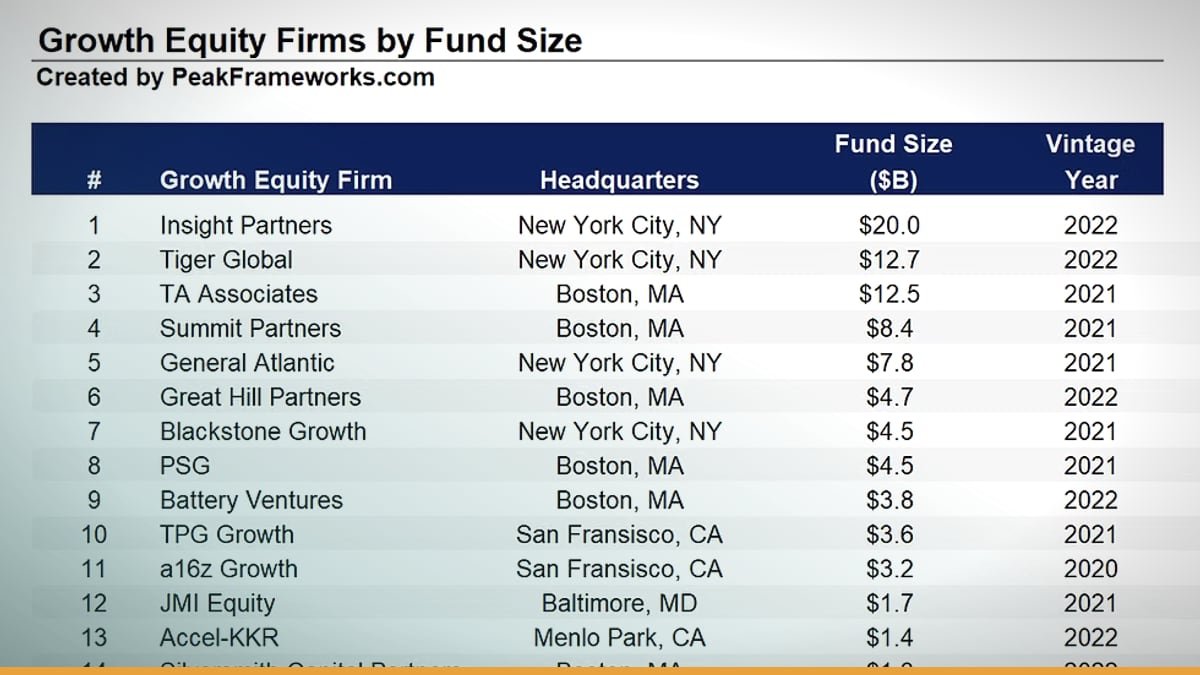
    Header image source: What is Growth Equity? / Growth Equity Interview Guide via Peak Frameworks via Google — cropped to 16:9 and colour-adjusted.

    Key takeaways

    • General Innovation Capital manages $331M for growth-stage deep-tech firms
    • Targets companies at critical inflection points between R&D and mass adoption
    • Focuses on quantum computing and advanced communications for Western tech leadership

    General Innovation Capital has $331M in assets under management. Not venture. Not private equity. Growth equity—meaning it steps in when a deep-tech company has proven the science, cleared the regulatory hurdles, and now needs capital to scale. The firm’s pitch? It invests at the exact moment a technology hits its inflection point: when quantum computing stops being a lab experiment, when advanced communications moves from R&D to deployment, when deep tech shifts from niche to necessity. This isn’t innovation as inspiration. It’s innovation as institutional-grade capital, deployed with precision to reinforce Western technological leadership.

    They target companies at "critical inflection points"—the moment when a technology moves from experimental to essential. That’s not early-stage VC. That’s growth equity, a discipline that sits between the high-risk world of venture and the cash-flow stability of private equity. The distinction matters. General Innovation Capital isn’t betting on ideas. It’s betting on momentum.


    The Inflection Point: Why Timing Is Everything

    The firm’s entire thesis hinges on one idea: breakthrough technologies only scale when they hit an inflection point. This isn’t theoretical. It’s a testable claim, and their strategy is built on spotting these moments before they become obvious.

    For decades, it was a lab curiosity—promising, but commercially irrelevant. Quantum computing has progressed from lab curiosity to commercial relevance. They mark the shift from “will this ever work?” to “how fast can we scale it?” General Innovation Capital’s focus on advanced technology suggests they’re betting on transitions from experimental to commercial viability.

    They’re targeting technologies moving from R&D to deployment. Again, the inflection point is the key. It’s the difference between a prototype and a product with a market.

    This isn’t just about picking winners. It’s about timing. Their growth equity approach avoids the early-stage risk of traditional venture capital. Instead, they look for companies that have cleared technical and regulatory hurdles but haven’t yet achieved mass adoption. This is where institutional clients want to deploy capital: in opportunities that are de-risked but still high-growth.


    The Sectors: Where the Firm Puts Its Money

    Areas include quantum and advanced communications. They’re technologies that align with Western strategic priorities.

    Quantum computing is a national priority. The technology’s applications could redefine entire industries. There is international competition in quantum computing. General Innovation Capital’s focus suggests they see advanced technologies as strategic imperatives.

    Advanced communications focuses on next-generation networks. These are technologies critical for both economic competitiveness and national security. The firm’s interest aligns with trends like the U.S. push to diversify supply chains away from Chinese telecom equipment.

    It refers to hardware or software enabling breakthroughs in other fields. The inclusion of "impact & social enterprise" suggests a focus on technologies with societal benefits.

    They’re betting on technologies that can reshape industries and economies.


    The Institutional Angle: Who Benefits?

    It’s built for institutions that have both the capital and patience for high-growth, high-impact sectors. Their $331M AUM and 2024 SEC registration signal institutional focus.

    Their strategy is designed for institutional clients.

    It suggests they work with institutional partners. By acting as an advisor, they can leverage technical expertise.

    It implies clients are investing in technologies that reinforce Western resilience.S. and allied leadership. This aligns with trends in technology policy.


    The Geopolitical Layer: Why “Western Resilience” Matters

    It reflects a recognition that technological leadership has strategic importance. There is international competition in next-generation technologies. General Innovation Capital’s strategy suggests they see themselves as part of technological advancement.

    The technology has significant implications for security. There are efforts to protect technological advantages. General Innovation Capital’s focus here suggests they’re betting on companies that can help the U.S. maintain its lead—or avoid falling behind.

    There are efforts to reduce reliance on foreign technology. The next frontier of communications will be critical. The firm’s interest implies a belief that the U.S. The firm’s interest implies a belief that Western countries can build competitive technologies.

    Their U.S.-based footprint reinforces this angle. Unlike global VC firms, General Innovation Capital keeps investments close to home. This could reflect a strategy to align with Western policy priorities.

    The question is whether this is defensive or offensive in nature. It will shape technological leadership for decades.


    The Mechanics: How They Operate

    General Innovation Capital’s inflection-point focus sets them apart. They target companies at critical inflection points of growth. This is where identifying inflection points comes into play.

    Quantum computing is progressing through different stages of development. The next inflection point involves more advanced quantum capabilities. This is when technologies move from experimental to commercial. Their strategy suggests they’re betting on companies at inflection points.

    Their focus on both financial returns and Western resilience adds complexity. The brief mentions "impact & social enterprise," but it’s unclear what specific areas this covers. If it’s the latter, their impact metrics might include patents filed, U.S. jobs created, or supply chain diversification—measures aligning with national priorities.

    The inflection-point focus requires active engagement. Their venture-capital advisory model suggests they work with institutional partners.


    What General Innovation Isn’t

    The inflection-point focus demands active engagement. They bet on companies at critical growth moments.

    It’s a structured investment strategy blending financial returns with strategic impact. Their target sectors—quantum, advanced communications, deep tech—are important for technological advancement.


    The Broader Trend: Why This Model Is Here to Stay

    Growth equity is rising, with firms focusing on later-stage, high-growth opportunities. Deep tech is attracting more investment.

    Some firms blend commercial and strategic goals.S. leadership. General Innovation Capital serves institutional clients.

    Some sectors have become priorities for institutional investors. General Innovation Capital’s focus suggests they see opportunities in advanced technology sectors.

    Their $331M AUM is significant.


    The Unanswered Questions

    How do they measure “Western resilience”? Patents filed? Jobs created? Supply chain diversification? Or something more nebulous, like geopolitical influence?

    How do they differentiate from other firms that focus on deep tech?


    The Biggest Question: Can General Innovation Scale?

    The sectors they target have long time horizons. Institutional clients are interested in both strategic narratives and returns.

    It will be a template for how institutional capital deploys in advanced technology.


  • **What Is Innovation Capital? Four Distinct Meanings, One Unifying Idea**

    **What Is Innovation Capital? Four Distinct Meanings, One Unifying Idea**

    Header image source: Innovation Capital | Innovator’s DNA via Innovator’s DNA via Google — cropped to 16:9 and colour-adjusted.

    Key takeaways

    • Innovation Capital has four distinct meanings: VC fund, boutique bank, consultancy, and strategic asset
    • Reputation, networks and persuasion form the core of intangible innovation capital
    • Building innovation capital requires long-term investment in R&D, relationships and storytelling

    Innovation Capital is a €21.1 million Bulgarian VC fund. It’s also a boutique investment bank specialising in mid-market gaming and retail deals. And it’s an intangible asset—like political capital—that helps leaders rally support for new ideas.

    These aren’t competing definitions. They’re different applications of the same principle: turning ideas into commercial value. The first three are institutions. The fourth is a strategic asset. One is concrete. The other is slippery, hard to measure, and often misunderstood.


    Innovation Capital as a Boutique Investment Bank: The Power of Niche

    Innovation Capital’s website calls itself “a leading boutique investment bank dedicated to representing mid-market clients in the gaming, leisure, restaurant and retail industries.” That’s not just specialisation. That’s obsession.

    No bulge-bracket bank operates this narrowly. Jefferies covers gaming, sure. But it doesn’t only cover gaming. Innovation Capital does. That’s the whole point.

    Boutique banks thrive where deep domain knowledge beats balance-sheet size. A mid-market restaurant chain isn’t just another asset. It’s a business with perishable inventory, franchise agreements, and margins thinner than a chef’s knife. A banker who understands those nuances can structure deals generalists would miss. Earn-outs tied to same-store sales growth. Contingent payments based on franchise renewal rates.

    The problem? The brief gives no numbers. No deal volume. No client names. No transaction types—M&A, capital raises, recapitalisations. Without those, it’s impossible to know if Innovation Capital is actually innovating in deal structuring or just branding itself as such. Boutique banks love to talk about “creative solutions.” But creativity in finance means nothing without execution. If they’re not disclosing performance metrics—IRR, exit multiples, time-to-close—then the innovation label is just marketing.


    Innovation Capital as a Healthcare Consultancy: Scaling Human and Social Capital

    Innovation Capital LLC’s mission: “build human and social capital for innovation at scale.” That’s a mouthful. Let’s unpack it.

    Human capital means skills, training, talent development. Social capital means networks—partnerships, alliances, collaborations. In healthcare, both are critical. A hospital system rolling out AI diagnostics doesn’t just need the tech. It needs radiologists trained to use it, IT teams to integrate it, regulators convinced it’s safe. Innovation Capital LLC focuses on the people and relationships side of the equation, not the tech itself.

    This aligns with trends in healthcare innovation. Digital health startups fail more often from poor go-to-market than bad tech. A wearable that tracks glucose levels is useless if no one trusts it enough to prescribe it. Value-based care models require alignment between insurers, providers, and patients—something that’s more about social capital than financial capital.

    But again, the brief offers no specifics. No methodologies. No client names. No measurable outcomes. Did they help a client secure FDA approval? Train 500 clinicians? Broker a partnership between pharma and digital therapeutics? Without those details, the claim of “scaling human and social capital” is abstract to the point of meaninglessness.


    Innovation Capital as a Bulgarian VC Fund: Early-Stage Equity in a Growing Ecosystem

    Innovation Capital’s Bulgarian fund is €21.1 million. It’s in its “post-investment stage.” That means no new deals—just managing the existing portfolio. The fund provides “equity and quasi-equity funding” to Bulgarian startups. Quasi-equity typically means convertible notes or revenue-sharing agreements—common in early-stage investing where valuations are uncertain.

    Bulgaria’s startup ecosystem is small but growing. In 2022, Bulgarian startups raised over €100 million in VC funding. That’s a fraction of Berlin or Tel Aviv, but it’s progress. A €21.1 million fund is meaningful here. For comparison, LAUNCHub Ventures, one of Bulgaria’s most prominent VC firms, raised a €70 million fund in 2021. Innovation Capital’s fund is about a third of that size, but it’s still a player.

    The “post-investment stage” is telling. Most VC funds spend 5–7 years deploying capital and the next 5–7 years managing exits. If Innovation Capital is already in post-investment mode, it suggests either an accelerated investment period or a focus on value-add activities—governance, follow-on funding, exit support. But the brief doesn’t say. What’s the portfolio composition? SaaS, biotech, hardware? What’s the stage—pre-seed, seed, Series A? And crucially, what’s the performance? MOIC (multiple on invested capital) is the gold standard for VC returns. Without it, we don’t know if this fund is a success or a cautionary tale.


    Innovation Capital as an Intangible Resource: The Strategic Definition That Matters

    Here’s where things get interesting. Innovation Capital isn’t just a bank, a consultancy, or a VC fund. It’s also an intangible asset—a resource leaders leverage to secure support for novel ideas. Forbes describes it as “an intangible capital, like political capital, that helps you win resources to commercialize novel ideas.” Arthur Lawrence frames it as “an assemblage of multiple development-promoting factors that encourages organizations to achieve innovative results.”

    This is the most compelling definition. It mirrors financial capital in structure but operates through reputation, networks, and persuasion. Financial capital is deployed via equity, debt, and grants. Innovation capital is deployed via pitches, alliances, and storytelling.

    How Innovation Capital Works

    1. Reputation: Track record matters. A founder who’s successfully exited a startup before will raise money more easily than a first-timer. Elon Musk’s reputation for shipping audacious projects—PayPal, Tesla, SpaceX—gives him innovation capital that a lesser-known entrepreneur lacks.
    1. Networks: Access to investors, partners, and talent is critical. A biotech founder with connections to top-tier VCs and pharma executives can secure funding and partnerships faster than someone without those relationships.
    1. Persuasion: The ability to frame ideas as inevitable is a superpower. Steve Jobs’ reality distortion field wasn’t magic—it was the ability to make people believe in a vision before it existed. That’s innovation capital in action.

    Evidence from the Real World

    Forbes cites leaders like Jeff Bezos and Reed Hastings as exemplars of high innovation capital. Leaders with high innovation capital can convince investors to back long-term growth despite years of losses. It was about reputation and storytelling ability. Similarly, major business pivots aren’t just tech shifts—they’re narrative shifts that require massive innovation capital to pull off.

    Arthur Lawrence’s framing is more organisational. They argue that innovation capital is built through long-term investments in R&D, talent development, and culture. A "Day 1" mentality isn’t just a slogan—it’s a cultural investment that signals commitment to innovation. That commitment is a form of innovation capital.


    Innovation Capital vs. Financial Capital: What’s the Difference?

    Financial capital is tangible. It’s cash in the bank, assets on the balance sheet, equity in a startup. It’s deployed via structured instruments—term sheets, loan agreements, stock options—and its returns are measured in IRR, ROI, and multiples.

    Innovation capital is intangible. It’s reputation, relationships, and the ability to persuade. It’s deployed via pitches, alliances, and narratives. Its returns are measured in support secured—funding, partnerships, regulatory approval, talent recruited.

    The Startup Paradox

    A startup with $1 million in cash (financial capital) but no innovation capital may struggle to raise more. Investors don’t just bet on ideas—they bet on people. A founder with high innovation capital—a serial entrepreneur with a track record of exits—can raise $10 million with no product, no revenue, and no customers. The cash is the same, but the innovation capital makes the difference.

    This isn’t theoretical. Data from PitchBook shows that repeat founders raise 2–3x more capital than first-time founders, even when controlling for sector and stage. That’s innovation capital at work.


    The Role of Venture Capital in Innovation Capital

    Venture capital is often seen as the fuel for innovation, but it’s more accurate to say that VC is a source of financial capital for innovation. Innovation capital precedes VC funding. A founder’s reputation, network, and ability to tell a compelling story are what attract VC in the first place.

    ScienceDirect’s research on VC and innovation highlights this dynamic. VC is critical for scaling innovations, but the innovations that attract VC are often those that already have some form of innovation capital behind them. A biotech startup with a Nobel laureate on its advisory board will raise money more easily than one without. A SaaS founder who’s previously built and sold a company will get better terms than a first-timer.

    This has implications for the Bulgarian VC fund. If Innovation Capital’s portfolio companies are struggling, it might not be a financial capital problem—it might be an innovation capital problem. Maybe the founders lack the reputation or networks to attract follow-on funding. Maybe their pitches aren’t compelling enough. The fund’s post-investment focus on value-add activities—governance, exits—suggests they’re aware of this, but without data, it’s impossible to know how effective they’re being.


    How Organisations Build Innovation Capital

    Building innovation capital isn’t like raising a funding round. There’s no term sheet, no cap table. It’s a long-term investment in reputation, networks, and storytelling.

    Invest in R&D

    Companies that consistently invest in R&D signal commitment to innovation. A "Day 1" culture isn’t just a slogan—it’s backed by significant R&D investment. That investment builds innovation capital by demonstrating long-term commitment.

    Cultivate Networks

    Partnerships with universities, accelerators, and industry groups are critical. Google’s relationships with Stanford and MIT aren’t just about hiring—they’re about access to cutting-edge research and talent. Startups that participate in accelerators like Y Combinator or Techstars gain access to a network of investors, mentors, and alumni. That network is a form of innovation capital.

    Develop Storytelling

    The ability to frame ideas as inevitable is a superpower. Tesla’s “master plan” wasn’t just a product roadmap—it was a narrative that convinced investors, customers, and regulators that electric vehicles were the future. Airbnb’s pivot from air mattresses to a global hospitality brand required a compelling story about belonging and community. That story was a form of innovation capital.

    Leverage Past Successes

    Early wins build credibility. A startup that lands a marquee customer can use that as proof of traction. A founder who’s previously built and sold a company can point to that track record as evidence of their ability to execute. These past successes are forms of innovation capital that make future successes more likely.

    Challenges in Building Innovation Capital

    The biggest challenge? It’s hard to measure. There’s no balance-sheet line item for innovation capital. It’s intangible, qualitative, and often subjective. That makes it difficult to manage. How do you know if your innovation capital is increasing? Is it the number of patents filed? The strength of your network? The quality of your pitches?

    Another challenge is time. Innovation capital isn’t built overnight. It takes years to develop a reputation, cultivate a network, and refine a narrative. That’s why serial entrepreneurs have an advantage—they’ve already done the work.


    The Future of Innovation Capital: Open Questions

    Innovation capital is a powerful concept, but it’s still poorly understood. Here are the big unanswered questions.

    Can Innovation Capital Be Systematically Developed?

    Some leaders seem to have an innate ability to build innovation capital—think Elon Musk or Steve Jobs. But is that ability teachable? Can organisations systematically develop innovation capital, or is it a trait that some have and others don’t?

    Forbes and Arthur Lawrence suggest it’s a learnable skill. They argue that leaders can build innovation capital through deliberate investments in reputation, networks, and storytelling. But there’s no playbook. No standardized course on innovation capital. And without quantitative data, it’s hard to know what works and what doesn’t.

    How Does AI Change Innovation Capital?

    AI is already changing how ideas are pitched, funded, and commercialised. Can large language models help founders craft better pitches? Can AI-generated personas simulate investor reactions? Could AI tools audit a founder’s innovation capital?

    The potential is enormous, but the risks are too. AI-generated pitches might lack authenticity. AI-curated networks might feel transactional. And if everyone uses the same AI tools, will innovation capital become commoditised?

    What’s the ROI of Innovation Capital?

    Financial capital has clear metrics—IRR, ROI, multiples. Innovation capital doesn’t. How do you measure the return on a reputation? How do you quantify the value of a network? Without answers to these questions, innovation capital will remain a fuzzy concept, more art than science.

    How Does Innovation Capital Vary by Industry?

    Is innovation capital more critical in biotech than in SaaS? In hardware than in software? In regulated industries than in unregulated ones? The brief doesn’t say. But intuition suggests that industries with longer development cycles—biotech, aerospace—might require more innovation capital than those with shorter cycles—SaaS, e-commerce.

    Can Innovation Capital Be Audited?

    Imagine a tool that scores a founder’s innovation capital—like a credit score, but for their ability to commercialise ideas. Here’s how to improve.” That tool doesn’t exist yet, but it’s not far-fetched. If innovation capital is a strategic asset, then it should be auditable.


    The Big Question

    Here’s the most interesting one: If innovation capital is so critical, why isn’t it more widely discussed?

    Financial capital is taught in every business school. There are entire industries built around raising, deploying, and managing it. Innovation capital? It’s mentioned in passing in Forbes articles and consulting white papers, but it’s not a core part of the curriculum. That’s a missed opportunity.

    The answer might lie in its intangibility. Financial capital is concrete—you can touch it, measure it, deploy it. Innovation capital is slippery. It’s reputation, networks, persuasion. It’s hard to quantify, hard to teach, and hard to scale.

    But that doesn’t make it any less real. In fact, its intangibility might be its superpower. Because while financial capital is table stakes, innovation capital is what separates the disruptors from the also-rans.

    So what is innovation capital? It’s the difference between an idea that stays on a whiteboard and one that changes the world. And right now, we’re only beginning to understand how it works.


  • **How to Use Technology Wisely: A Practical Guide Backed by Evidence**

    **How to Use Technology Wisely: A Practical Guide Backed by Evidence**

    Header image source: Train Your Teens to Manage Technology Wisely – Plugged In via Plugged In via Google — cropped to 16:9 and colour-adjusted.

    Key takeaways

    • Set strict time boundaries for work, leisure, and social media
    • Model healthy tech habits for kids and engage alongside them
    • Use tech as a tool—not a crutch—for productivity and connection

    Technology is only as wise as the hands that hold it. Use it with intention—clear boundaries, self-awareness, a refusal to let it replace real life—and it becomes a tool for productivity, connection, and growth. Use it mindlessly, and it drains time, relationships, and mental health.

    The formula isn’t complicated:

    1. Set strict time boundaries for work, leisure, and social media—and enforce them like your well-being depends on it. Because it does.
    2. Ask yourself daily: Is my tech use crowding out family, responsibilities, or sleep? If the answer is yes, cut it back.
    3. Be the user, not the used. Technology should serve your goals, not the algorithms designed to hijack attention.
    4. Model the behavior you want to see. Kids adopt your habits—good or bad.
    5. Engage alongside younger users. Co-viewing content and discussing it teaches discernment, not passive consumption.
    6. Schedule offline time. Meals, mornings, evenings—tech-free zones prevent overuse.

    That’s the answer. The rest is execution. And most people fail at it.


    Why Unwise Tech Use Keeps Winning

    The evidence is everywhere. Families sit together in silence, scrolling instead of talking. Productivity collapses under the weight of Slack, email, and TikTok. Parents default to screens as babysitters. And as devices get faster, cheaper, and more addictive, the problem isn’t just persisting—it’s worsening.

    Jehovah’s Witnesses’ Awake! magazine puts it bluntly: "Unwise use of digital technology can be a problem regardless of what it’s called. " The issue isn’t the tech itself—it’s the lack of intention behind it. When screens crowd out family time, responsibilities, or sleep, they stop being tools. They become traps.

    The same article warns: "As new devices make accessing and transmitting data easier and faster, unwise use of technology will likely grow. " We’re not just dealing with smartphones anymore. Smartwatches buzz with notifications. AI assistants anticipate needs. VR headsets promise to replace reality. The more seamless tech becomes, the harder it is to notice when it’s taking over.


    What Happens When We Get It Right?

    Wise tech use isn’t about rejection—it’s about strategic engagement. The data (or at least the guidance from organizations tackling this) shows clear benefits when people implement boundaries:

    Stronger Family Bonds

    FamilyLife, a Christian organization focused on relationships, emphasizes that parents who model healthy tech habits see better behavior in their kids.** That shouldn’t surprise anyone—kids mimic what they see. If you’re glued to your phone during dinner, they’ll do the same. If you put it away and engage, they learn that real-world interactions matter more than digital ones.

    But modeling isn’t enough. Parents need to engage alongside their teens. FamilyLife’s advice? FamilyLife’s advice? Parents need to engage with technology alongside their teenagers to help them learn to use it in a way that honors themselves and their faith.** Watch YouTube videos together. Discuss social media posts. It’s not policing—it’s teaching critical thinking.

    Higher Productivity

    Medium writer Tofe Evans argues that the best way to use technology for productivity is to be intentional about when and how you use it. That means:

    • Blocking distractions (website blockers during work hours).
    • Batching notifications (checking email twice a day instead of reacting to every ping).
    • Using tech as a tool, not a crutch (setting a timer for focused work, then stepping away).

    Evans’ key insight? ** Most people use it to multitask, which studies show is a myth—your brain isn’t doing two things at once. It’s just switching rapidly, losing efficiency each time.

    Better Digital Literacy

    When parents co-use tech with their kids, **teens develop discernment. FamilyLife’s guidance suggests that when parents engage with technology alongside their teenagers, it helps them learn to use it wisely.

    This isn’t just about screen time limits—it’s about **active guidance.

    Less Regret

    Jehovah’s Witnesses’ Awake! Jehovah’s Witnesses’ Awake! magazine points out that limiting how long you use digital technology helps avoid misuse.** The logic is simple: If you decide in advance how long you’ll spend on social media, you’re less likely to look up and realize you’ve lost an hour. The same goes for work—if you set a cutoff time, you’re less likely to burn out.


    How to Actually Implement Wise Tech Use

    Knowing the problem and the benefits is useless without action. Here’s how to make it stick:

    For Parents: Set Expectations and Engage

    1. Define screen time rules. No phones during meals. One hour of leisure screen time after homework.
    2. Co-view content. Watch YouTube videos together. Discuss social media posts. Ask questions.
    3. Model the behavior. If you want your kids to read instead of scroll, put your phone down and pick up a book.

    FamilyLife’s advice is clear: "Parents should model responsible technology use and set reasonable expectations for their children’s usage. " That means no double standards—if you ban phones at the dinner table, you can’t sneak glances at yours.

    For Individuals: Audit and Automate

    1. Conduct a tech audit. Track your usage for a week (most phones have screen time reports). Ask: Which apps are serving me, and which are wasting my time?
    2. Schedule tech-free blocks. The first hour of the day, meals, and the last hour before bed should be device-free.
    3. Automate boundaries. Use app timers, grayscale mode (which makes phones less addictive), and website blockers to reduce temptation.

    ** The key word? Stick. Most people set limits, then ignore them. Wise tech use requires enforcement.

    For Students: Use Tech as a Tool, Not a Crutch

    Using technology wisely during the school year is important for modern kids.** That means:

    • Using apps for flashcards or research, not passive scrolling.
    • Balancing online study with offline reading and note-taking.
    • Turning off notifications during study sessions.

    Schools are starting to catch on. The South African International School (SAIS) advises parents to help children maintain a balance between online and offline time.** That means setting expectations for when screens are allowed (after homework) and when they’re not (during family time).


    Can Campaigns and Communities Help?

    Individual discipline only goes so far. Culture shifts require collective action. That’s where campaigns like No One Cares’ digital initiative come in.

    The startup, with 27 million followers, is launching a campaign **"encouraging youth to use technology and social media wisely." No One Cares is targeting youth in their campaign. That’s a big deal—most anti-tech-overuse campaigns preach to parents, not the kids actually glued to their screens.

    But campaigns aren’t enough. Schools and workplaces need to step up. Some institutions, like SAIS, already provide guidelines for parents. Others could:

    • Enforce "digital wellness" policies (no emails after 7 PM).
    • Teach digital literacy as part of the curriculum.
    • Create tech-free zones (libraries, cafeterias).

    The missing piece? **Self-assessment. Jehovah’s Witnesses’ magazine suggests evaluating if technology use is causing neglect of important things. If the answer is no, it’s time to adjust.


    Why Willpower Isn’t Enough

    Here’s the hard truth: Tech is designed to be addictive. Social media apps use infinite scroll, autoplay, and notifications to keep you hooked. Smartphones are engineered to demand attention. Unlike cars (which have seatbelts) or cigarettes (which have warning labels), there are no built-in safeguards for digital overuse.

    Jehovah’s Witnesses’ magazine highlights this imbalance: "As new devices make accessing and transmitting data easier and faster, unwise use of technology will likely grow. " The more seamless tech becomes, the less friction there is between you and your next dopamine hit.

    This isn’t an accident—it’s by design. Every notification, like, and swipe is a variable reward, triggering the same brain chemistry as gambling.

    So what’s the solution? Policy changes. Schools could enforce screen time limits. Workplaces could ban after-hours emails. Governments could regulate addictive design (as some countries are starting to do with social media).

    But until then, the burden falls on individuals. And that’s a problem—because willpower alone isn’t enough.


    Will Tech Use Get Wiser—or More Chaotic?

    Optimists point to growing awareness. Campaigns like No One Cares’ are reaching millions. Books like Digital Minimalism and Stolen Focus are becoming bestsellers. People are starting to question their tech habits.

    Pessimists, however, have a stronger case. Faster, smarter devices will make unwise use harder to resist. AI assistants will anticipate needs before we even think of them. VR will blur the line between digital and real life. And as Jehovah’s Witnesses’ magazine warns, "Unwise use of technology will likely grow. "

    The middle path? A cultural shift toward intentionality. That means:

    • Normalizing tech-free spaces (restaurants, parks).
    • Valuing presence over engagement (fewer likes, more real conversations).
    • Treating tech as a tool, not a lifestyle.

    But here’s the catch: This shift requires trade-offs. You’ll miss viral trends. You’ll disappoint algorithms. You’ll have to say no—to yourself, to your kids, to the endless scroll.

    Is it worth it?


    What You Gain from Using Tech Wisely

    The benefits aren’t just theoretical—they’re measurable.

    More Time

    Jehovah’s Witnesses’ magazine puts it simply: "By making the best use of time, people can avoid misusing digital technology. " That means reclaiming hours lost to doomscrolling, binge-watching, or mindless app-switching. Those hours add up—imagine what you could do with an extra 10, 20, or 30 hours a month.

    Better Relationships

    FamilyLife emphasizes that parents should model responsible technology use.** That makes sense—when parents put down their phones, kids feel seen. When families have tech-free meals, conversations deepen.

    Greater Control

    Medium’s Tofe Evans argues that the best way to use technology for productivity is to be intentional about when and how you use it.** Instead of reacting to every notification, you decide when to engage. Instead of letting algorithms dictate your mood, you curate your digital diet.

    A Legacy

    FamilyLife’s advice is clear: "Parents should model responsible technology use. " The habits you teach your kids today will shape their relationship with tech for decades. Do you want them growing up in a world where screens come first? Or one where real life does?


    The Hard Truth: Wise Tech Use Requires Sacrifice

    Here’s what no one tells you: Using tech wisely means missing out.

    • You’ll miss viral memes. And that’s okay.
    • You’ll disappoint algorithms. They’ll survive.
    • You’ll have to say no—to yourself, to your kids, to the endless scroll.

    But here’s what you’ll gain:

    • Time you didn’t know you had.
    • Relationships that actually matter.
    • Control over your attention.
    • A legacy of intentionality.

    The question isn’t Can you afford to use tech wisely? It’s Can you afford not to?


  • **Technology and Science?: How They Intertwine, Where They Diverge, and Why It Matters**

    **Technology and Science?: How They Intertwine, Where They Diverge, and Why It Matters**

    Header image: File:Mongolian Technology and Science University.jpg by Chinneeb, CC BY-SA 3.0, via wikimedia via Openverse — cropped to 16:9 and colour-adjusted.

    Key takeaways

    • Science explains why things happen; technology builds tools that apply that knowledge
    • Feedback loops connect scientific discovery to technological advancement and back again
    • Different fields depend on science to varying degrees—mechanical tech often advances without it

    Scientific understanding of electron behavior enabled transistor development. Technological advances in electronics enabled microprocessor development. Advancements in computing technology enable simulation of complex systems. That’s the loop. And it’s tighter than ever.

    Science and technology aren’t interchangeable. Science chases understanding—why electrons behave the way they do, how proteins fold, what dark matter might be. Technology chases utility—faster chips, better drugs, cleaner energy. One produces papers. The other produces products. One wins Nobels. The other wins market share. But strip away the labels, and you’ll find they’re locked in a feedback loop that’s become the engine of modern progress.

    That loop isn’t uniform. Some technologies sprint ahead with barely a whisper of scientific theory. Others crawl without it. Understanding the difference isn’t academic. It’s the difference between funding the right research, building the right tools, and avoiding ethical trainwrecks.


    The Divide: Goals, Methods, Outputs

    Science asks why. Technology asks how. Science delivers theories, laws, models—abstract frameworks that explain reality. Technology delivers tools, processes, systems—concrete solutions that change it. The scientific method demands experimentation, peer review, reproducibility. Technological development demands design, iteration, market validation. You don’t test a hypothesis with a hammer. You don’t build a bridge with a particle accelerator.

    The CK-12 Foundation nails it: science and technology serve different masters. Science seeks knowledge. Technology seeks application. That doesn’t make one superior—just measured by different yardsticks. A scientific breakthrough might earn a Nobel. A technological one might earn a billion. Some breakthroughs achieve both scientific recognition and practical application.


    The Loop: How They Feed Each Other

    The relationship isn’t linear. It’s a feedback loop. Science enables technology. Technology accelerates science. Consider electronic technology. Scientific understanding of electron behavior developed. This led to transistor development. Transistors led to computers. Computers now simulate quantum systems. The cycle never ends.

    Analysis shows that science provides the knowledge base. Technology provides the tools. Without microscopes, no cell biology. Without telescopes, no modern astronomy. Without particle accelerators, no Standard Model. And without the Standard Model, no next-gen quantum tech.

    CRISPR is another textbook case. The discovery of bacterial immune systems (CRISPR) led to a gene-editing tool. That tool is now used to study gene function, model diseases, and attempt germline editing. Each scientific advance opens new technological doors. Each technological advance raises new scientific questions.


    Field-Specific Dependencies: When Science Is Optional

    The relationship shifts depending on the field. Some technologies advance with minimal scientific input. Others are utterly dependent.

    Mechanical tech is the poster child for independence. Mechanical inventions often need little science. The steam engine, printing press, bicycle—all emerged without deep theoretical understanding. Early inventors didn’t need deep theoretical understanding. Early aviation pioneers didn’t need deep theoretical understanding. These inventions came from observation, trial and error, incremental improvement. Science arrived later to explain why they worked.

    Electrical, chemical, and nuclear tech tell a different story. These fields demand scientific training. No semiconductor physics? No transistors. No molecular biology? No new drugs. No nuclear fission? No reactors. Most advances in these fields require serious scientific groundwork. There’s no accidental discovery of a new battery chemistry or high-temperature superconductor.

    Biotech sits somewhere in between. It needs both scientific discovery (genetics, biochemistry) and engineering (lab techniques, manufacturing). mRNA vaccines relied on decades of RNA biology research, lipid nanoparticle science, and immunology. But they also needed advancements in manufacturing, delivery systems, and clinical trials. Without either, no vaccines.


    The Limits: What Happens Without the Other

    Technology can succeed without science—briefly. A prototype might work. A product might sell. But without scientific understanding, scaling and improving become nearly impossible. Even successful technology alone provides an insufficient basis for true innovation. You can build a working steam engine without thermodynamics, but you can’t optimize it for efficiency or scale it for industry. You can invent a transistor without quantum mechanics, but you can’t shrink it to nanoscale or integrate billions onto a chip.

    Science acts as technology’s conscience. It provides constraints, ethics, long-term vision. Without it, tech risks becoming a runaway train—powerful but directionless. Look at AI. The last decade saw staggering progress driven by engineering—better algorithms, more data, faster hardware. But without research into alignment, interpretability, and safety, we’re flying blind. The tech works. We don’t know why—or what it might do next.

    The reverse is also true. Science without technology is limited. Theoretical breakthroughs can languish for decades without the tools to test them. String theory remains unproven because we lack the tech to observe its predictions. CRISPR’s discovery was scientific, but its impact depends on tech—delivery systems, off-target detection, clinical applications.


    Innovation: Where They Converge

    Innovation sits at the top. It’s the application of science and technology to create value—economic, social, environmental. They can be framed as nested categories. Science is the foundation. Technology is the toolkit. Innovation is the outcome.

    Engineering bridges the gap. It takes scientific knowledge and designs real-world solutions. Renewable energy is a perfect example. Photovoltaics science explained how light interacts with semiconductors. That led to solar cells—a tech breakthrough. But turning cells into efficient, scalable, affordable panels required engineering—materials science, manufacturing, system integration. Without engineering, solar power remains a curiosity, not a viable energy source.

    Together, science and technology drive human progress. Vaccines, computing, agriculture, transportation—none exist without their interplay. Science tells us how mRNA works. Technology packages it into a vaccine. Innovation delivers it to billions.


    AI: The Ultimate Blur

    AI blurs the lines more than any other field. It’s both science and technology. Machine learning theory, neural networks, optimization algorithms—all grounded in math and stats. But AI is also a tool—image recognition, NLP, recommendation systems, autonomous vehicles.

    Some AI advances came from science. Deep learning built on decades of neural network research. Others—like prompt engineering or reinforcement learning for robotics—are more empirical, driven by trial and error.

    Data is the glue. Scientific models (transformer architectures) need tech infrastructure (GPUs, data centers, large-scale datasets). The field moves so fast it’s often unclear whether a breakthrough is scientific or technological. AlphaFold was both—a scientific achievement in protein folding and a tech tool for drug discovery.

    Field-specific observations apply here too. AI straddles the line, making it a case study in how science and tech can evolve together—or diverge.


    The Future: Will They Merge?

    The trend lines point to deeper entanglement. Synthetic biology, quantum computing, nanotech—all push both science and tech boundaries. Synthetic biology blends scientific discovery (genetic circuits) with tech application (engineering organisms for medicine or materials). Quantum computing demands scientific research (qubit coherence, error correction) and tech development (cryogenics, control systems, algorithms).

    But there’s a risk. As tech outpaces science, we create tools we can’t control. AI alignment is exhibit A. We’re building powerful AI without fully understanding its workings or implications. The same goes for gene editing, geoengineering, even social media algorithms. Tech without science invites unintended consequences.

    The open question: will emerging fields demand new collaboration models? Will we need hybrid disciplines where scientists and engineers work side by side from day one? Or will the feedback loop suffice, with science and tech advancing in parallel but distinct tracks?


    Why It Matters: Policy, Industry, Ethics

    The distinction isn’t just academic. It shapes funding, strategy, ethics.

    Funding priorities: Governments and institutions must allocate limited resources. Basic science (fundamental physics, biology) or applied tech (clean energy, AI)? The Belfer Center’s analysis suggests both are necessary, but the balance varies by field. Mechanical tech might need less science. Electrical or chemical tech demands more. Conflating the two risks underfunding critical research—or wasting money on dead ends.

    Industry strategies: Companies face similar trade-offs. R&D (scientific discovery) or engineering (tech application)? Pharma needs both—basic research into drug targets and engineering for delivery systems. Software might focus more on engineering, iterating on existing tech. But even software benefits from scientific research—algorithms, AI, human-computer interaction.

    Ethical considerations: Science acts as tech’s conscience. Without it, we risk building tools we can’t control or understand. CRISPR is the cautionary tale. The scientific discovery enabled tech applications—curing genetic diseases. But it also raised ethical questions about germline editing, designer babies, unintended consequences. Science provides the framework for asking these questions. Tech provides the tools to answer them—or ignore them.

    The CRISPR baby scandal in 2018 drove this home. Some researchers have attempted human germline editing, raising ethical concerns. Such experiments raise concerns about both ethics and scientific responsibility. He bypassed consensus on germline editing, jumping straight to application without understanding the risks. The result was widespread concern and calls for greater oversight.


    The Bottom Line

    Science and technology? Distinct but inseparable. Science studies nature. Technology builds on that knowledge to create tools. Science seeks understanding. Technology seeks utility. Together, they drive progress.

    But their relationship isn’t one-size-fits-all. Mechanical tech can advance with minimal science. Electrical, chemical, nuclear tech demand deep scientific groundwork. Biotech, AI, and emerging fields blur the lines, requiring both.

    The distinction matters. It shapes funding, strategy, ethics. Ignore it, and we waste resources, stall innovation, or create tools we can’t control. Embrace it, and we unlock their full potential—progress that’s not just powerful, but purposeful.

    So, science and technology? Not the same. But together? Unstoppable. The question isn’t whether they’ll merge. It’s whether we’ll guide their evolution—or let them guide us.